Lumen Vietnam Fund

Blog

IMF official says few countries match Vietnam's reform drive

IMF official says few countries match Vietnam's reform drive

Few countries have carried out reforms on the scale of Vietnam in recent years, while the Southeast Asian nation’s economy has shown impressive growth and resilience in the face of external shocks, an International Monetary Fund (IMF) official said on Tuesday.

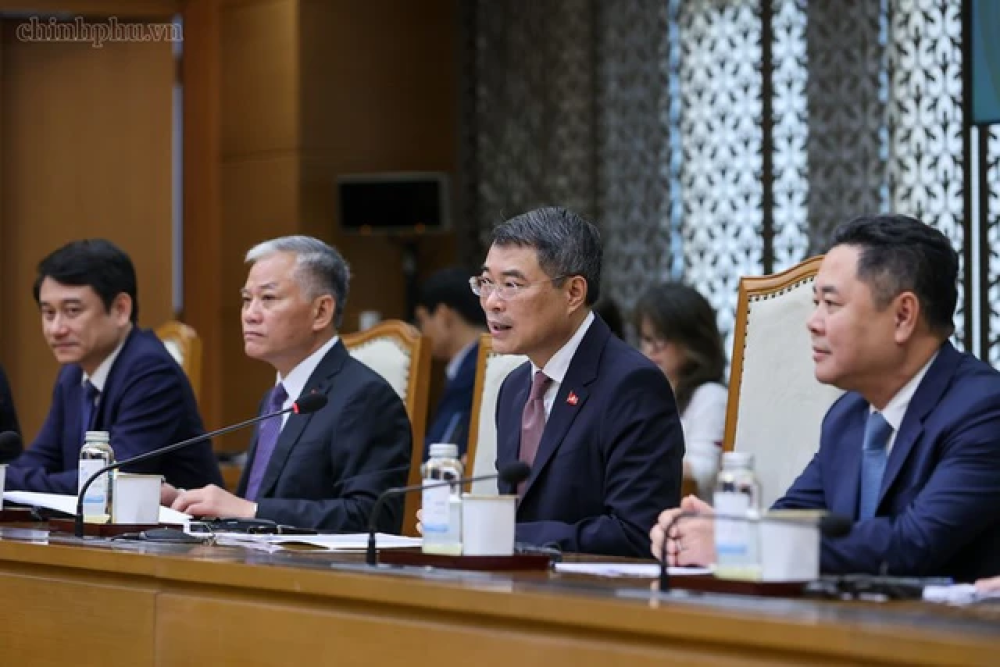
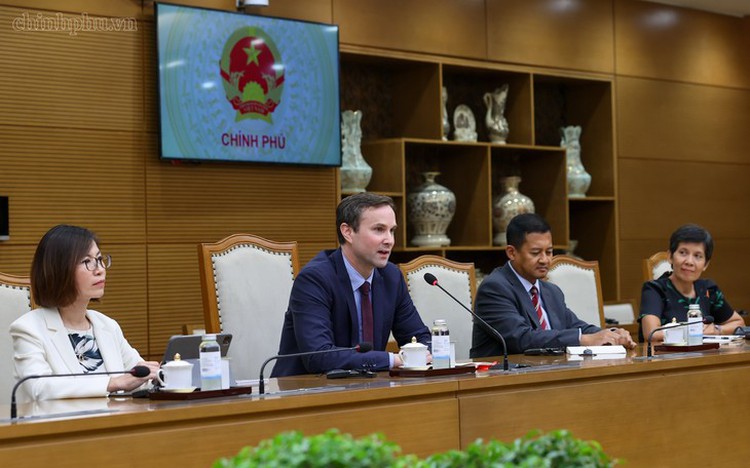
Jochen Schmittmann, the outgoing regional resident representative for the IMF Resident Offices in Vietnam, Cambodia, and Laos, made the remarks during a meeting with Vietnamese Prime Minister Le Minh Hung in Hanoi.

Also attending the meeting was Fazurin Jamaludin, who will assume the position of IMF representative for Vietnam and Laos from August 23.

The Vietnamese premier thanked Schmittmann for his contributions during his tenure, particularly his efforts to maintain policy dialogue and connect programs on training, institution-building, and capacity development.

He said the Party Central Committee's recent third plenum adopted a resolution on renewing Vietnam's development model, recognizing that the country is at a historic turning point that calls for deep and large-scale reforms.

The structural reforms are aimed at laying the foundation for long-term development and helping Vietnam achieve its two strategic 100-year goals: becoming a developing country with modern industry and upper-middle income status by 2030, and a developed, high-income country by 2045.

PM Hung said the government remains committed to pursuing economic growth while maintaining macroeconomic stability.

He underscored that Vietnam will ensure the safety of its financial and banking system, strengthen fiscal discipline, and develop capital markets to reduce its reliance on bank credit.

The country will not sacrifice macroeconomic stability or the safety of its financial and banking system for rapid but unsustainable growth, he added.

The prime minister also spoke about the upcoming National Assembly session, which is expected to consider and pass a series of bills to further improve Vietnam's legal and institutional framework in line with international standards and practices.

The move will help make the investment and business environment safer and more attractive while strengthening the confidence of businesses, investors, and international partners, he said.

PM Hung described the IMF as a strategic policy advisory partner and a trusted companion in Vietnam's socioeconomic development.

The government values the IMF's assessments and recommendations and considers them an important source of information for policymaking and implementation, he said.

PM Hung expressed hope that during Jamaludin's tenure, the IMF office would continue to serve as an important and proactive bridge, maintain regular policy dialogue, and offer practical advice to support Vietnam's goal of rapid and sustainable growth.

Echoing the prime minister's sentiments, Schmittmann spoke highly of the strong cooperation between Vietnam and the IMF, praising the country's impressive economic growth, effective response to external shocks, and significant reforms.

Few countries have been able to carry out reforms on the scale Vietnam has in recent years, he said.

He also lauded Vietnam's key development priorities, particularly its efforts to make breakthroughs in science and technology, innovation, and digital transformation.

Vietnam still has room to further accelerate growth, particularly by ensuring effective coordination between fiscal and monetary policies and other policy measures, Schmittmann said.

He offered several specific recommendations and affirmed the IMF's full support for Vietnam's goal of achieving double-digit economic growth, as well as its efforts in the financial, monetary, and banking sectors.

For his part, Jamaludin noted that Vietnam is entering a new phase of development with promising prospects and expressed his impression of the country's ambition to achieve double-digit growth.

He said he hoped to build on the positive results of cooperation between the IMF and Vietnam during his tenure.

The IMF stands ready to remain a trusted partner and work with and support Vietnam in realizing its development goals and priorities in the coming period, Jamaludin said.


Source: Vinh Tho - Ngoc An / Tuoi Tre News

Photo: Vietnam Government Portal

Latest Posts

Bank credit for real estate business rises to nearly $94.7 billion

Bank credit for real estate business rises to nearly $94.7 billion

Outstanding loans for urban area investment and housing development projects remained the largest category, reaching VNĐ833.6 trillion by the end of June, up 6.33 per cent from the end of March.

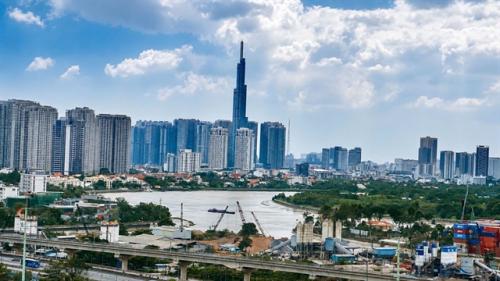
HÀ NỘI — Outstanding loans for real estate business activities rose to more than VNĐ2.5 quadrillion (nearly US$95 billion) as of June 30.

The Ministry of Construction's report on housing and the real estate market for the second quarter of 2026 showed that compared to the end of March 2026, the loans rose by more than VNĐ284 trillion. They were up more than VNĐ518 trillion compared to the end of 2025.

According to the report, outstanding loans for urban area investment and housing development projects remained the largest category, reaching VNĐ833.6 trillion by the end of June, up 6.33 per cent from the end of March.

Loans for land-use right acquisitions surged by more than 23 per cent to VNĐ314.5 trillion, while loans for industrial zone and export processing zone construction projects hit VNĐ184.2 trillion, an increase of over 32 per cent.

Conversely, loans for eco-tourism and resort projects declined by more than 4 per cent to VNĐ80.6 trillion.

According to the Ministry of Construction, real estate credit in the second quarter continued to be managed in a cautious and selective manner, prioritising capital for projects with full legal compliance and the capacity for implementation and completion, thus generating actual market supply.

Access to capital varies among real estate enterprises. Developers with strong financial standing, viable business plans and stable cash flows enjoy more favourable conditions for securing credit, whereas projects facing legal hurdles or low liquidity continue to struggle.

From an investment perspective, Tạ Mỹ Bách, head of property consulting firm Jones Lang Lasalle Vietnam’s capital markets division, noted a shift in investor appetite from strategies driven primarily by expectations of price hikes toward an emphasis on asset quality and actual operational performance. This indicates that an asset's cash-generating potential and operational efficiency are playing an increasingly critical role in investment decisions.

The developments in the first half of the year showed that bank capital continued to play a vital role in the real estate market, but access to such capital is becoming increasingly differentiated.

A developer's financial strength, a project's legal status, performance and ability to generate cash flow are emerging as key factors determining its appeal to both credit institutions and investors.


Adjusting power supplies as required

Adjusting power supplies as required

Vietnam’s energy sector has a substantial task ahead of it in ensuring that power supplies are commensurate with growing demand during the country’s new era of development.

As Vietnam enters a new phase of development targeting double-digit economic growth, its energy sector must go beyond ensuring adequate supplies to build a modern, competitive, and resilient system. It must adapt to the global energy transition and meet the country’s emissions commitments, creating both an opportunity to restructure the sector and a test of policymakers’ and businesses’ ability to deliver.

The sector has made significant strides forward over the last several years. The national power system has expanded rapidly, while oil and gas infrastructure has developed more systematically. Based on the revised National Power Development Plan for 2021-2030, with a vision to 2050 (PDP8), Vietnam faces enormous energy demand in the time ahead. By 2050, commercial electricity consumption is expected to exceed 1.23 trillion kWh, reflecting the scale of energy demand required to support national development.

National energy planning

The most significant change is the shift in the power generation mix. Whereas the national system once relied mainly on coal and hydropower, nowadays LNG-fired power, wind, solar, nuclear, pumped-storage hydropower, battery storage, and other emerging sources are reshaping the generation market.

The transition is also extending beyond generation into energy storage. Battery energy storage systems (BESS) are beginning to be deployed by businesses and power generators, signaling a new approach to energy management.

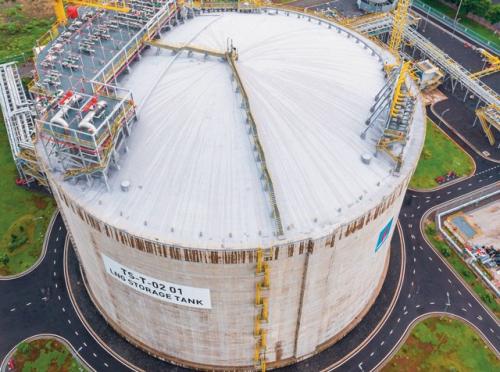
PDP8 identifies 13 LNG power projects with a combined capacity of about 22.4 GW, with the goal of making LNG a key source of baseload power. In practice, however, these projects face major obstacles.

Though 13 projects are planned through 2030, only Nhon Trach 3 and Nhon Trach 4 have been completed and brought into operation so far. Most of the remaining LNG projects remain only on paper, with investors and power generators still working through legal and regulatory procedures. The challenges include fragmented investment mechanisms, difficulties arranging financing and, particularly, obstacles in negotiating power purchase agreements (PPAs), all of which are slowing investment across the sector.

Nuclear energy has also returned to the policy agenda, with the Ninh Thuan 1 and Ninh Thuan 2 projects included in development plans through 2030-2035. Both remain at the investment preparation stage, however. Policies covering regulatory mechanisms, environmental safety, special incentives, and power purchase arrangements are still under study, with no specific framework yet in place to support implementation.

This shows that while Vietnam is seeking to build one of Southeast Asia’s largest energy systems, planning is only the necessary condition. The sufficient condition is a strong policy framework that allows resources to be mobilized efficiently once projects come online, minimizes waste, and ensures viable returns for investors.

Core bottlenecks

A closer look at the sector shows that institutional reform is a critical prerequisite for development. Four major bottlenecks are constraining investment and project implementation: an inconsistent legal and policy framework; an incomplete and insufficiently competitive energy market; a mismatch between power generation and transmission infrastructure; and shortcomings in policies for emerging energy sectors.

The lack of policy coordination is particularly problematic. Energy projects are subject to multiple laws, including the Law on Petroleum, the Law on Electricity, the Law on Investment, the Land Law, the Law on Environmental Protection, and the Law on Marine Resources, alongside numerous implementing decrees. This creates a complex legal framework that businesses must navigate simultaneously.

A delay at any single stage can have knock-on effects across the entire project timeline. Electricity pricing and PPAs also remain challenging.
For offshore wind, though the government has issued Decree No. 11 on surveying and development, several key mechanisms are still missing. These include a clear methodology for determining electricity prices, standardized PPA templates, risk-sharing arrangements between the government and investors, and foreign-currency payment guarantees. These factors are critical for international lenders assessing project financing. Without adequate payment security and dispatch commitments, projects will struggle to secure financing, directly affecting their timelines and viability.

Vietnam’s energy market also remains incomplete. The gas and LNG markets, in particular, have yet to fully develop. Electricity prices remain insufficiently attractive to major investors, while the power market is still evolving and commitments on maximum dispatch volumes have not been applied consistently.

This is especially important for LNG, which requires substantial capital and involves a long value chain from import terminals to power plants. Without mechanisms to guarantee offtake and capacity dispatch, investors will remain reluctant to commit. This helps explain why many LNG projects planned for 2025-2030, including Ninh Thuan, Ca Na, Quynh Lap, and Quang Ninh, remain at the investment solicitation stage.

The mismatch between generation and transmission infrastructure is another major bottleneck. Though regulations on direct power purchase agreements (DPPAs) have been issued, generators cannot effectively mobilize their resources without adequate transmission lines and grid connections. PDP8 sets targets for smart grids and energy storage, but mechanisms to attract private investment in the power grid remain limited.

Many businesses have invested in rooftop solar systems but have been unable to feed excess electricity into the national grid, leaving them to use the power internally and resulting in significant underutilization of resources.

Emerging sectors such as green hydrogen, green ammonia, and carbon capture, utilization, and storage (CCUS) also lack clear technical standards and specific incentives. While neighboring countries have developed national strategies for hydrogen and carbon markets, Vietnam remains largely at the research stage.

The absence of pricing mechanisms and viable markets discourages investment, while financial institutions lack sufficient grounds to assess project viability. The main constraints facing Vietnam’s energy sector therefore lie not in a lack of resources or demand, but in institutional barriers and an incomplete investment environment.

Strengthening institutions

Vietnam needs to review relevant regulations and ensure consistency among the Law on Electricity, the Law on Petroleum, the Law on Investment, and the Land Law. Simplifying investment procedures and shortening project preparation timelines would also help unlock capital. The revised Law on Electricity, in particular, needs clearer mechanisms for electricity pricing for renewable energy and LNG projects rather than leaving them at the level of broad proposals or ongoing studies.

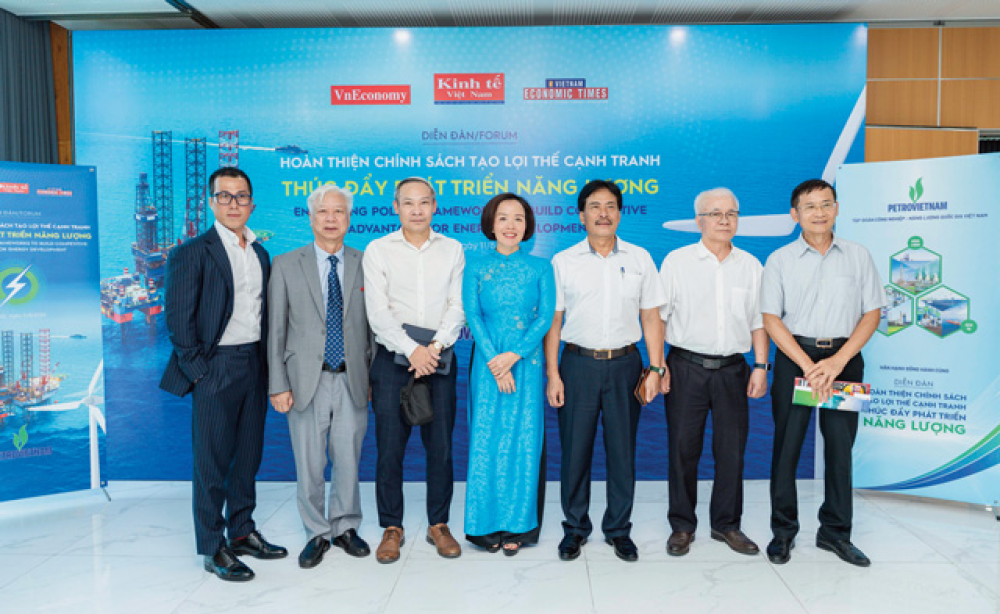
One notable development in recent legal reforms is the proposed delegation of authority to the Vietnam National Industry-Energy Group (PetroVietnam) under the new draft Law on Petroleum. Allowing PetroVietnam to directly negotiate, sign contracts, and select contractors for petroleum exploration and production projects, rather than requiring multiple layers of approval, would represent a significant step forward.

The reform could shorten project timelines while facilitating the development of small and marginal fields as fossil fuel resources decline. Greater consistency across legislation, connecting onshore and offshore projects, would also help eliminate legal gaps that have historically complicated cost approvals and project implementation.

Vietnam also needs to develop a fully-competitive energy market under State regulation. Transparent electricity pricing and gas-market mechanisms, together with long-term PPAs and clear risk-sharing arrangements, are essential to attracting international financial institutions. With borrowing costs rising, businesses will struggle to finance investments of $1.2 billion-$1.4 billion for each gas-fired power complex without dedicated financial incentives or specialized energy banks.

The government must play a leading role in creating a level playing field and avoiding fragmented investment that wastes national resources.

Developing an integrated energy industrial ecosystem is equally important. Vietnam cannot focus solely on power generation; it must also invest in transmission infrastructure, energy storage and, particularly, domestic manufacturing and supporting technical services. Specific policies are needed to help domestic companies participate more deeply in global value chains for emerging energy industries.

Companies such as the PetroVietnam Technical Services Corporation (PTSC), Vietsovpetro, and Dai Dung have already begun establishing positions in offshore wind technical services. Maintaining and expanding this market share would not only generate significant revenue - foreign services and offshore wind account for 60-80 per cent of PTSC’s revenue structure - but also strengthen competitiveness and localization across the wider economy.

Finally, amid increasingly complex geopolitical conditions and disruptions in areas such as the Red Sea and the Strait of Hormuz, national energy security has become more important than ever. External shocks have highlighted the need for Vietnam to strengthen energy storage and diversify supply sources to improve resilience.

The fact that refineries such as Dung Quat and Nghi Son have had to operate at 110-120 per cent capacity during recent periods of disruption is a warning of the risks to system security. Vietnam therefore needs an energy market capable of adapting to shocks, supported by a robust legal framework and a strong domestic industrial ecosystem. Together, these elements will be essential if the energy sector is to become a genuine engine of growth for Vietnam’s next stage of economic development.


Rethinking productivity to drive a new growth model

Rethinking productivity to drive a new growth model

The combination of traditional tools and modern technologies is enabling many Vietnamese enterprises to make significant breakthroughs, helping build a modern productivity and quality ecosystem and driving a new growth model.

HÀ NỘI —Amid rapid changes in the global and domestic economies, productivity and quality in the new era are no longer simply about expanding scale or optimising costs. Instead, they increasingly depend on the ability to harness technology and data while pursuing sustainable development.

The combination of traditional tools and modern technologies is enabling many Vietnamese enterprises to achieve substantial productivity gains, helping build a modern productivity and quality ecosystem and driving a new growth model.

As Việt Nam accelerates the development of science and technology, innovation and digital transformation, this transition is creating both opportunities and challenges, said Nguyễn Nam Hải, chairman of the Commission for the Standards, Metrology and Quality of Việt Nam (STAMEQ).

Renewing the growth model based on higher productivity and quality has therefore become an urgent priority, he said. A new mindset is needed, with productivity measured not only by output but also by the value generated through innovation, the efficiency of resource utilisation and the sustainable value created for society.

This provides a strategic foundation for advancing the dual digital and green transition, helping enterprises strengthen their competitiveness and contributing to Việt Nam’s efforts to realise its development vision through 2045.

Việt Nam is moving towards a productivity and quality ecosystem that places enterprises at the centre and addresses practical management challenges.

To develop this ecosystem, enterprises need to adopt technologies and practices such as AI, big data, ISO 56001-based innovation management, digital traceability and environmental, social and governance (ESG) standards, alongside management tools that can be applied directly to production and business operations to optimise resources and improve international competitiveness.

Hải said institutional reform, technology adoption, digital transformation and advanced management tools would help raise national productivity and support a new growth model.

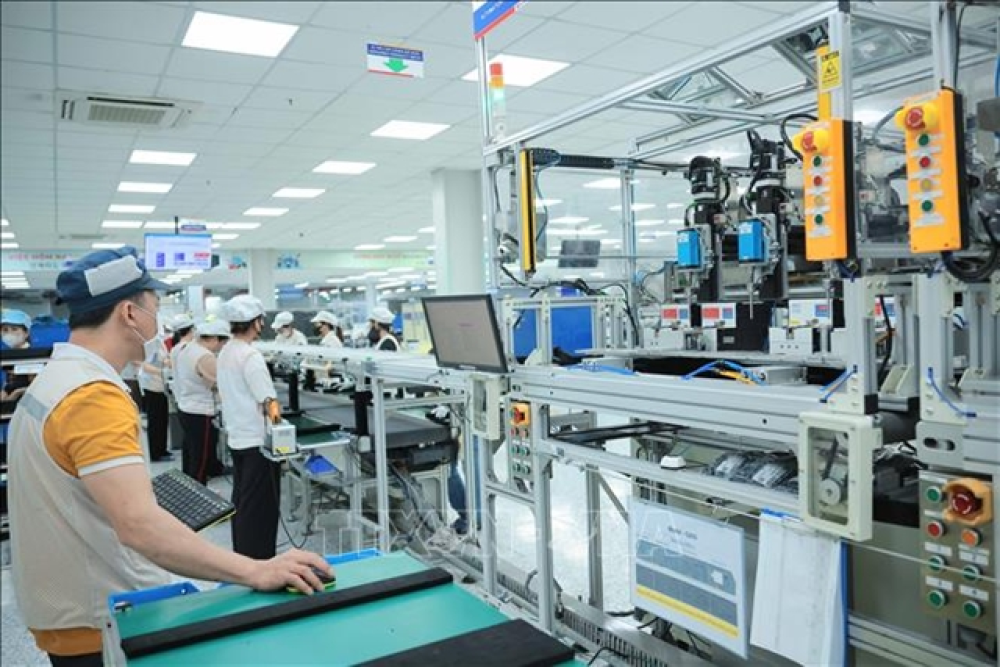
According to productivity experts, AI, the Internet of Things (IoT) and Big Data are becoming core technologies for transforming production management. They offer opportunities to raise productivity, improve product quality, strengthen competitiveness and enable enterprises to participate more deeply in global supply chains. Business decisions are increasingly supported by scientific analysis rather than relying primarily on experience, improving management accuracy and efficiency.

The integration of AI, IoT and Big Data is also accelerating the shift from traditional, experience-based production towards smart manufacturing. To make effective use of these technologies, however, enterprises need to invest in digital infrastructure, establish standardised data systems, develop digitally skilled workforces and adopt management systems based on international standards.

Deputy Minister of Science and Technology Lê Xuân Định said digital transformation and AI have brought profound changes worldwide. Technology is not only improving productivity, but also transforming management, quality control and market connectivity.

As markets impose stricter requirements for transparency, product quality, traceability and compliance, adopting digital platforms and AI has become essential to building a new growth model, he added.

New drivers of productivity growth

Hải said Việt Nam is stepping up investment in standards, productivity and quality infrastructure. Developing a strong cadre of productivity and quality experts, strengthening communications and scaling up model productivity initiatives nationwide are among the key priorities.

STAMEQ is also expanding international cooperation, leveraging the Asian Productivity Organization network and global certification bodies to strengthen Vietnamese enterprises’ capacity for international integration in productivity and standards.

In coordination with ministries, sectors and localities, STAMEQ will carry out measures to renew productivity and build a modern productivity and quality ecosystem through 2030. The aim is to maximise opportunities arising from digital transformation and international integration, making productivity and quality a central driver of economic growth.

Nguyễn Tùng Lâm, director of the Vietnam Productivity Institute, said digital transformation would be one of the most important drivers of labour productivity growth over the coming decade. Digital management platforms can help enterprises monitor production processes, optimise supply chains and ensure quality from the outset.

Meanwhile, ESG is emerging as a new measure of the quality of corporate development and an increasingly important requirement for export markets, investment funds and global supply chains.

ESG practices can help Vietnamese enterprises meet international standards while combining productivity improvements with green transformation and international integration in pursuit of sustainable development.

See all blog