Lumen Vietnam Fund

Blog

Vietnam’s air carriers expand international networks, grow fleets

Vietnam’s air carriers expand international networks, grow fleets

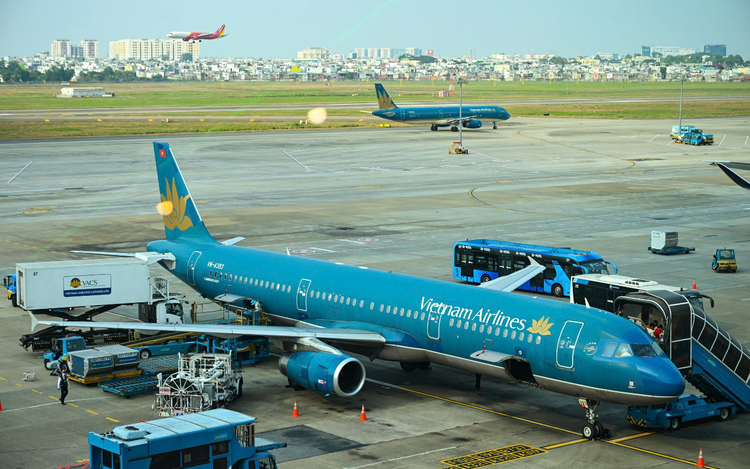
Vietnam’s aviation industry is entering a new phase of expansion, with major carriers launching new international routes, increasing flight frequencies, and accelerating fleet growth plans.

A significant milestone was reached on Tuesday when national flag carrier Vietnam Airlines operated the country’s first-ever direct flight between Hanoi and Amsterdam.

Flight VN83 departed Noi Bai International Airport in Hanoi at 3:50 am carrying nearly 300 passengers to the Dutch capital.

The route is operated using an Airbus A350 aircraft, with a flight time of some 12 hours.

Vietnam Airlines operates the Hanoi-Amsterdam air service on Tuesdays, Thursdays, and Saturdays.

The new route eliminates the need for passengers to transit through other hubs while providing convenient onward connections from Amsterdam to destinations across Europe.

Nguyen Quang Trung, deputy CEO of Vietnam Airlines, said that the route was part of the carrier’s strategy to selectively expand its international network and strengthen links between Vietnam and major global hubs of commerce, tourism, and trade.

With the addition of the air route to Amsterdam, Vietnam Airlines now operates 12 direct routes between Vietnam and Europe, serving eight destinations, including Paris, London, Frankfurt, Munich, Milan, Copenhagen, Moscow, and Amsterdam.

The national carrier is planning to increase the flight frequency on its Hanoi-Moscow route from three to four round-trip flights per week, starting from July 1.

Low-cost carrier Vietjet is also strengthening its European presence.

The airline is scheduled to launch a Hanoi-Prague (Czechia) service on October 10 using Airbus A330 aircraft.

The route will operate twice weekly and include a stopover in Almaty, Kazakhstan.

Travel firms view the simultaneous expansion by Vietnamese airlines into Europe as a positive development that will provide travelers with more options while supporting tourism, business travel, family visits, and cargo transportation.

Another carrier Vietravel Airlines, on the domestic front, opened its Hanoi-Buon Ma Thuot route on Monday and resumed operations on the Hanoi-Cam Ranh route for the peak summer season.

The Hanoi-Buon Ma Thuot service operates once daily, while the Hanoi-Cam Ranh route offers two flights per day.

The carrier has also increased frequencies on the Hanoi-Ho Chi Minh City route to five daily flights and added services on routes connecting Da Nang and Cam Ranh.

Internationally, Vietravel Airlines has started ticket sales for a new Ho Chi Minh City-Shenzhen route, scheduled to commence operations on August 15.

The airline is also organizing charter flights between Hanoi and Lanzhou, China, beginning in late June.

The carrier plans to add seven aircraft during the second half of the year, and aims to expand its fleet to up to 50 aircraft by 2030.

Meanwhile, Sun PhuQuoc Airways is preparing to launch three international routes connecting Vietnam with Russia, China, and Malaysia.

The airline had previously established agent networks in Taiwan, South Korea, Hong Kong, Singapore, Thailand, and India.

According to aviation experts, the wave of new routes and increased flight frequencies indicates that Vietnam’s aviation market is transitioning from a recovery phase to a period of network expansion and long-term growth.


Source: Tieu Bac - Cong Trung / Tuoi Tre News

Photo: Quang Dinh / Tuoi Tre
Latest Posts

New rules promote sustainable growth of corporate bond market

New rules promote sustainable growth of corporate bond market

According to the State Securities Commission, the new decree completes the legal framework, thoroughly address practical difficulties, and enhance transparency to protect the legitimate rights of investors, creating conditions for businesses to raise medium- and long-term capital to serve economic growth.

HÀ NỘI — New regulations on private placement of corporate bonds will help strengthen investor confidence and promote the development of a sustainable market, according to the State Securities Commission (SSC).

Decree 200/2026/NĐ-CP has taken effect this month to replace Decree No. 153/2020/NĐ-CP, Decree No. 65/2022/NĐ-CP and Decree No. 08/2023/NĐ-CP.

According to the SSC, the new decree completes the legal framework, thoroughly addresses practical difficulties and enhances transparency to protect the legitimate rights of investors, creating conditions for businesses to raise medium- and long-term capital to serve economic growth.

One of the notable changes in the decree is the clear distinction between the conditions, documents and procedures for offering securities according to two different groups of businesses: the first group includes public companies, securities companies and securities investment management companies; and the second group includes businesses not falling under the aforementioned categories.

“This separation aims to both facilitate businesses in the implementation process and to make it easier for management authorities to categorise inspections, audits and violations according to the specific characteristics of each group,” the SSC explains.

To ensure the financial safety of the system, the decree added a crucial condition: the debt of enterprises, including the value of bonds expected to be issued, must not exceed five times their equity capital, as stipulated in the amended Enterprise Law of 2025. However, this regulation also includes reasonable exceptions for State-owned enterprises, credit institutions, insurance companies, or entities issuing bonds to implement specific real estate projects.

In parallel with controlling financial leverage, Decree 200 also redefines the purpose of issuance and the management and use of capital. Accordingly, funds raised from bond issuance must be used to implement investment projects in accordance with the forms stipulated in the Investment Law.

Notably, enterprises are obligated to separately monitor this capital, ensuring that the management and use of capital are in line with the issuance plan announced to investors. In cases where an enterprise issues bonds through a second party to use the capital for an investment project, the issuer must establish strict monitoring measures to ensure the second party fulfils its commitments.

To create flexibility while maintaining security, the decree allows businesses to deposit funds in commercial banks or purchase certificates of deposit when the raised capital has not yet reached the disbursement deadline.

Simultaneously, the mechanism for changing bond terms or issuance purposes has been standardised. Specifically, it must be approved by the competent authority and receive the consent of bondholders representing 65 per cent or more of the total outstanding bonds. For bondholders who do not agree, the enterprise is required to complete the early repurchase of the bonds before implementing these changes.

Aiming for a professional bond market and minimising risks for individual investors, the decree has significant adjustments regarding the eligible participants in transactions.

Accordingly, professional individual investors are only allowed to purchase and transfer privately placed corporate bonds under certain conditions. Specifically, for bonds other than convertible bonds issued by financial institutions or public companies, individuals can only participate if the bond has a credit rating and is secured by collateral, or if there is a payment guarantee from a credit institution. The decree also clarifies that the collateral must have sufficient value to pay the entire principal of the bond and absolutely cannot include shares, stocks, or capital contributions of the issuing company itself. This regulation aims to ensure that the collateral is substantial and highly liquid in the event of a crisis.

In terms of documentation and information transparency, the new decree abolishes the regulation allowing the use of audited semi-annual or quarterly financial statements as a basis for determining issuance eligibility. Instead, businesses are required to rely on audited annual financial statements to accurately determine the debt-to-equity ratio, in line with the spirit of the 2025 Enterprise Law. For parent-subsidiary company models, both audited consolidated financial statements and audited financial statements of the parent company are mandatory.

The responsibilities of service providers such as consulting firms, issuing agents, auditing organisations, and credit rating agencies have also been increased. Specifically, these organisations are directly responsible for the accuracy and truthfulness of the reports and documents in the issuance dossier.

The decree also regulates the issuer's obligation to disclose information, which extends until the bonds are fully delinquent, including periodic reports on capital utilisation, to ensure maximum oversight for investors.

According to the SSC, the new decree is a significant step forward in perfecting the institutional framework for Việt Nam's capital market. By combining measures to tighten discipline with regulations to create transparency, the decree not only protects investors but also helps financially sound businesses find effective capital-raising channels.

“This helps bring the corporate bond market back onto a sustainable development trajectory and makes a positive contribution to the development of the economy,” the SSC said.

HCMC to use prime land assets worth $889 mln to pay Masterise for two major bridge projects

HCMC to use prime land assets worth $889 mln to pay Masterise for two major bridge projects

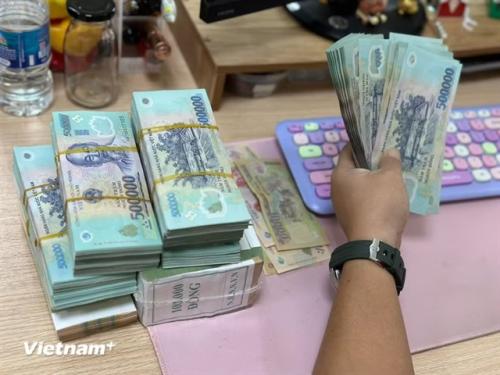
Ho Chi Minh City will use prime land assets worth more than VND23.4 trillion ($889.4 million) and public funds to compensate Masterise for two major bridge projects under build-transfer (BT) contracts, according to a new decision by the city People's Council.

The council approved adjustments to the investment policies for the Can Gio bridge and Phu My 2 bridge projects, both of which are being developed by the local developer under public-private partnership (PPP) arrangements.

For the Can Gio bridge project, authorities revised the payment structure after changes to the land bank earmarked for investor compensation. The city will now allocate two downtown land plots with a combined estimated value of more than VND7.5 trillion ($285.06 million) and use budget funds to cover the remainder of the payment obligation.

The sites include a property at 8-12 Le Duan boulevard, valued at VND3.42 trillion ($130 million), and another at 2-4-6 Hai Ba Trung street, valued at around VND4.11 trillion ($156.21 million).

The land assets account for roughly 69.7% of the BT contract value for the bridge construction, estimated at VND10.82 trillion ($411.25 million). The remaining VND3.74 trillion ($142.15 million) will be paid from the local budget after the land transfer is completed.

The Can Gio bridge project has a revised total investment of about VND13.35 trillion ($507.41 million), including interest expenses during construction, up by VND148 billion ($5.63 million) from the previously approved plan.

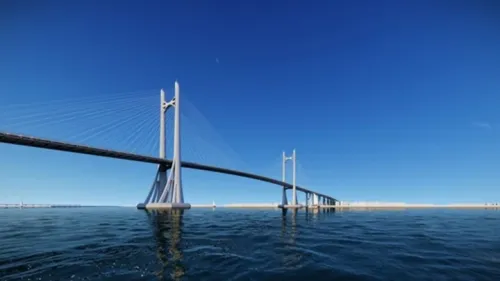
The bridge will span across the Soai Rap river, linking Can Gio with Nha Be communes and replacing the Binh Khanh ferry crossing. The project includes a bridge section of about three kilometers and connecting roads, bringing the total length to roughly seven kilometers.

Separately, the city approved adjustments to the Phu My 2 bridge project, for which land assets valued at approximately VND15.91 trillion ($604.72 million) are expected to be used as payment to the investor.

The bridge will connect Nguyen Huu Tho road in HCMC with Lien Cang road in the neighboring industrial city of Dong Nai. The route will stretch about 6.64 km, including 4.6 km within HCMC and 2.04 km in Dong Nai.

Designed with eight traffic lanes and supporting infrastructure, the project carries a total investment of about VND21.83 trillion ($829.73 million), including financing costs during construction. Completion is targeted for 2029.

Authorities view Phu My 2 as a strategic transport link that will strengthen connections between southern HCMC, Dong Nai's Nhon Trach commune, and Long Thanh International Airport.

Once completed, the bridge is expected to ease congestion on the existing Phu My bridge, National Highways 1 and 51, and the Ho Chi Minh City-Long Thanh expressway, while improving logistics efficiency and supporting economic activity across the southern key economic region.

US leads imports of Vietnam’s computers and electronics in five months

US leads imports of Vietnam’s computers and electronics in five months

VOV.VN - The US imported US$22.54 billion worth of computers, electronic products and components from Vietnam during the five-month period of 2026, making it Vietnam’s largest export market for the sector, ahead of China, the European Union and Hong Kong.

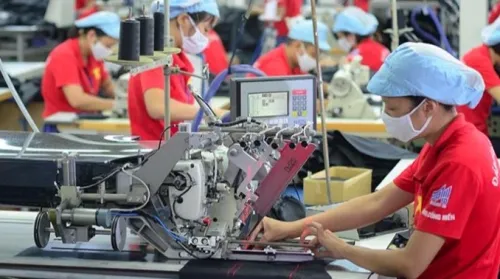
According to the Vietnam Customs, Vietnam’s exports of computers, electronic products and components totaled nearly US$56.2 billion in January-May, up 46.2% year-on-year.

The US remained the sector’s main growth driver, with exports to the market rising nearly 55% and accounting for more than 40% of total export value.

China ranked second with imports worth US$8.82 billion. The EU and Hong Kong also ranked among Vietnam’s leading export markets, with Hong Kong serving as a major transshipment hub for Vietnamese electronics.

Exports to the EU posted a strong recovery, while the ASEAN became another fast-growing market, with export value reaching US$3.02 billion, up nearly 77% year-on-year.

Other Asian markets, including the Republic of Korea (RoK), Taiwan (China), Japan and India, also continued to grow, indicating Vietnam’s ongoing efforts to diversify its export markets.

Several non-traditional markets such as Mexico, the United Kingdom, Australia and Canada also recorded strong growth.

In 2025, Vietnam’s exports of computers, electronic products and components surpassed US$100 billion for the first time. With strong momentum in early 2026, export value for the sector is expected to significantly exceed last year’s level.


See all blog