Lumen Vietnam Fund

Blog

Vietnam industrial real estate enters race for new capital

Vietnam industrial real estate enters race for new capital

As foreign direct investment becomes increasingly selective and low costs cease to be a competitive advantage, Vietnam’s industrial real estate developers are being forced to reinvent themselves, demonstrating project execution capabilities, cost management expertise, and compliance with green standards.

When land banks no longer enough

For the past two decades, Vietnam’s industrial real estate has relied on a “golden trio” of advantages: inexpensive land, low-cost labor, and tax incentives. These factors fulfilled their historical role by attracting the first wave of FDI and laying the foundation for the country’s industrialization. Today, however, they are no longer sufficient to retain a new generation of investors.

“Finding cheap land, securing incentives, and building as quickly as possible is no longer a winning formula for industrial real estate,” said Vu Minh Chi, director of industrial services at Avison Young Vietnam.

According to Chi, emerging sectors such as energy, technology, and digital infrastructure require industrial parks to meet highly specific technical requirements in order to ensure efficient operating costs and support broader industrial ecosystems.

“In the past, companies typically looked for cleared land with lease terms of 25 to 30 years. Today, FDI investors often require leases of at least 35 years, along with a range of additional conditions to support long-term investment planning and cash flow calculations,” he said.

Sharing the same view, Nguyen Anh Nguyet, an industrial park analyst at FPT Securities (FPTS), noted that the sector is transitioning from a period of limited supply to one of strong expansion, with industrial park land expected to increase by roughly 14% by 2028.

At the same time, land clearance and construction costs have risen by between 25% and more than 81% compared with previous periods. Green and smart industrial parks require construction investments that are 20-30% higher than conventional developments.

“This means that merely owning a land bank is no longer enough. To attract investment capital, developers must also demonstrate strong cost management and cash flow control capabilities at a time when investment expenses are rising sharply,” she said.

On investment criteria, Nguyet said that tenants, particularly foreign investors, are no longer simply leasing land but are selecting production environments that align with their operational requirements, prioritizing environmental, social and governance (ESG) standards, low-carbon emissions, and stable energy infrastructure.

The FPTS expert expected industrial land rents to continue rising, albeit at a slower pace of around 2-3% annually due to abundant new supply. Northern Vietnam is seen as having greater room for rental growth than the south, given its lower current price base and its strong appeal to high-tech manufacturers such as Samsung, Apple, and Foxconn.

Industrial real estate transforms in 2026

The business performance of several industry players reflects these broader market shifts.

According to its Q1 financial results, core industrial real estate revenue at major developer Becamex IDC Corp. (HoSE: BCM) fell 47% year-on-year to VND754 billion ($28.64 million), weighing on the company’s overall performance.

Becamex reported net revenue of VND1.1 trillion ($41.78 milion) for the quarter, down 40% from a year earlier, while net profit declined 22% to nearly VND280 billion ($10.63 million), marking its weakest quarterly result since the second quarter of 2024.

Documents prepared for the company’s upcoming annual shareholders’ meeting on June 28 show that Becamex is targeting consolidated revenue of VND10.23 trillion ($388.53 million) and after-tax profit of VND3.88 trillion ($147.36 million) this year, up 4% and 10%, respectively, from 2025.

After the first quarter, the company had completed just 12% and 7% of its respective revenue and profit targets.
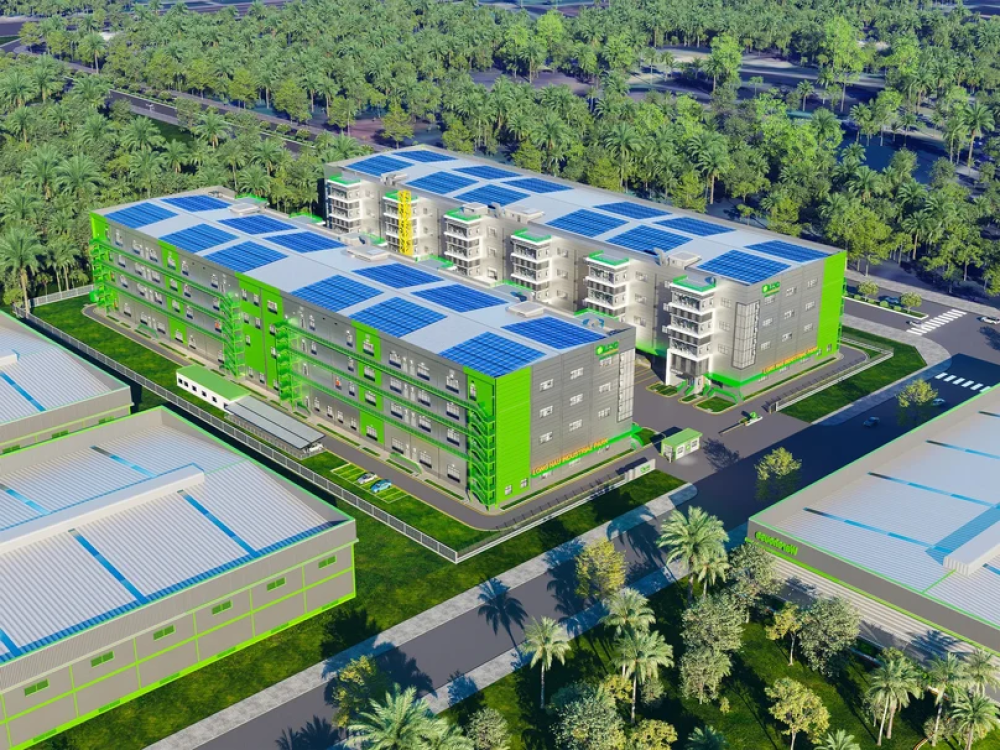
The group plans to continue developing next-generation smart eco-industrial parks, focusing on renewable energy, water recycling, and emissions reduction. Key projects include the 380-hectare Phase 2 of Bau Bang Expansion Industrial Park and the 700-hectare Cay Truong Industrial Park in Ho Chi Minh City.

The firm aims to gradually transform traditional industrial parks through automation and sustainability initiatives. It is also studying investments in digital technology zones and science and technology industrial parks in HCMC in the coming years.

Another notable name highlighted by FPTS is Sai Gon VRG Investment Corporation (HoSE: SIP). In the first quarter, the company posted a 12% year-on-year increase in revenue to VND2.17 trillion ($82.42 million), although after-tax profit declined 11% to VND357 billion ($13.56 million). The company had achieved 41% of its full-year profit target.

Industrial land leasing revenue remained stable at VND117 billion ($4.44 million), with gross margins holding at 70.6%. Leasing activity was particularly strong, with more than 49 hectares signed during the first quarter of 2026, equivalent to 72% of the total area leased throughout 2025 and 82% of the company’s full-year leasing target for 2026.

Of that total, 35 hectares were leased at Phuoc Dong Industrial Park in Tay Ninh province, mainly to rubber product manufacturers, while 14.3 hectares at Loc An-Binh Son Industrial Park in Dong Nai were leased to logistics operators Transimex and CJ Korea Logistics.

ACB Securities (ACBS) expected investment attraction at Loc An-Binh Son Industrial Park and Phase 2 of Long Duc Industrial Park to remain encouraging, supported by Dong Nai province’s centrally governed city status and the planned commercial operation of Long Thanh International Airport by the end of 2026. With several new industrial parks set to launch in Dong Nai, rental rates at these projects are forecast to remain competitive rather than experiencing sharp increases.

Meanwhile, Long Hau Corporation (HoSE: LHG), one of the pioneers in ESG-focused industrial real estate development, reported positive results, having achieved 34% and 68% of the year's revenue and profit targets approved at the 2026 annual shareholders’ meeting.

In the first quarter, Long Hau generated net revenue of more than VND176 billion ($6.68 million), down 25% year-on-year, largely due to lower income from serviced land leases and built-to-suit factory rentals. Despite the decline in revenue, its net profit edged higher to more than VND112 billion ($4.25 million).

In its core business segment, Long Hau currently operates approximately 200,000 square meters of ready-built factories. In March 2026, the company broke ground on Long Hau LEED Park, an ESG-compliant warehouse and manufacturing complex developed under the internationally recognized LEED Certified green building standard.

The project incorporates energy optimization solutions, water management systems, improved workplace environmental quality, and environmentally friendly construction materials. Scheduled for completion of Phase 1 in November 2026, Long Hau LEED Park targets industries including electronics, medical equipment, precision engineering, logistics, and research and development - sectors that are expected to drive the next wave of FDI inflows. It is among the few production and logistics developments in southern Vietnam to meet LEED standards.

Amid market volatility and adjustments to tax incentive policies, Long Hau has shifted its investment attraction strategy away from incentives and toward core strengths such as location, infrastructure quality, production space, and integrated service ecosystems. The company is among the few industrial park developers in Vietnam that fully satisfy all four ESG pillars.

For 2026, Long Hau has identified increasing factory occupancy rates as a key priority to ensure operational efficiency and achieve its revenue targets. Current occupancy exceeds 95%, with the first phase of its six-story multi-storey factory reaching 97% occupancy and the second phase, comprising nine floors, about 95%.

Source: Lien Thuong, Minh Hue

Photo: Photo courtesy of Becamex
Latest Posts

New rules promote sustainable growth of corporate bond market

New rules promote sustainable growth of corporate bond market

According to the State Securities Commission, the new decree completes the legal framework, thoroughly address practical difficulties, and enhance transparency to protect the legitimate rights of investors, creating conditions for businesses to raise medium- and long-term capital to serve economic growth.

HÀ NỘI — New regulations on private placement of corporate bonds will help strengthen investor confidence and promote the development of a sustainable market, according to the State Securities Commission (SSC).

Decree 200/2026/NĐ-CP has taken effect this month to replace Decree No. 153/2020/NĐ-CP, Decree No. 65/2022/NĐ-CP and Decree No. 08/2023/NĐ-CP.

According to the SSC, the new decree completes the legal framework, thoroughly addresses practical difficulties and enhances transparency to protect the legitimate rights of investors, creating conditions for businesses to raise medium- and long-term capital to serve economic growth.

One of the notable changes in the decree is the clear distinction between the conditions, documents and procedures for offering securities according to two different groups of businesses: the first group includes public companies, securities companies and securities investment management companies; and the second group includes businesses not falling under the aforementioned categories.

“This separation aims to both facilitate businesses in the implementation process and to make it easier for management authorities to categorise inspections, audits and violations according to the specific characteristics of each group,” the SSC explains.

To ensure the financial safety of the system, the decree added a crucial condition: the debt of enterprises, including the value of bonds expected to be issued, must not exceed five times their equity capital, as stipulated in the amended Enterprise Law of 2025. However, this regulation also includes reasonable exceptions for State-owned enterprises, credit institutions, insurance companies, or entities issuing bonds to implement specific real estate projects.

In parallel with controlling financial leverage, Decree 200 also redefines the purpose of issuance and the management and use of capital. Accordingly, funds raised from bond issuance must be used to implement investment projects in accordance with the forms stipulated in the Investment Law.

Notably, enterprises are obligated to separately monitor this capital, ensuring that the management and use of capital are in line with the issuance plan announced to investors. In cases where an enterprise issues bonds through a second party to use the capital for an investment project, the issuer must establish strict monitoring measures to ensure the second party fulfils its commitments.

To create flexibility while maintaining security, the decree allows businesses to deposit funds in commercial banks or purchase certificates of deposit when the raised capital has not yet reached the disbursement deadline.

Simultaneously, the mechanism for changing bond terms or issuance purposes has been standardised. Specifically, it must be approved by the competent authority and receive the consent of bondholders representing 65 per cent or more of the total outstanding bonds. For bondholders who do not agree, the enterprise is required to complete the early repurchase of the bonds before implementing these changes.

Aiming for a professional bond market and minimising risks for individual investors, the decree has significant adjustments regarding the eligible participants in transactions.

Accordingly, professional individual investors are only allowed to purchase and transfer privately placed corporate bonds under certain conditions. Specifically, for bonds other than convertible bonds issued by financial institutions or public companies, individuals can only participate if the bond has a credit rating and is secured by collateral, or if there is a payment guarantee from a credit institution. The decree also clarifies that the collateral must have sufficient value to pay the entire principal of the bond and absolutely cannot include shares, stocks, or capital contributions of the issuing company itself. This regulation aims to ensure that the collateral is substantial and highly liquid in the event of a crisis.

In terms of documentation and information transparency, the new decree abolishes the regulation allowing the use of audited semi-annual or quarterly financial statements as a basis for determining issuance eligibility. Instead, businesses are required to rely on audited annual financial statements to accurately determine the debt-to-equity ratio, in line with the spirit of the 2025 Enterprise Law. For parent-subsidiary company models, both audited consolidated financial statements and audited financial statements of the parent company are mandatory.

The responsibilities of service providers such as consulting firms, issuing agents, auditing organisations, and credit rating agencies have also been increased. Specifically, these organisations are directly responsible for the accuracy and truthfulness of the reports and documents in the issuance dossier.

The decree also regulates the issuer's obligation to disclose information, which extends until the bonds are fully delinquent, including periodic reports on capital utilisation, to ensure maximum oversight for investors.

According to the SSC, the new decree is a significant step forward in perfecting the institutional framework for Việt Nam's capital market. By combining measures to tighten discipline with regulations to create transparency, the decree not only protects investors but also helps financially sound businesses find effective capital-raising channels.

“This helps bring the corporate bond market back onto a sustainable development trajectory and makes a positive contribution to the development of the economy,” the SSC said.

HCMC to use prime land assets worth $889 mln to pay Masterise for two major bridge projects

HCMC to use prime land assets worth $889 mln to pay Masterise for two major bridge projects

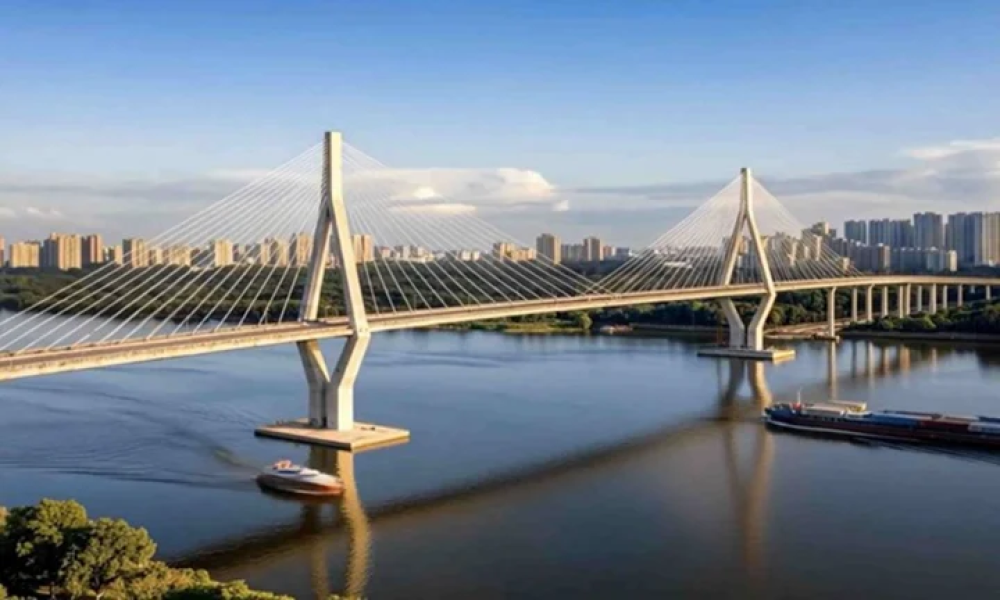
Ho Chi Minh City will use prime land assets worth more than VND23.4 trillion ($889.4 million) and public funds to compensate Masterise for two major bridge projects under build-transfer (BT) contracts, according to a new decision by the city People's Council.

The council approved adjustments to the investment policies for the Can Gio bridge and Phu My 2 bridge projects, both of which are being developed by the local developer under public-private partnership (PPP) arrangements.

For the Can Gio bridge project, authorities revised the payment structure after changes to the land bank earmarked for investor compensation. The city will now allocate two downtown land plots with a combined estimated value of more than VND7.5 trillion ($285.06 million) and use budget funds to cover the remainder of the payment obligation.

The sites include a property at 8-12 Le Duan boulevard, valued at VND3.42 trillion ($130 million), and another at 2-4-6 Hai Ba Trung street, valued at around VND4.11 trillion ($156.21 million).

The land assets account for roughly 69.7% of the BT contract value for the bridge construction, estimated at VND10.82 trillion ($411.25 million). The remaining VND3.74 trillion ($142.15 million) will be paid from the local budget after the land transfer is completed.

The Can Gio bridge project has a revised total investment of about VND13.35 trillion ($507.41 million), including interest expenses during construction, up by VND148 billion ($5.63 million) from the previously approved plan.

The bridge will span across the Soai Rap river, linking Can Gio with Nha Be communes and replacing the Binh Khanh ferry crossing. The project includes a bridge section of about three kilometers and connecting roads, bringing the total length to roughly seven kilometers.

Separately, the city approved adjustments to the Phu My 2 bridge project, for which land assets valued at approximately VND15.91 trillion ($604.72 million) are expected to be used as payment to the investor.

The bridge will connect Nguyen Huu Tho road in HCMC with Lien Cang road in the neighboring industrial city of Dong Nai. The route will stretch about 6.64 km, including 4.6 km within HCMC and 2.04 km in Dong Nai.

Designed with eight traffic lanes and supporting infrastructure, the project carries a total investment of about VND21.83 trillion ($829.73 million), including financing costs during construction. Completion is targeted for 2029.

Authorities view Phu My 2 as a strategic transport link that will strengthen connections between southern HCMC, Dong Nai's Nhon Trach commune, and Long Thanh International Airport.

Once completed, the bridge is expected to ease congestion on the existing Phu My bridge, National Highways 1 and 51, and the Ho Chi Minh City-Long Thanh expressway, while improving logistics efficiency and supporting economic activity across the southern key economic region.

US leads imports of Vietnam’s computers and electronics in five months

US leads imports of Vietnam’s computers and electronics in five months

VOV.VN - The US imported US$22.54 billion worth of computers, electronic products and components from Vietnam during the five-month period of 2026, making it Vietnam’s largest export market for the sector, ahead of China, the European Union and Hong Kong.

According to the Vietnam Customs, Vietnam’s exports of computers, electronic products and components totaled nearly US$56.2 billion in January-May, up 46.2% year-on-year.

The US remained the sector’s main growth driver, with exports to the market rising nearly 55% and accounting for more than 40% of total export value.

China ranked second with imports worth US$8.82 billion. The EU and Hong Kong also ranked among Vietnam’s leading export markets, with Hong Kong serving as a major transshipment hub for Vietnamese electronics.

Exports to the EU posted a strong recovery, while the ASEAN became another fast-growing market, with export value reaching US$3.02 billion, up nearly 77% year-on-year.

Other Asian markets, including the Republic of Korea (RoK), Taiwan (China), Japan and India, also continued to grow, indicating Vietnam’s ongoing efforts to diversify its export markets.

Several non-traditional markets such as Mexico, the United Kingdom, Australia and Canada also recorded strong growth.

In 2025, Vietnam’s exports of computers, electronic products and components surpassed US$100 billion for the first time. With strong momentum in early 2026, export value for the sector is expected to significantly exceed last year’s level.


See all blog