Lumen Vietnam Fund

Blog

Việt Nam’s trade surplus with EU expands amid economic headwinds

Việt Nam’s trade surplus with EU expands amid economic headwinds

Việt Nam’s trade with the European Union (EU) remained resilient in the first five months of 2026, with exports posting robust double-digit growth and the country’s trade surplus with the bloc climbing 11.3 per cent year-on-year to US$18.1 billion.

HÀ NỘI — Việt Nam’s trade with the European Union (EU) remained resilient in the first five months of 2026, with exports posting robust double-digit growth and the country’s trade surplus with the bloc climbing 11.3 per cent year-on-year to US$18.1 billion, despite slowing economic activity in Europe.

Trade between Việt Nam and the EU maintained momentum during the January-May period, supported by the EU-Việt Nam Free Trade Agreement (EVFTA) and sustained demand for key Vietnamese exports, even as the EU grappled with inflationary pressures and sluggish consumer spending.

Latest data from the Customs Department showed bilateral trade reaching $36 billion during the five-month period.

Exports to the EU rose 16.9 per cent from a year earlier to $26 billion, while imports increased 21.6 per cent to nearly $8 billion, leaving Việt Nam with a trade surplus of about $18.1 billion.

Strong performances were recorded across major export categories, including electronics, garments and textiles, wood products and agricultural commodities. Imports from the EU were concentrated on machinery, equipment and production technologies.

The bloc’s growing contribution also helped lift Việt Nam’s total trade turnover to more than $445 billion in the first five months, up 25 per cent year-on-year.

Việt Nam is currently the EU’s largest trading partner in ASEAN.

In 2025, bilateral trade approached $74 billion, with Vietnamese exports to the bloc reaching $56.2 billion, up 8.6 per cent, while imports rose 5.4 per cent to $17.6 billion. The figures translated into a record trade surplus of $38.6 billion.

Last year, computers, electronic products and components led export earnings at $10.89 billion, followed by machinery, equipment and spare parts at $7.42 billion, and phones and components at $6.9 billion, all posting growth from the previous year.

The Ministry of Industry and Trade attributed the strong performance largely to the EVFTA, which has significantly expanded market access for Vietnamese goods in the EU’s nearly 500-million-consumer market.

Rising exports and a steadily widening trade surplus have further strengthened Việt Nam’s role in global supply chains.

Since the agreement took effect in August 2020, bilateral trade has surged.

Bilateral trade turnover increased from $49.7 billion in 2020 to $68.4 billion in 2024 before approaching $74 billion in 2025. Over the same period, Việt Nam’s exports to the EU grew from $35.1 billion to $56.2 billion, while its trade surplus nearly doubled from $20.5 billion to almost $39 billion.

The sustained growth highlights the Việt Nam – EU economic partnership as one of the country’s most stable and successful trade relationships.

European businesses increasingly regard Việt Nam as a strategic link in global supply chains thanks to its strong FDI attraction, diversified export markets and extensive network of free trade agreements.

Raising supplier standards

The steady rise in exports and trade surplus since the EVFTA entered into force reflects Vietnamese businesses’ growing ability to meet the EU’s stringent quality and regulatory requirements. Many products have effectively leveraged tariff preferences under the agreement to generate export revenues exceeding $1 billion, while local firms have deepened their integration into the supply chains of European multinational corporations.

At the same time, exporters face mounting pressure as the EU tightens rules on environmental protection, carbon emissions, product traceability and corporate responsibility.

Đậu Anh Tuấn, vice decretary-general and director of the Legal Department at the Vietnam Chamber of Commerce and Industry (VCCI), said globalisation continues to create opportunities, but businesses must also adapt to increasingly demanding standards on sustainability, transparency and accountability.

The EU currently accounts for around 13 per cent of Việt Nam’s total exports and is becoming an increasingly important destination as the country seeks to diversify markets amid growing global trade uncertainties.

According to the Ministry of Industry and Trade, the EU trade landscape is being reshaped by three major trends: US tariff policies, green transition and digital transformation. Together, these forces are redefining global supply chains, import regulations and supplier expectations.

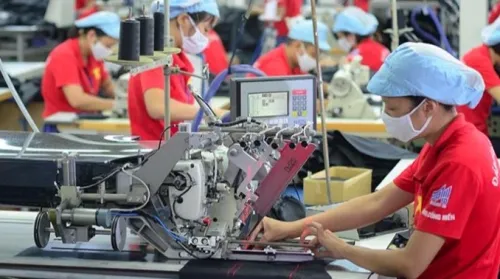
To stay competitive, many textile and garment manufacturers are accelerating investments in green production and sustainable development.

Garco 10 Corporation, for example, is investing heavily in modern equipment, digitalisation and smart manufacturing lines at its new factory in Hưng Yên province.

More than VNĐ142 billion ($5.39 million) has been earmarked for equipment upgrades and digital transformation, alongside nearly VNĐ40 billion for construction and VNĐ29.5 billion for additional investment projects.

Trần Ngọc Quân, trade counsellor at the Vietnam Trade Office in Belgium and the EU, said Vietnamese enterprises must proactively align with the requirements of the European Green Deal while advancing circular economy models, sustainable production and responsible consumption to secure long-term growth in the European market.


Source: VNA/VNS
Latest Posts

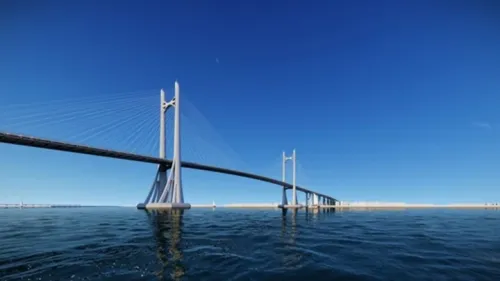
HCMC to use prime land assets worth $889 mln to pay Masterise for two major bridge projects

HCMC to use prime land assets worth $889 mln to pay Masterise for two major bridge projects

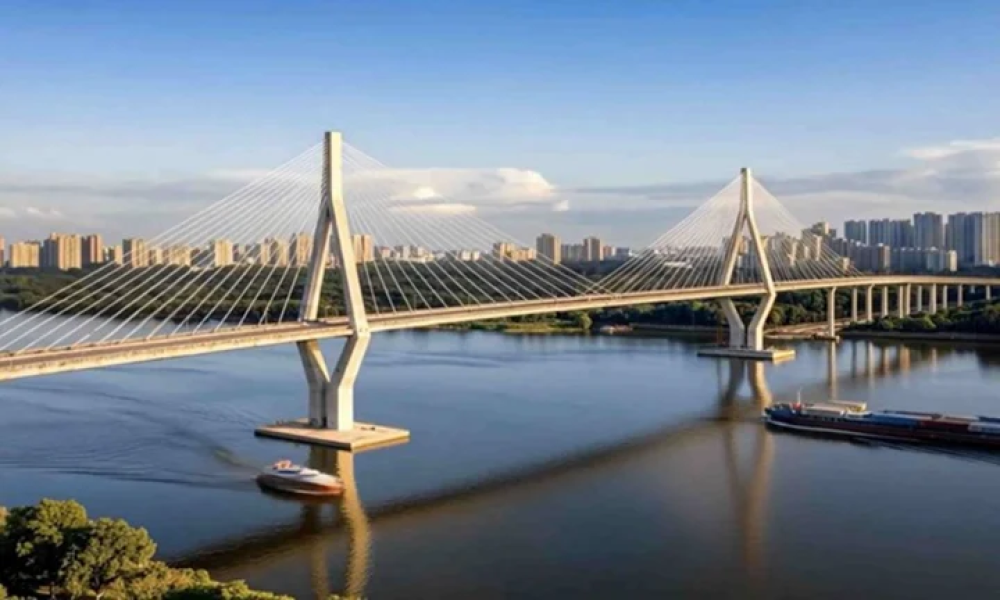
Ho Chi Minh City will use prime land assets worth more than VND23.4 trillion ($889.4 million) and public funds to compensate Masterise for two major bridge projects under build-transfer (BT) contracts, according to a new decision by the city People's Council.

The council approved adjustments to the investment policies for the Can Gio bridge and Phu My 2 bridge projects, both of which are being developed by the local developer under public-private partnership (PPP) arrangements.

For the Can Gio bridge project, authorities revised the payment structure after changes to the land bank earmarked for investor compensation. The city will now allocate two downtown land plots with a combined estimated value of more than VND7.5 trillion ($285.06 million) and use budget funds to cover the remainder of the payment obligation.

The sites include a property at 8-12 Le Duan boulevard, valued at VND3.42 trillion ($130 million), and another at 2-4-6 Hai Ba Trung street, valued at around VND4.11 trillion ($156.21 million).

The land assets account for roughly 69.7% of the BT contract value for the bridge construction, estimated at VND10.82 trillion ($411.25 million). The remaining VND3.74 trillion ($142.15 million) will be paid from the local budget after the land transfer is completed.

The Can Gio bridge project has a revised total investment of about VND13.35 trillion ($507.41 million), including interest expenses during construction, up by VND148 billion ($5.63 million) from the previously approved plan.

The bridge will span across the Soai Rap river, linking Can Gio with Nha Be communes and replacing the Binh Khanh ferry crossing. The project includes a bridge section of about three kilometers and connecting roads, bringing the total length to roughly seven kilometers.

Separately, the city approved adjustments to the Phu My 2 bridge project, for which land assets valued at approximately VND15.91 trillion ($604.72 million) are expected to be used as payment to the investor.

The bridge will connect Nguyen Huu Tho road in HCMC with Lien Cang road in the neighboring industrial city of Dong Nai. The route will stretch about 6.64 km, including 4.6 km within HCMC and 2.04 km in Dong Nai.

Designed with eight traffic lanes and supporting infrastructure, the project carries a total investment of about VND21.83 trillion ($829.73 million), including financing costs during construction. Completion is targeted for 2029.

Authorities view Phu My 2 as a strategic transport link that will strengthen connections between southern HCMC, Dong Nai's Nhon Trach commune, and Long Thanh International Airport.

Once completed, the bridge is expected to ease congestion on the existing Phu My bridge, National Highways 1 and 51, and the Ho Chi Minh City-Long Thanh expressway, while improving logistics efficiency and supporting economic activity across the southern key economic region.

US leads imports of Vietnam’s computers and electronics in five months

US leads imports of Vietnam’s computers and electronics in five months

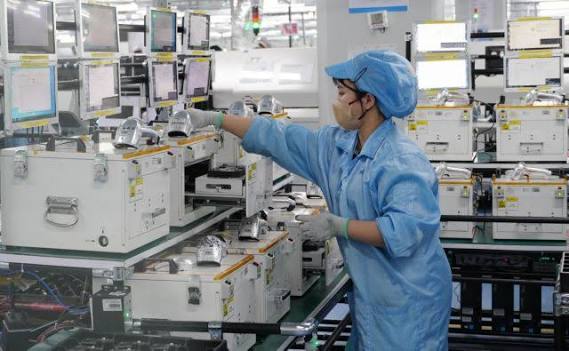
VOV.VN - The US imported US$22.54 billion worth of computers, electronic products and components from Vietnam during the five-month period of 2026, making it Vietnam’s largest export market for the sector, ahead of China, the European Union and Hong Kong.

According to the Vietnam Customs, Vietnam’s exports of computers, electronic products and components totaled nearly US$56.2 billion in January-May, up 46.2% year-on-year.

The US remained the sector’s main growth driver, with exports to the market rising nearly 55% and accounting for more than 40% of total export value.

China ranked second with imports worth US$8.82 billion. The EU and Hong Kong also ranked among Vietnam’s leading export markets, with Hong Kong serving as a major transshipment hub for Vietnamese electronics.

Exports to the EU posted a strong recovery, while the ASEAN became another fast-growing market, with export value reaching US$3.02 billion, up nearly 77% year-on-year.

Other Asian markets, including the Republic of Korea (RoK), Taiwan (China), Japan and India, also continued to grow, indicating Vietnam’s ongoing efforts to diversify its export markets.

Several non-traditional markets such as Mexico, the United Kingdom, Australia and Canada also recorded strong growth.

In 2025, Vietnam’s exports of computers, electronic products and components surpassed US$100 billion for the first time. With strong momentum in early 2026, export value for the sector is expected to significantly exceed last year’s level.


Nghe An launches $720 mln climate change adaptation project

Nghe An launches $720 mln climate change adaptation project

This includes roughly $595 million in loans from the World Bank (WB) and approximately $125 million in local counterpart funding.

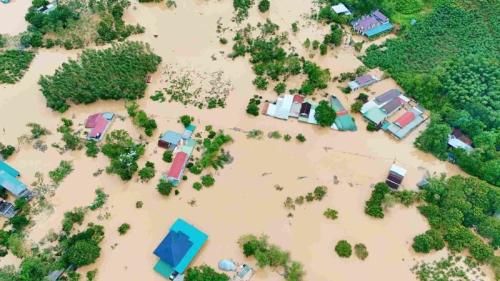
Nghe An is set to launch a $720 million climate change adaptation and eco-tourism infrastructure project in the province's western region. This includes roughly $595 million in loans from the World Bank (WB) and approximately $125 million from local counterpart funding.

According to the proposal, the project is divided into four components. Among them, the component on developing Vinh’s urban infrastructure to adapt to climate change is the largest, with a total estimated capital of about $415 million.

The funds will be used to upgrade urban infrastructure by integrating stormwater drainage and transportation systems at a cost of around $258 million; expand the wastewater collection and treatment system with about $65 million; and strengthen the drainage capacity of major rivers and canals with about $60 million.

Additionally, a component dedicated to strengthening solid waste management through a circular economy approach has a projected investment of $50 million. This segment focuses on improving waste management efficiency, developing material recovery facilities, and promoting circular economy models.

Another notable feature of the project is the $170 million component dedicated to upgrading infrastructure to drive tourism development in Western Nghe An. Under this plan, the province will prioritize the construction of roads connecting to tourist sites along National Highway 7A, upgrade technical infrastructure at central hubs, and support local villages in developing community-based tourism.

Furthermore, between $78 million and $85 million has been allocated for technical assistance and capacity building to ensure the effective management and implementation of all investment items.

During a working session on June 19 between the Provincial People’s Committee and the World Bank Vietnam to consult on the adjusted investment list and conduct a preliminary investment screening for the project, World Bank representatives stated that their task force had previously conducted several field surveys and held specialized meetings with local authorities and relevant agencies to assess the current situation, identify investment needs, and finalize the project proposals.


See all blog