Lumen Vietnam Fund

Blog

Việt Nam’s hi-tech exports surpass 50% as startup ranking hits record

Việt Nam’s hi-tech exports surpass 50% as startup ranking hits record

Việt Nam climbed five places to rank 50th globally in StartupBlink’s Global Startup Ecosystem Index 2026, its highest position ever.

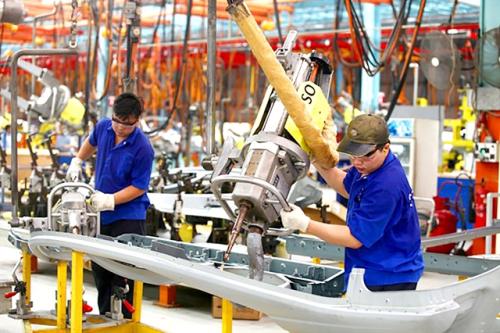
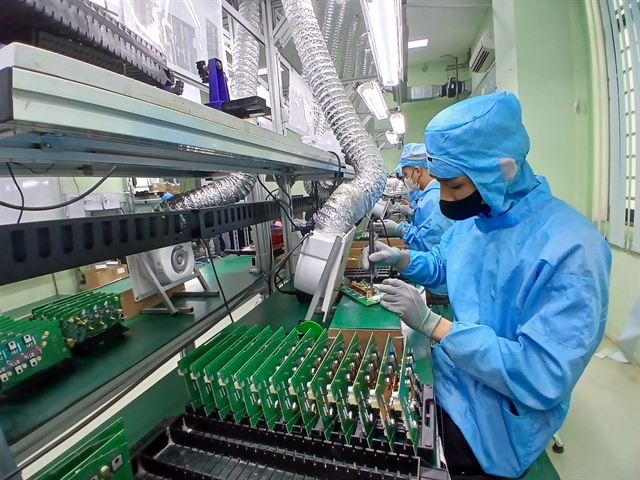
HÀ NỘI — Hi-tech products accounted for 50.76 per cent of Việt Nam’s total exports in the first quarter, reported the Ministry of Science and Technology.

Notably, Việt Nam climbed five places to rank 50th globally in StartupBlink’s Global Startup Ecosystem Index 2026, its highest position ever.

The domestic innovation ecosystem continued to expand, with 963 sci-tech enterprises, 20 sci-tech exchanges and 37 innovation centres operating across 26 out of the 34 cities and provinces nationwide.

On digital transformation, the rate of fully online administrative procedures reached 50.2 per cent in May. The digital economy contributed an estimated 14.02 per cent of GDP in 2025, equivalent to about US$72.1 billion.

Việt Nam also held its position among the world’s leading countries for telecom infrastructure. Mobile broadband speeds hit 207.3 Mbps and fixed broadband averaged 287.33 Mbps, placing the country 11th globally in both categories.

To date, Việt Nam has recorded 110.5 million mobile broadband subscriptions, including 24.29 million 5G users, alongside 25.62 million fixed broadband subscriptions. Postal service revenue in May was estimated at VNĐ8.5 trillion, up 30 per cent from a year earlier.

May saw several key diplomatic and science events, including the Việt Nam–India Innovation Forum in New Delhi attended by Party General Secretary and State President Tô Lâm, talks between Việt Nam and Sri Lanka on cooperation in 6G, drones and satellite technology, and the third meeting of the Government Steering Committee on science, technology, innovation and digital transformation.


Source: VNA/VNS

Photo: VNA/VNS Photo

Latest Posts

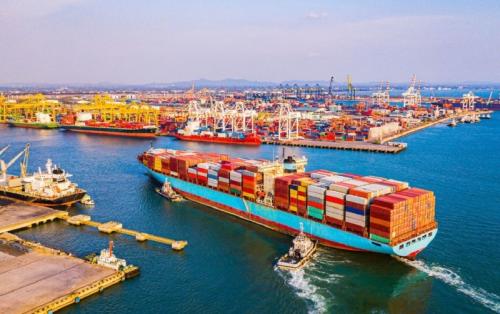
Vietnam’s trade turnover hits $445bln in 5M

Vietnam’s trade turnover hits $445bln in 5M

The figure representing a year-on-year rise of 25%.

Vietnam’s total trade turnover reached $445.12 billion in the first five months of 2026, up 25% from a year earlier, according to data released by the National Statistics Office on June 3.

Exports rose 19.5% year-on-year to $215.66 billion, while imports jumped 30.8% to $229.46 billion, resulting in a trade deficit of $13.8 billion. In the same period last year, the country recorded a trade surplus of $5.1 billion.

In May alone, total import-export turnover amounted to $99.07 billion, up 3.2% from April and 25.8% higher than a year earlier. Exports reached $46.93 billion, increasing 2.1% month-on-month, while imports climbed 4.3% to $52.14 billion, creating a monthly trade deficit of $5.21 billion.

The foreign-invested sector continued to dominate Vietnam’s export performance, accounting for nearly 80% of total exports with shipments worth $172.16 billion, up 24.7% year-on-year.

Processed industrial goods remained the country’s largest export category, generating $193.71 billion and representing 89.8% of total exports. Agricultural and forestry products contributed $15.79 billion, while seafood exports reached $4.67 billion.

The US remained Vietnam’s largest export market, with turnover of $69.6 billion, while China was the country’s biggest source of imports at $92.6 billion.


HCM City’s great advantages in growing its mechanical engineering industry

HCM City’s great advantages in growing its mechanical engineering industry

HCM City’s mechanical engineering industry is expected to grow strongly, supported by infrastructure investment, supply chain shifts and innovation, helping cement its role as the country’s leading engineering hub, industry insiders said.

HCM CITY — HCM City’s mechanical engineering industry is poised for strong growth, driven by infrastructure investment, global supply chain shifts, and innovation by businesses, while its long-established industrial base, favourable logistics network, and increasingly supportive policies are expected to help it maintain its position as the country’s leading mechanical engineering hub, industry insiders said.

The city is home to thousands of enterprises operating in precision engineering, machinery manufacturing, steel structures, and supporting industries.

Many city-based firms have participated in major domestic and international projects.

Đại Dũng Metallic Manufacture Construction and Trade Corporation, for example, supplied thousands of tonnes of steel structures for stadiums used during the 2022 World Cup in Qatar.

In recent years, many mechanical engineering enterprises in the city have proactively invested in automation, advanced technologies, and production expansion to integrate more deeply into global supply chains.

In eastern HCM City, several companies that previously focused on supplying products for the domestic oil and gas sector are shifting towards manufacturing equipment for the energy, infrastructure, and heavy industry sectors.

One example is Southern Petroleum Construction Joint Stock Company (Alpha ECG), which has expanded into producing equipment for renewable energy plants, maritime applications, and industrial structures.

Around 90 per cent of the company’s products are now exported to markets like the US, Germany, Australia, Norway, South Korea, and Japan.

Similarly, Minh Việt Engineering and Construction JSC has evolved from a shipbuilding and oil-and-gas mechanical workshop into a manufacturer serving industrial and energy projects with six large factories.

In March, its new factory at the An Ngãi Industrial Cluster in Long Điền Commune reached full capacity, raising output to around 2,500 tonnes per month.

It has orders for until the end of 2026, prompting it to recruit an additional 300 workers.

Hoàng Trung Thao, director of the An Ngãi Factory under Minh Việt Engineering and Construction JSC, told Sài Gòn Giải Phóng (Liberated Saigon) newspaper: “We plan to expand workshops and invest in additional machinery, particularly modern equipment such as welding robots, CNC cutting machines, and precision machining tools.

“At the same time, the company is accelerating workforce training to meet future production requirements.”

Beyond its skilled workforce and manufacturing experience, the city also benefits from a well-developed logistics network, seaport system, and trade connectivity, helping businesses reduce transport costs and expand exports.

Besides, its approval of a specialised mechanical engineering industrial park spanning more than 780 hectares in Bình Cơ and Tân Uyên wards is expected to provide fresh momentum.

According to Huỳnh Kiều Sơn, permanent vice chairman of the HCM City Association of Mechanical and Electrical Enterprises (HAMEE), many member companies are adopting an “order-sharing” model, collaborating on large-scale projects instead of operating independently.

The approach helps reduce pressure on resources, improve responsiveness, and strengthen the competitiveness of domestic enterprises.
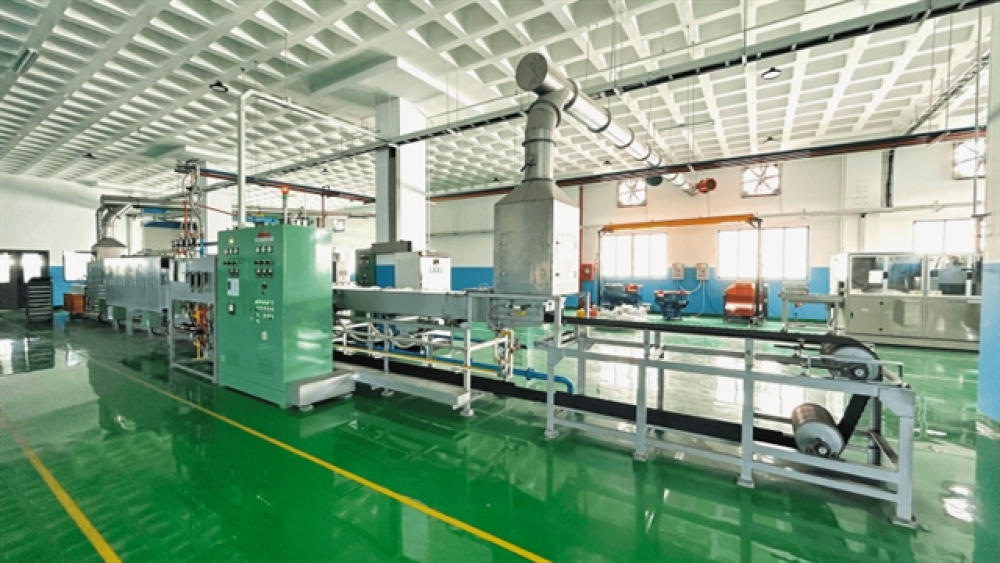
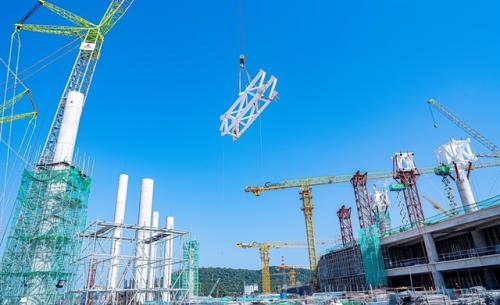
Experts said opportunities are expanding for Việt Nam’s mechanical engineering industry as the Government accelerates industrialisation and major infrastructure projects.

Dr Võ Trí Thành, former vice-president of the Central Institute for Economic Management, said the development of metro systems in HCM City and Hà Nội would create major opportunities for local firms to manufacture specialised equipment, steel structures, and precision components.

On the policy front, the Government issued in April Resolution No. 82/NQ-CP on drafting a Law on Key Industries aimed at institutionalising strategic orientations for industrialisation and modernisation.

The proposed legislation focuses on encouraging domestic manufacturing of key industrial products and strengthening supporting industries.

Another favourable factor is Việt Nam’s growing appeal as a destination amid the restructuring of global supply chains.

According to Thành, if the opportunity is fully utilised, Việt Nam could develop three to five major mechanical engineering conglomerates within the next few years, particularly in precision engineering, which is considered a core factor in industrialisation and modernisation.

Despite the strong potential, businesses still face significant challenges, particularly in accessing investment capital.

Nguyễn Đức Anh, owner of a company manufacturing drilling rig equipment and containers for the oil and gas sector in HCM City, said the industry requires huge investments and long breakeven periods.

Modern machinery and equipment alone could cost tens of billions of đồng, while preferential financing programmes for mechanical engineering enterprises remain limited and difficult to access, he pointed out.

Businesses need more suitable financing channels and stronger connections with factories and buyers to ensure stable demand for their products.

According to HAMEE, although HCM City resumed its interest rate subsidisation programme in late 2023, fewer than 5 per cent of member enterprises have managed to access the preferential loans.

Businesses have urged the city to simplify procedures for accessing capital and prioritise domestically manufactured mechanical products for public works and major projects, measures seen as crucial to encouraging long-term investment.

Industry insiders also stressed the need to strengthen linkages between foreign-invested enterprises and local companies, while improving transparency in component demand, technical standards, and production processes, to help Vietnamese firms participate more deeply in global supply chains.

According to the HCM City Statistics Office, the city’s industrial production index rose 11.2 per cent in the first four months of this year, while the mechanical engineering sector alone grew 13 per cent, reaffirming its important role in the city’s industrial structure.

Public investment disbursement reaches 21.6% of the annual plan within five months

Public investment disbursement reaches 21.6% of the annual plan within five months

The Government's public investment plan for 2026 totals VNĐ1.08 quadrillion, the largest on record and about VNĐ175 trillion higher than the 2025 plan, the ministry said.

HÀ NỘI — Việt Nam’s public investment disbursement reached VNĐ219.4 trillion (US$8.4 billion) in the first five months of 2026, equal to 21.6 per cent of the annual target set by Prime Minister Lê Minh Hưng, the Ministry of Finance said on Wednesday.

Of the total, VNĐ70.6 trillion came from the central government budget, achieving 19.4 per cent of the target while local government budgets contributed VNĐ148.7 trillion, equivalent to 22.9 per cent of their plan, the ministry said.

The Government’s public investment plan for 2026 totals VNĐ1.08 quadrillion, the largest on record and about VNĐ175 trillion higher than the 2025 plan, the ministry said.

More than VNĐ1 quadrillion has been allocated to ministries, government agencies and local authorities, leaving around VNĐ79.7 trillion, or 7.4 per cent of the National Assembly-approved plan, still unassigned.

By the end of May, ministries, agencies and localities had allocated more than VNĐ1 trillion to specific projects and tasks. Excluding additional funding from local budgets, detailed allocations reached VNĐ990.7 trillion, equivalent to 97.8 per cent of the amount assigned by the Prime Minister.

Unallocated capital stood at VNĐ22.7 trillion, or 2.2 per cent of the assigned plan, across 12 ministries, central agencies and 12 localities.

The ministry said delays were mainly caused by incomplete investment procedures and proposals to reallocate funds from projects with limited demand to those requiring additional capital.

The ministry identified shortages of construction materials as a major obstacle to faster disbursement, as demand has risen sharply alongside efforts to accelerate public investment projects.

It also cited higher material prices, which have exceeded approved budgets and required contract adjustments, as well as delays in land clearance linked to disputes over land ownership, compensation rates and resettlement plans.

In addition, many project owners were still completing design work, cost estimates, approvals and contractor selection in the early months of the year, limiting the volume of work eligible for payment.

The ministry said weaknesses in project preparation and planning had also contributed to delays, with some projects requiring revisions or capital reallocations.

It added that the capacity of some project management boards, investors and contractors remained limited, while some local administrations lacked dedicated public investment personnel.

To accelerate disbursement, the ministry urged ministries, agencies and local governments to speed up land clearance, ensure adequate supplies of construction materials and strengthen oversight of material prices.

It also called for stricter enforcement of administrative discipline, including penalties for officials and organisations that delay projects, and urged local authorities to ensure sufficient staffing for project management, particularly in remote and disadvantaged areas.

The ministry further instructed agencies to fully update public investment disbursement data on its digital monitoring system to support performance tracking and evaluation.


See all blog