Lumen Vietnam Fund

Blog

SK Group eyes AI data center tied to $2 bln LNG power project in central Vietnam

SK Group eyes AI data center tied to $2 bln LNG power project in central Vietnam

South Korea’s SK Group is stepping up its presence in Vietnam with plans to develop an AI data center linked to the Quynh Lap LNG-to-power project in Nghe An province, as it pushes its “AI full-stack” strategy overseas.

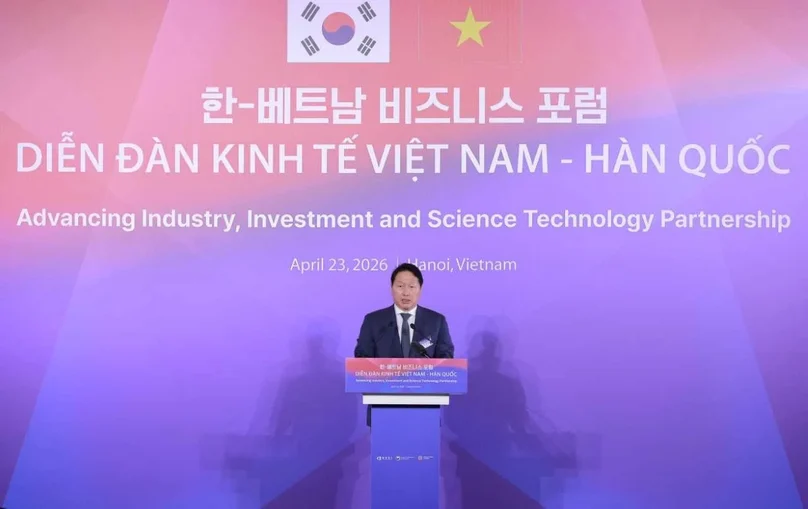
The plan was unveiled at the Vietnam-Korea Business Forum held in Hanoi, where SK signed memoranda of understanding with Nghe An provincial authorities and the National Innovation Center (NIC).

Under the agreements, SK aims to position itself as a strategic partner in Vietnam’s national AI strategy, focusing on three pillars: digital infrastructure, energy and industrial applications.

A key component is the proposed development of an AI data center in Nghe An, a province seen as an emerging industrial and energy hub in north-central Vietnam.

Two SK subsidiaries, SK Innovation and SK Telecom, will jointly implement the project, with an emphasis on ensuring stable power supply, a critical factor for large-scale data centers.

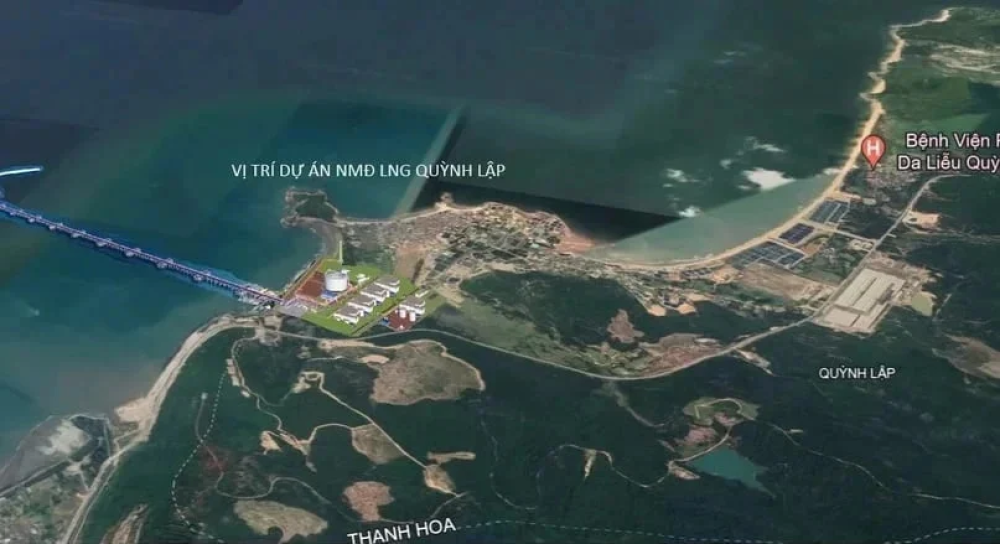
The AI facility is expected to be integrated with the Quynh Lap LNG power project, in which SK Innovation is involved in developing a complex including a roughly 1.5-gigawatt LNG-fired power plant, an LNG import terminal and a dedicated port.

The model would directly link energy supply with data infrastructure, helping optimize costs and operational stability.

Under the division of roles, SK Innovation will handle energy solutions and power provision, while SK Telecom will oversee development, construction and operation of the data center, as well as global customer acquisition and AI service demand.
Boosting Vietnam’s AI ecosystem

Beyond Nghe An, SK Innovation and SK Telecom also signed cooperation agreements with NIC to support the development of Vietnam’s AI ecosystem.

The collaboration covers data center development, energy infrastructure, and policy recommendations for the AI industry.

SK Telecom is expected to contribute technological expertise and help attract international investment, while SK Innovation will provide energy solutions. NIC will act as a coordinator for domestic partners and support regulatory and policy frameworks.

NIC is a key institution in Vietnam’s AI, semiconductor and startup ecosystem. SK has been a long-term partner, contributing $30 million during the center’s early development phase.

The move marks one of the first times SK has deployed its “AI full-stack” model abroad, a strategy championed by chairman Chey Tae-won to integrate the entire AI value chain, from energy and semiconductors to data centers and AI services.

Previously, SK launched similar projects in South Korea, including a large-scale AI data center in Ulsan in partnership with Amazon Web Services (AWS), expected to be completed by 2027. The group is also exploring cooperation with OpenAI in AI infrastructure.

"SK has capabilities across the full AI value chain, from energy and semiconductors to AI models and applications. We expect to contribute meaningfully to the development of Vietnam’s AI industry,” an SK representative said.

SK is South Korea’s second-largest conglomerate and ranks among the world’s top 100 corporations. In 2024, it had a market capitalization of about $270 billion and revenue of $150 billion.

The group’s operations span four strategic pillars: green energy, semiconductors and advanced materials, information technology and biotechnology.

In LNG, SK Innovation is South Korea’s largest private power producer, operating plants with total capacity of nearly 5 GW and posting stable operating profits exceeding $715 million over the past three years.

The group has also built a closed LNG value chain by importing more than 5 million tons annually, underpinning its cost competitiveness.

Source: Van Dung, Thai Ha
Latest Posts

Nearly 200km of expressway from Quang Ngai to Cu Mong Tunnel to open on April 29

Nearly 200km of expressway from Quang Ngai to Cu Mong Tunnel to open on April 29

Just in time for the April 30 holiday, a stretch of the North - South expressway from Quang Ngai to the Cu Mong Tunnel will officially open to traffic…

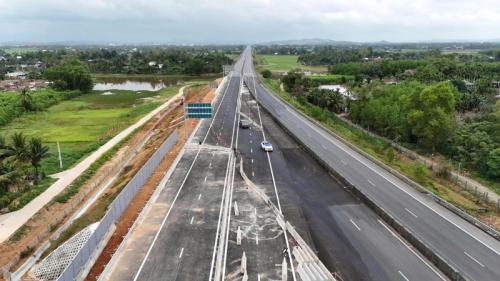
Just in time for the April 30 holiday, a stretch of the North - South expressway from Quang Ngai to the Cu Mong Tunnel will officially open to traffic, significantly accelerating travel along the North-South corridor.

Project Management Unit 2 (under the Ministry of Transport) was quoted by the Government News as announcing that the main route of the Quang Ngai – Hoai Nhon component project will be officially operational starting at 11:30 am on April 29.

The main section being opened in this phase spans approximately 88km. The expressway section begins at Km1050+00 (Nghia Giang commune, Quang Ngai province), where it connects with the Da Nang – Quang Ngai section of the North-South Expressway, and ends at Km1138+00, connecting to the Hoai Nhon – Quy Nhon section of the expressway.

The project began in January 2023 with a total investment of over VND21.110 trillion (nearly $802 million) from the State budget. To date, key items on the main route have been completed, most notably three major mountain tunnels: Tunnel No. 1 (Duc Pho), Tunnel No. 2 (Huan Phong), and Tunnel No. 3 (Binh De).

Under the current traffic organization plan for this initial phase, the expressway section will operate with four lanes and a roadbed width of 17 meters. The maximum speed is set at 90 km/h, with a minimum speed of 60 km/h.

In addition to the Quang Ngai – Hoai Nhon section, April 29 will also see the opening of the Hoai Nhon – Quy Nhon component project and Package 11-XL (Km0+200 - Km19+800) of the Quy Nhon – Chi Thanh component project.

The Hoai Nhon – Quy Nhon section of the expressway has a total length of 70.1km whilst the Quy Nhon – Chi Thanh section of the expressway has a total length of 61.7km (excluding the 5.1km section through the Cu Mong Tunnel). Both projects commenced construction on January 1, 2023.


Central Vietnam province Gia Lai to have 600MW pumped storage hydropower plant

Central Vietnam province Gia Lai to have 600MW pumped storage hydropower plant

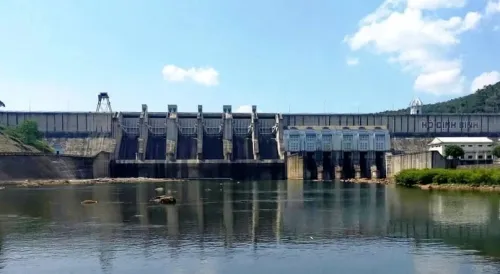
Gia Lai province is accelerating procedures to begin construction of the 600-megawatt Vinh Thanh pumped storage hydropower project, with a total investment of nearly VND11 trillion ($417.49 million).

According to a leader of the provincial Department of Industry and Trade, the Gia Lai People’s Committee has instructed relevant agencies to support and create conditions for Vinh Thanh Pumped Storage JSC to start construction in early 2027, aiming for operation by 2030.

The project’s main components include a newly built upper reservoir with a capacity of 4.3 million cubic meters, a lower reservoir utilizing the existing Dinh Binh irrigation lake, a bidirectional water tunnel system, and reversible turbines. For grid connection, the project will construct a double-circuit 500 kV transmission line linking the plant to the Binh Dinh 500 kV substation.

The project was approved in principle by the Gia Lai People’s Committee for research and survey in late February 2025. After more than a year of study, on April 23, the investor - Vinh Thanh Pumped Storage JSC, together with its French partners, reported survey and research results, concluding that the project is highly feasible.

Once operational, the plant is expected to generate an average of 783 million kWh per year, contributing to energy security and helping stabilize the national power system.

In addition, the project is projected to contribute VND320-350 billion ($13.28 million) annually to the local budget, create 300-500 jobs during construction and 40-50 jobs during operation, and promote socio-economic development, supporting the province’s goal of sustained double-digit economic growth in the coming years.

Legally, the project, located in the former Vinh Thanh district of Binh Dinh province (now Vinh Thanh commune, Gia Lai province after the July 2025 merger), has been approved by the Prime Minister under the revised Power Development Plan for 2021-2030, with a vision to 2050 under Decision No. 768 dated April 15, 2025, and its implementation plan was passed by the Ministry of Industry and Trade under Decision No. 1509 dated May 30, 2025.

The Gia Lai People’s Committee has also incorporated the project into the revised provincial master plan for 2021-2030, with a vision to 2050 under Decision No. 2832 dated November 28, 2025. The initial timeline projected operation during 2031-2032, but local authorities are working to accelerate progress and bring the plant online by 2030.

Vinh Thanh Pumped Storage JSC was established on November 4, 2024, with headquarters on Hoang Van Thu street, Quy Nhon Nam ward, Gia Lai province (formerly Quy Nhon town, Binh Dinh province). Its main business activity is power generation.

The company has a charter capital of VND50 billion ($1.9 million). Its founding shareholders include Tong Phan Long (VND5 billion, 10%), Bui Tien Trung (VND20 billion, 40%), and Le Duc Thoa (VND25 billion, 50%).

The legal representative is Le Duc Thoa (from Thanh Hoa province), who serves as director. He is also the legal representative of La Vuong Wind Power JSC (in Gia Lai) and Gia Nghia Green Renewable Energy Investment and Trading JSC (in Thanh Hoa).


Work starts on $2bn container terminal in Da Nang

Work starts on $2bn container terminal in Da Nang

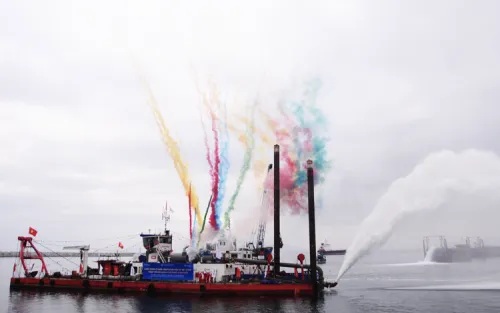
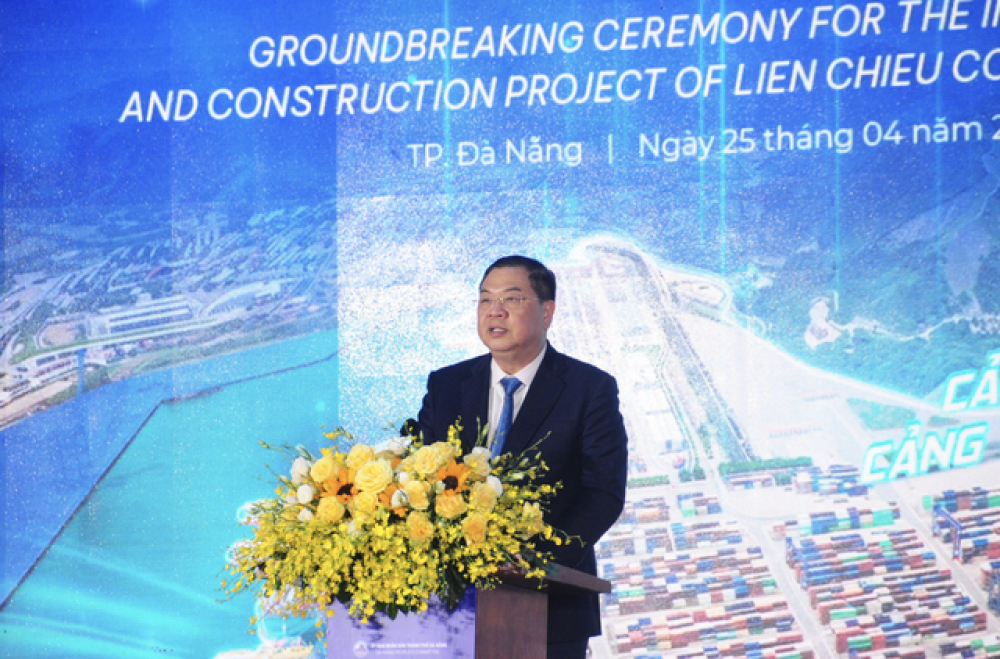
Da Nang City, central Vietnam on Saturday broke ground on the Lien Chieu container terminal project, which carries a price tag of more than VND45 trillion (US$2 billion), marking a significant step in the city’s long-term economic and logistics strategy.

The project, invested by a consortium of Hateco Group, Hateco Seaport Company and APM Terminals B.V. of the Netherlands, will be executed over a 10-year period from 2026 to 2036, divided into three phases.

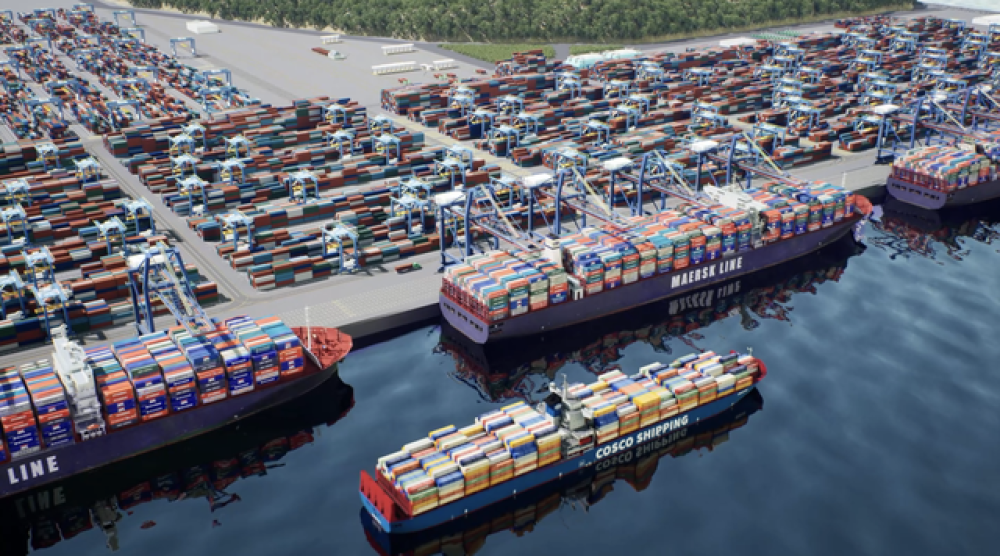
Designed to meet international standards, the Lien Chieu container terminal will feature eight berths spanning a total length of 2,750 meters.

The terminal is capable of accommodating vessels of up to 18,000 TEU and will have a projected annual capacity of 5.7 million TEU, equivalent to roughly 74 million metric tons of cargo.

Within three years of its initial operational phase, throughput is expected to reach some four million TEU annually.

Strategically located along international maritime routes, the mammoth terminal sits at the terminus of the East-West Economic Corridor, a critical trade axis linking Vietnam with Southeast Asia and the Mekong subregion.

Beyond its function as a seaport, Lien Chieu container terminal is envisioned as a comprehensive logistics ecosystem, including integrated barge terminals, warehousing, customs inspection facilities, and container handling services, all connected directly to the national railway network to facilitate multimodal transport.

Tran Van Ky, a representative from the consortium, said that the terminal will adopt a ‘green and smart port’ model, incorporating advanced technologies such as the Internet of Things (IoT) and artificial intelligence (AI) to optimize operations.

Automation systems, clean energy usage, and ecofriendly equipment are expected to reduce emissions and align with both domestic and international environmental standards, positioning the terminal within global green supply chains.

Chairman of the municipal administration Nguyen Manh Hung described the project as a strategic collaboration between public investment and private sector commitment, in line with national policies promoting private economic development.

He emphasized that the terminal would serve as a catalyst for the city’s growth, helping to complete a modern logistics network while reducing transportation costs for businesses.

Also, the project is expected to support sustainable urban expansion, separating cargo traffic from tourism flows and reinforcing Da Nang’s role as an international gateway.

Speaking at the groundbreaking ceremony, Deputy Prime Minister Pham Gia Tuc highlighted the project as a milestone in implementing Vietnam’s strategy for sustainable marine economic development.

He noted that the terminal would stimulate logistics services, industrial growth, and port-based urbanization, while also strengthening national defense and enhancing the country’s global standing.

See all blog