Lumen Vietnam Fund

Blog

SBV proposes raising short-term capital use to support GDP growth

SBV proposes raising short-term capital use to support GDP growth

The State Bank of Vietnam has proposed raising the maximum ratio of short-term capital used for medium and long-term lending by credit institutions from the current 30 per cent to 40 per cent.

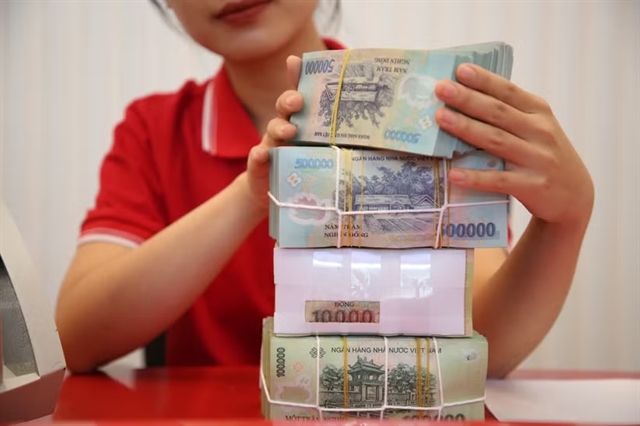
HÀ NỘI — The State Bank of Vietnam (SBV) has proposed raising the maximum ratio of short-term capital used for medium and long-term lending by credit institutions from the current 30 per cent to 40 per cent.

If approved, the new regulation would give credit institutions more room to provide capital to businesses and investment projects to help promote high economic growth in the next few years, while increasing flexibility in the SBV’s monetary policy management.

The proposal has been made under a draft circular amending and supplementing several articles of Circular 22/2019/TT-NHNN, which focuses on limits and safety ratios in the operations of banks and branches of foreign banks in Việt Nam. Public comment is being sought on the proposed draft.

According to the roadmap stipulated in Circular 22, the maximum ratio of short-term capital used for medium and long-term lending reduced from 40 per cent to 30 per cent from October 1, 2023, to control maturity risk and ensure liquidity safety for the banking system.

However, amid increasing demand for medium and long-term capital in the economy, the SBV said that adjusting the ratio back to 40 per cent would help credit institutions be more proactive in using short-term funds to provide credit to businesses and investment projects.

According to the SBV, the amendments are based on the policies and resolutions of the Party and the Government, aiming to promote high economic growth during the 2026-2030 period.

If enacted, the new regulations will expand the banking system's capital supply capacity, thus contributing to meeting the medium and long-term capital needs of the economy.

In addition to relaxing the short-term capital use ratio, the draft also amends the regulation on how to determine total deposits when calculating the loan-to-deposit ratio.

Under current regulations, when determining total deposits, credit institutions must exclude all demand deposits of the State treasury and exclude 80 per cent of the treasury's time deposits.

The new draft circular retains the exclusion of demand deposits from the State treasury, but adds a more flexible mechanism for time deposits. In addition to the current 80 per cent exclusion rate, the SBV’s governor can decide to apply a different rate depending on market developments in each period.

According to the SBV, this amendment aims to create additional tools for managing monetary policy, helping the central bank be more proactive in balancing liquidity and supporting credit growth when necessary.

Both amendments aim to increase the operating space for credit institutions while still ensuring system safety.

Increasing the ratio of short-term capital used for medium and long-term lending will help banks retain more resources to meet the investment capital needs of businesses, especially as many manufacturing, infrastructure and real estate sectors require more long-term capital.

Meanwhile, adjusting the method of calculating total deposits will help the regulatory authority be more flexible in managing safety ratios, in line with developments in the money market and economic growth goals.

The draft also stipulates that after the new circular takes effect, some related provisions in Circular 08/2020/TT-NHNN and Circular 08/2026/TT-NHNN will be repealed to ensure the consistency of the legal system.

If enacted, these amendments are expected to create more room for credit in the banking system, improve businesses' access to medium- and long-term capital and enhance the SBV's role in managing monetary and credit policies, helping to support economic growth targets.


Source: BIZHUB/VNS

Photo: VNA/VNS
Latest Posts

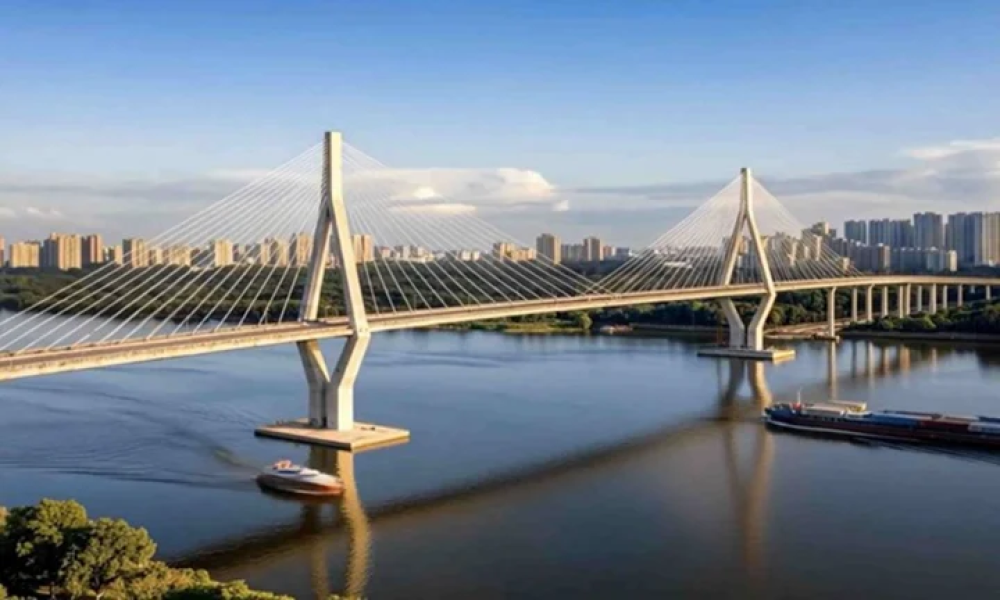
HCMC to use prime land assets worth $889 mln to pay Masterise for two major bridge projects

HCMC to use prime land assets worth $889 mln to pay Masterise for two major bridge projects

Ho Chi Minh City will use prime land assets worth more than VND23.4 trillion ($889.4 million) and public funds to compensate Masterise for two major bridge projects under build-transfer (BT) contracts, according to a new decision by the city People's Council.

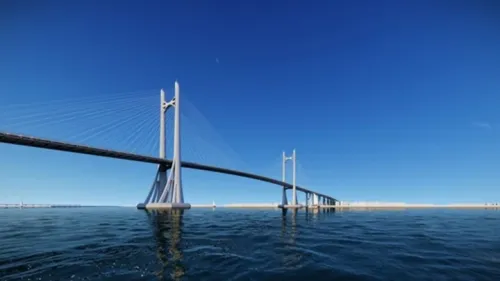
The council approved adjustments to the investment policies for the Can Gio bridge and Phu My 2 bridge projects, both of which are being developed by the local developer under public-private partnership (PPP) arrangements.

For the Can Gio bridge project, authorities revised the payment structure after changes to the land bank earmarked for investor compensation. The city will now allocate two downtown land plots with a combined estimated value of more than VND7.5 trillion ($285.06 million) and use budget funds to cover the remainder of the payment obligation.

The sites include a property at 8-12 Le Duan boulevard, valued at VND3.42 trillion ($130 million), and another at 2-4-6 Hai Ba Trung street, valued at around VND4.11 trillion ($156.21 million).

The land assets account for roughly 69.7% of the BT contract value for the bridge construction, estimated at VND10.82 trillion ($411.25 million). The remaining VND3.74 trillion ($142.15 million) will be paid from the local budget after the land transfer is completed.

The Can Gio bridge project has a revised total investment of about VND13.35 trillion ($507.41 million), including interest expenses during construction, up by VND148 billion ($5.63 million) from the previously approved plan.

The bridge will span across the Soai Rap river, linking Can Gio with Nha Be communes and replacing the Binh Khanh ferry crossing. The project includes a bridge section of about three kilometers and connecting roads, bringing the total length to roughly seven kilometers.

Separately, the city approved adjustments to the Phu My 2 bridge project, for which land assets valued at approximately VND15.91 trillion ($604.72 million) are expected to be used as payment to the investor.

The bridge will connect Nguyen Huu Tho road in HCMC with Lien Cang road in the neighboring industrial city of Dong Nai. The route will stretch about 6.64 km, including 4.6 km within HCMC and 2.04 km in Dong Nai.

Designed with eight traffic lanes and supporting infrastructure, the project carries a total investment of about VND21.83 trillion ($829.73 million), including financing costs during construction. Completion is targeted for 2029.

Authorities view Phu My 2 as a strategic transport link that will strengthen connections between southern HCMC, Dong Nai's Nhon Trach commune, and Long Thanh International Airport.

Once completed, the bridge is expected to ease congestion on the existing Phu My bridge, National Highways 1 and 51, and the Ho Chi Minh City-Long Thanh expressway, while improving logistics efficiency and supporting economic activity across the southern key economic region.

US leads imports of Vietnam’s computers and electronics in five months

US leads imports of Vietnam’s computers and electronics in five months

VOV.VN - The US imported US$22.54 billion worth of computers, electronic products and components from Vietnam during the five-month period of 2026, making it Vietnam’s largest export market for the sector, ahead of China, the European Union and Hong Kong.

According to the Vietnam Customs, Vietnam’s exports of computers, electronic products and components totaled nearly US$56.2 billion in January-May, up 46.2% year-on-year.

The US remained the sector’s main growth driver, with exports to the market rising nearly 55% and accounting for more than 40% of total export value.

China ranked second with imports worth US$8.82 billion. The EU and Hong Kong also ranked among Vietnam’s leading export markets, with Hong Kong serving as a major transshipment hub for Vietnamese electronics.

Exports to the EU posted a strong recovery, while the ASEAN became another fast-growing market, with export value reaching US$3.02 billion, up nearly 77% year-on-year.

Other Asian markets, including the Republic of Korea (RoK), Taiwan (China), Japan and India, also continued to grow, indicating Vietnam’s ongoing efforts to diversify its export markets.

Several non-traditional markets such as Mexico, the United Kingdom, Australia and Canada also recorded strong growth.

In 2025, Vietnam’s exports of computers, electronic products and components surpassed US$100 billion for the first time. With strong momentum in early 2026, export value for the sector is expected to significantly exceed last year’s level.


Nghe An launches $720 mln climate change adaptation project

Nghe An launches $720 mln climate change adaptation project

This includes roughly $595 million in loans from the World Bank (WB) and approximately $125 million in local counterpart funding.

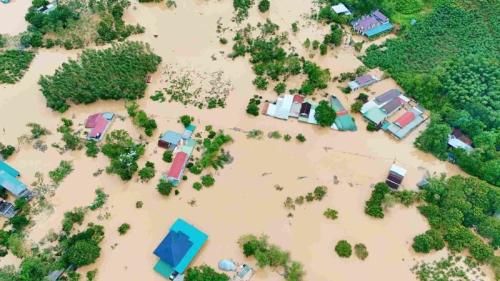
Nghe An is set to launch a $720 million climate change adaptation and eco-tourism infrastructure project in the province's western region. This includes roughly $595 million in loans from the World Bank (WB) and approximately $125 million from local counterpart funding.

According to the proposal, the project is divided into four components. Among them, the component on developing Vinh’s urban infrastructure to adapt to climate change is the largest, with a total estimated capital of about $415 million.

The funds will be used to upgrade urban infrastructure by integrating stormwater drainage and transportation systems at a cost of around $258 million; expand the wastewater collection and treatment system with about $65 million; and strengthen the drainage capacity of major rivers and canals with about $60 million.

Additionally, a component dedicated to strengthening solid waste management through a circular economy approach has a projected investment of $50 million. This segment focuses on improving waste management efficiency, developing material recovery facilities, and promoting circular economy models.

Another notable feature of the project is the $170 million component dedicated to upgrading infrastructure to drive tourism development in Western Nghe An. Under this plan, the province will prioritize the construction of roads connecting to tourist sites along National Highway 7A, upgrade technical infrastructure at central hubs, and support local villages in developing community-based tourism.

Furthermore, between $78 million and $85 million has been allocated for technical assistance and capacity building to ensure the effective management and implementation of all investment items.

During a working session on June 19 between the Provincial People’s Committee and the World Bank Vietnam to consult on the adjusted investment list and conduct a preliminary investment screening for the project, World Bank representatives stated that their task force had previously conducted several field surveys and held specialized meetings with local authorities and relevant agencies to assess the current situation, identify investment needs, and finalize the project proposals.


See all blog