Lumen Vietnam Fund

Blog

Resolution 10: Turning ESG commitments into action for quality FDI

Resolution 10: Turning ESG commitments into action for quality FDI

VOV.VN - Moving beyond mere GDP growth, global capital now demands Environmental, Social, and Governance (ESG) standards for high-quality FDI in Vietnam. Yet, a clear gap persists between the country's ESG commitments and its actual implementation.

Current state of ESG implementation

ESG serves as a set of criteria evaluating corporate sustainability across three pillars: Environmental, Social, and Governance. No longer a mere compliance requirement, ESG has become an essential benchmark for investors assessing risk and allocating capital.

According to PwC’s 2025 survey on ESG progress in Vietnam, roughly 89% of surveyed enterprises have established or plan to establish ESG commitments within the next two to four years; 61% have formulated structured ESG strategies; and 41% have integrated ESG into their core business models. This indicates a marked shift in corporate awareness regarding sustainable development, moving from short-term growth mindsets toward long-term orientation. ESG is gradually becoming a central component of governance and investment strategy.

However, experts note that the proportion of businesses truly embedding ESG into core operations, governance, and long-term strategy remains low.

Dr. Tran Van Khai, Vice Chairman of the National Assembly’s Committee on Science, Technology and Environment, points out that Vietnamese enterprises face numerous hurdles in implementing ESG.

"ESG remains a new field in Vietnam. Although adoption has accelerated in recent years, the country still lacks a unified nationwide guidance framework and criteria. Financial constraints, technological limitations, and a shortage of high-quality human resources pose major barriers to corporate ESG practice," Khai says.

For small and medium-sized enterprises (SMEs), practicing ESG presents an obstacle and is often seen as a compliance cost rather than a strategic investment, while short-term profit pressures leave many hesitant to allocate resources for transformation.

In addition, Vietnam’s legal framework and supporting ecosystem for ESG are not yet fully developed, while fragmented guidelines and oversight mechanisms make it difficult for businesses to adopt ESG systematically, effectively, and in line with international standards.

Dr. Nguyen The Binh, Director of the Banking Science and Technology Research Institute at Banking University of Ho Chi Minh City, points out a wide divide between making ESG commitments and actually putting them into practice.

"About 60% of businesses report a lack of expertise due to numerous unapplied guidelines and frameworks; 46% cite enterprise size as an obstacle; and 28% indicate a lack of transparent information. Measuring and evaluating ESG performance in Vietnam is also difficult due to the absence of unified assessment tools and standardized criteria. Balancing environmental, social, and governance factors is a tough challenge, as ESG demands a comprehensive transformation of core internal elements, from corporate culture and strategic thinking to actual operations," Binh stresses.

Refining institutions to turn ESG into competitive edge

With international investors sharply focused on sustainable development and risk transparency, ESG has become an entry ticket for capital allocation.

Dr. Le Xuan Nghia, Director of the Center for Development Consultation (CODE), emphasizes that Vietnamese businesses have no choice but to pursue green growth and meet ESG criteria.

"Vietnamese enterprises rely almost entirely on commercial bank credit without alternative funding sources. Although global green capital and energy transition funds are abundant, domestic firms face very limited access. In an environment where investment capital grows increasingly cautious and international requirements become stricter, ESG is no longer a superficial bonus to polish profiles, but a mandatory condition to enter global supply chains and access long-term, low-cost capital," Nghia states.

As Vietnam integrates deeper into the global market, businesses must stop treating ESG as a compliance burden and instead leverage it as a competitive advantage through practical action. Craig Martin, Executive Chairman of Dynam Capital, says that ESG is a prerequisite for Vietnamese firms to access international capital. International investors no longer look at paper commitments; they evaluate actual execution, transparency, and operational capability.

Resolution No.10 on foreign investment development sets the goal of positioning Vietnam as a competitive destination for high-quality, medium- and long-term foreign capital. Translating the resolution into concrete policies that support and invest in effective ESG practice is key to making Vietnamese firms attractive to foreign investors.

Dr. Tran Van Khai outlined three immediate priorities to ensure genuine ESG adoption:

First, build tailored ESG criteria and implementation guidelines for specific business groups and sectors, with the Government and National Assembly guiding and supervising implementation.

Second, given the substantial investment costs of ESG, appropriate financial mechanisms must be created to help enterprises, especially SMEs, access green capital and sustainable finance. Third, train and develop high-quality human resources, a key factor enabling businesses to execute ESG in practice, from strategy building and operations to measurement and reporting, ensuring ESG moves beyond guidelines into concrete action.

Vietnam holds significant advantages in attracting international capital, but funds will flow to the most trusted destinations rather than the fastest-growing ones. Genuine and effective ESG adoption serves as the "pass" for both the economy and domestic enterprises to enhance competitiveness and draw high-quality FDI. Achieving this requires supportive state policies to help businesses narrow the gap between commitments and sustainable ESG practice.

Source: VOV

Latest Posts

Rethinking productivity to drive a new growth model

Rethinking productivity to drive a new growth model

The combination of traditional tools and modern technologies is enabling many Vietnamese enterprises to make significant breakthroughs, helping build a modern productivity and quality ecosystem and driving a new growth model.

HÀ NỘI —Amid rapid changes in the global and domestic economies, productivity and quality in the new era are no longer simply about expanding scale or optimising costs. Instead, they increasingly depend on the ability to harness technology and data while pursuing sustainable development.

The combination of traditional tools and modern technologies is enabling many Vietnamese enterprises to achieve substantial productivity gains, helping build a modern productivity and quality ecosystem and driving a new growth model.

As Việt Nam accelerates the development of science and technology, innovation and digital transformation, this transition is creating both opportunities and challenges, said Nguyễn Nam Hải, chairman of the Commission for the Standards, Metrology and Quality of Việt Nam (STAMEQ).

Renewing the growth model based on higher productivity and quality has therefore become an urgent priority, he said. A new mindset is needed, with productivity measured not only by output but also by the value generated through innovation, the efficiency of resource utilisation and the sustainable value created for society.

This provides a strategic foundation for advancing the dual digital and green transition, helping enterprises strengthen their competitiveness and contributing to Việt Nam’s efforts to realise its development vision through 2045.

Việt Nam is moving towards a productivity and quality ecosystem that places enterprises at the centre and addresses practical management challenges.

To develop this ecosystem, enterprises need to adopt technologies and practices such as AI, big data, ISO 56001-based innovation management, digital traceability and environmental, social and governance (ESG) standards, alongside management tools that can be applied directly to production and business operations to optimise resources and improve international competitiveness.

Hải said institutional reform, technology adoption, digital transformation and advanced management tools would help raise national productivity and support a new growth model.

According to productivity experts, AI, the Internet of Things (IoT) and Big Data are becoming core technologies for transforming production management. They offer opportunities to raise productivity, improve product quality, strengthen competitiveness and enable enterprises to participate more deeply in global supply chains. Business decisions are increasingly supported by scientific analysis rather than relying primarily on experience, improving management accuracy and efficiency.

The integration of AI, IoT and Big Data is also accelerating the shift from traditional, experience-based production towards smart manufacturing. To make effective use of these technologies, however, enterprises need to invest in digital infrastructure, establish standardised data systems, develop digitally skilled workforces and adopt management systems based on international standards.

Deputy Minister of Science and Technology Lê Xuân Định said digital transformation and AI have brought profound changes worldwide. Technology is not only improving productivity, but also transforming management, quality control and market connectivity.

As markets impose stricter requirements for transparency, product quality, traceability and compliance, adopting digital platforms and AI has become essential to building a new growth model, he added.

New drivers of productivity growth

Hải said Việt Nam is stepping up investment in standards, productivity and quality infrastructure. Developing a strong cadre of productivity and quality experts, strengthening communications and scaling up model productivity initiatives nationwide are among the key priorities.

STAMEQ is also expanding international cooperation, leveraging the Asian Productivity Organization network and global certification bodies to strengthen Vietnamese enterprises’ capacity for international integration in productivity and standards.

In coordination with ministries, sectors and localities, STAMEQ will carry out measures to renew productivity and build a modern productivity and quality ecosystem through 2030. The aim is to maximise opportunities arising from digital transformation and international integration, making productivity and quality a central driver of economic growth.

Nguyễn Tùng Lâm, director of the Vietnam Productivity Institute, said digital transformation would be one of the most important drivers of labour productivity growth over the coming decade. Digital management platforms can help enterprises monitor production processes, optimise supply chains and ensure quality from the outset.

Meanwhile, ESG is emerging as a new measure of the quality of corporate development and an increasingly important requirement for export markets, investment funds and global supply chains.

ESG practices can help Vietnamese enterprises meet international standards while combining productivity improvements with green transformation and international integration in pursuit of sustainable development.

Apartment prices ease in Hanoi, Ho Chi Minh City but remain high

Apartment prices ease in Hanoi, Ho Chi Minh City but remain high

After a prolonged period of rising prices, Vietnam’s real estate market saw a downward adjustment in the secondary segment in the second quarter of 2026.

However, housing and land prices in Hanoi and Ho Chi Minh City remained high, while market liquidity declined and inventories continued to rise, according to the Ministry of Construction.

Secondary apartment prices fall

Vietnam’s secondary apartment market showed a clearer downward adjustment in the second quarter of 2026, with prices nationwide falling from the first quarter, according to the Ministry of Construction.

Despite the decline, apartment prices in major cities remained high.

In Hanoi, secondary apartments averaged around VND123 million (US$4,710) per square meter.

Prices ranged from VND133-140 million ($5,090-5,360) per square meter at Hateco Laroma, VND97-103 million ($3,710-3,940) at Bamboo Airways Tower, and VND80-87 million ($3,060-3,330) at Sunshine Garden.

In Ho Chi Minh City, the average secondary apartment price stood at around VND108 million ($4,130) per square meter.

Masteri Thao Dien was priced at VND114-120 million ($4,360-4,590) per square meter, Cantavil An Phu at VND80-89 million ($3,060-3,410), and An Gia Skyline at VND64-72 million ($2,450-2,760).

High apartment prices have also spread to neighboring markets such as Hung Yen Province in the northern region, where the average reached VND69 million ($2,640) per square meter.

At the Ecopark urban area, Sol Forest apartments were priced at VND65-85 million ($2,490-3,250) per square meter, while Sky Oasis ranged from VND55-70 million ($2,110-2,680).

Dinh Minh Tuan, southern regional director of Batdongsan.com.vn, toldTuoi Tre(Youth) online newspaper that apartment prices could come under downward pressure of five to seven percent whenever bank lending rates increase.

From 2021 to 2024, when interest rates remained high at 14-16 percent, apartment prices in Ho Chi Minh City fell by five to seven percent, he said.

When interest rates began easing in 2025, apartment prices rebounded rapidly. Over the past year, prices in the city surged 22.5 percent, offsetting the declines recorded in previous years.

Villa, land prices decline

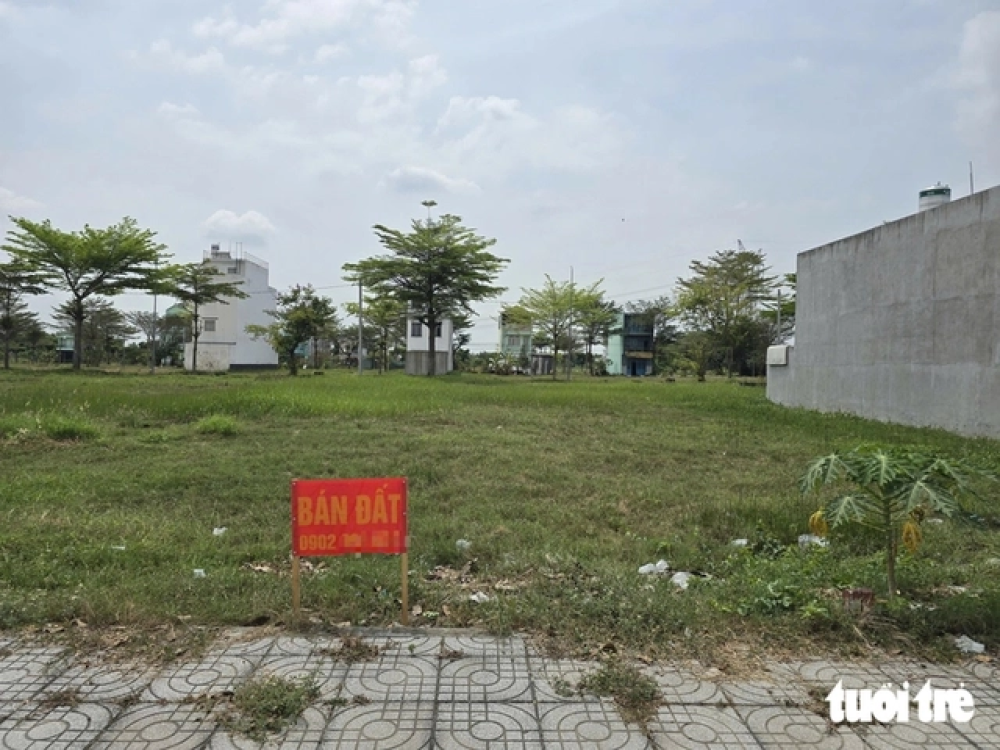
Compared with apartments, land plots in property developments recorded a more pronounced decline.

Apartment prices ease in Hanoi, Ho Chi Minh City but remain high- Ảnh 1.

Secondary land prices nationwide fell by around two to three percent from the previous quarter, bringing the average asking price down to VND40 million ($1,530) per square meter.

In Ho Chi Minh City, land prices fell nearly three percent to an average of around VND66 million ($2,530) per square meter.

Prices at many projects declined by three to six percent, particularly for high-value properties. Despite the drop, land prices remained high.

In Hanoi, land at the Dai Kim-Dinh Cong new urban area was priced at VND105-160 million ($4,020-6,120) per square meter, while Cienco 5 Me Linh ranged from VND40-56 million ($1,530-2,140).

In Ho Chi Minh City, Van Phuc City was priced at VND100-150 million ($3,830-5,740) per square meter, while Rio Vista ranged from VND95-110 million ($3,640-4,210).

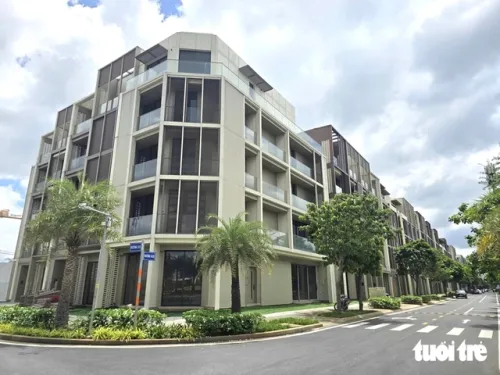
Villa and townhouse prices also declined amid weak liquidity, although prices remained high, according to the Ministry of Construction.

In Hanoi, Sunshine Riverside was priced at VND390-440 million ($14,930-16,840) per square meter, while Louis City ranged from VND285-292 million ($10,910-11,180).

In Ho Chi Minh City, prices at The Global City stood at VND360-371 million ($13,780-14,200) per square meter, while Lakeview City ranged from VND220-250 million ($8,420-9,570).

Pressure from weak liquidity, high interest rates

Vietnam recorded more than 100,000 successful real estate transactions in the second quarter, equivalent to 71.5 percent of the previous quarter’s figure and 63.7 percent of the level recorded in the same period of 2025.

Transactions involving apartments and individual houses fell nearly 14 percent to 26,567.

Land transactions recorded the steepest decline, with only 73,438 successful deals, equivalent to 67.4 percent of the previous quarter and less than 60 percent of the year-earlier level.

Meanwhile, new project supply increased sharply, with 113 commercial housing projects comprising more than 103,200 units newly licensed during the quarter, nearly double the number in the first quarter and adding pressure on market absorption.

Financing costs also remained a major hurdle. Real estate lending rates are currently commonly at 12-14 percent per year.

After preferential periods expire, floating rates at many banks rise to 13-15 percent, with some reaching 15-16 percent per year.


30% reduction in personal and corporate income tax proposed

30% reduction in personal and corporate income tax proposed

State budget revenue is expected to decline by approximately VND 3.191 trillion ($112.12 million) in 2026 and VND 3.51 trillion ($134.2 million) in 2027.

Authorized by the Prime Minister, Minister of Finance Ngo Van Tuan, on behalf of the Government, on August 21 presented its proposal for a 30 percent reduction in personal income tax payable for the 2026 and 2027 tax periods on business income to the on-going extra session of the 16th National Assembly.

According to the proposal, the 30% reduction will be applicable to resident individuals whose annual business revenue between 2026 and 2027 does not exceed VND10 billion.

Meanwhile, a 30% reduction in corporate income tax payable for the 2026 and 2027 tax periods is also proposed for enterprises and organizations established in accordance with Vietnamese law whose annual revenue in 2026 and 2027 does not exceed VND 10 billion.

For enterprises currently eligible for tax incentives under the Law on Corporate Income Tax or other laws and resolutions of the National Assembly, the proposed corporate income tax reduction would be calculated based on the amount of corporate income tax payable after tax incentives have been deducted.

According to Minister Tuan’s presentation, the tax cuts would help ease difficulties and stabilize production and business activities for business households, individuals and enterprises.

The measures would also ensure timely support for inflation control and macroeconomic stability, contributing to the realization of the country's economic growth targets.

If these proposals will be accepted by the Legislature, state budget revenue is expected to decline by approximately VND3.191 trillion ($112.12 million) in 2026 and VND 3.51 trillion ($134.2 million) in 2027.


See all blog