Lumen Vietnam Fund

Blog

Private sector needs stronger policy support for sustainable growth

Private sector needs stronger policy support for sustainable growth

VOV.VN - Vietnam’s private sector is showing signs of weakening resilience, highlighting the urgent need for more effective policies to support sustainable business growth.

Mounting challenges for private businesses

According to the National Statistics Office, more than 57,400 enterprises were newly established in the first quarter of the year. However, business exits remained high, with nearly 63,500 firms temporarily suspending operations, over 16,600 awaiting dissolution, and more than 11,700 completing dissolution procedures. On average, around 30,600 businesses exited the market each month.

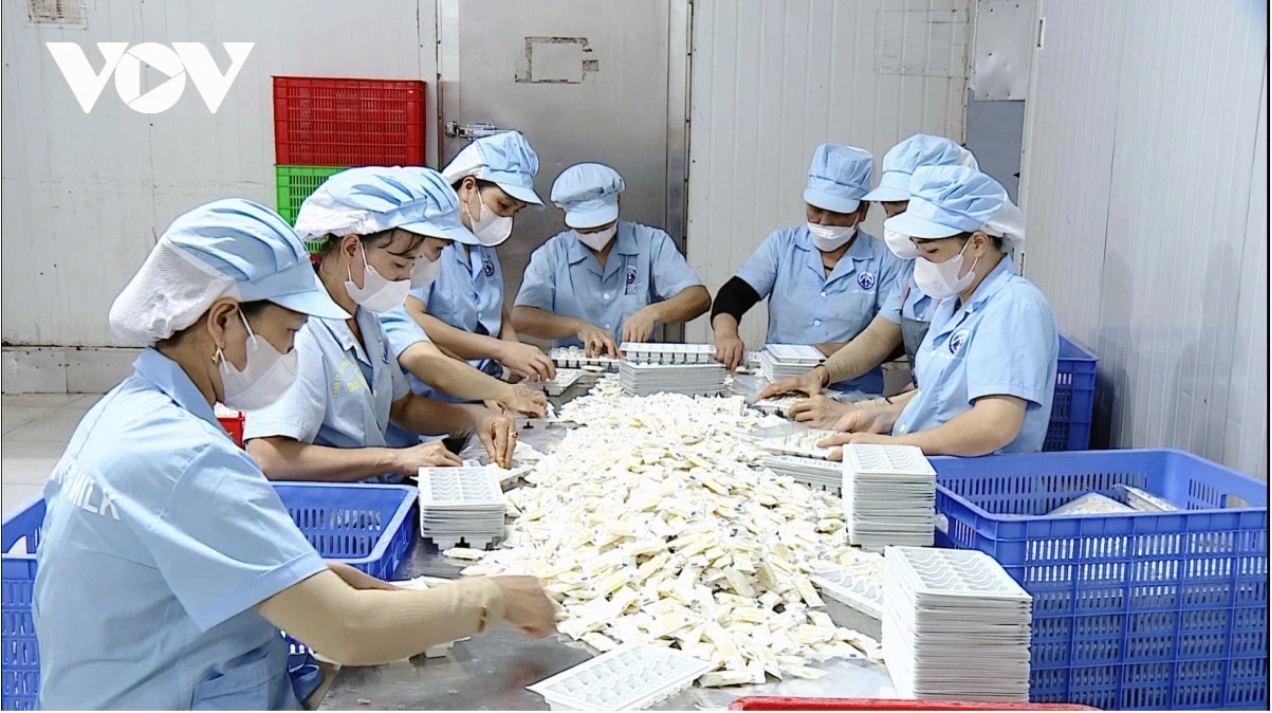
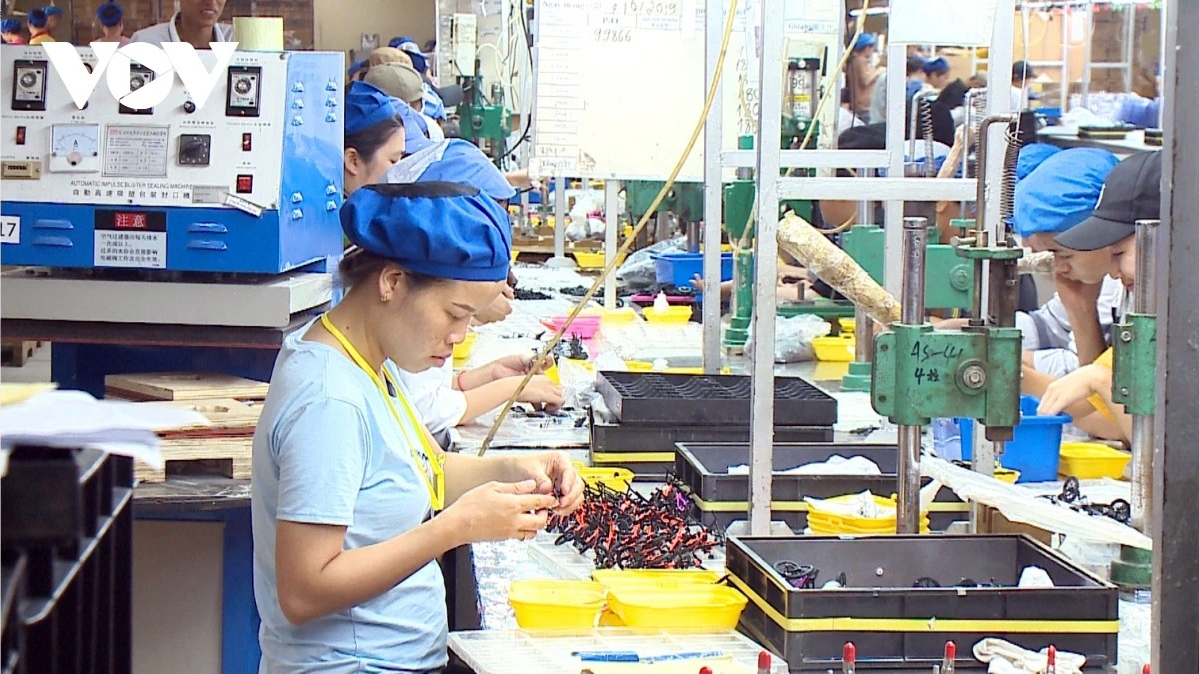
This trend reflects declining resilience among enterprises amid rising input costs, limited access to finance, and weakening demand. At Giap Bat Bus Station in Hanoi, interprovincial transport companies are facing mounting pressure as fuel prices increase while passenger numbers decline, forcing many operators to cut trips or consolidate schedules to stay afloat.

According to Ngo Thang Loi of National Economics University, the private sector is showing signs of slowdown. A growing trend of “staying small” is limiting business expansion, with private enterprises lagging behind state-owned and foreign-invested sectors in scale.

“The number of businesses ceasing operations or going bankrupt has been increasing, even exceeding new business formations. Around 50% of private enterprises do not survive beyond their second year, while nearly half report losses, indicating relatively low efficiency across the sector,” Loi said.

These figures suggest that the number of newly established businesses is no longer the most important metric; the key lies in how many can survive and grow sustainably.

Stronger policies needed to unlock long-term growth
private sector needs stronger policy support for sustainable growth picture 2

In this context, more robust and effective policies are required to support the long-term development of private enterprises.

The Government’s Decision No.463 issued in March 2026 sets a target of nearly 2 million active enterprises by 2030, with the private sector expected to grow by 10–12% annually and contribute 55–58% of GDP. However, achieving these goals will depend not only on policy direction but also on effective implementation.

According to Pham Xuan Hoe, former deputy director of the Banking Strategy Institute under the State Bank of Vietnam, Vietnam has introduced major policies such as the Politburo’s Resolution No.68 on private sector development, but these need to be quickly translated into clear and practical regulations. He noted that inconsistencies in implementation have sometimes created obstacles for businesses despite supportive policies.

“To effectively implement the resolution, there is no alternative but to translate it into clear, detailed and practical laws and regulations. More importantly, the implementation process must be improved to avoid the ‘carpet above, spikes below’ situation that continues to create difficulties for businesses,” Hoe said.

Meanwhile, Associate Professor Dr. Le Xuan Ba, former director of the Central Institute of Economic Management, emphasised the need for breakthrough reforms, including removing long-standing barriers and biases against the private sector, particularly large enterprises.

“Breakthrough does not simply mean doing existing things better or faster, but having the courage to do what has never been done before. In particular, it is essential to decisively remove the long-standing hesitation toward the private sector, including large private enterprises. Once this barrier is lifted, development resources can be fully unlocked,” Ba analysed.

The expert also highlighted trust as a critical factor, saying ensuring a level playing field among economic sectors must go beyond policy statements and be reflected in practice. A transparent business environment, free from “ask–give” mechanisms, would encourage private firms to scale up and invest for the long term.

“Many private enterprises have been small partly due to an uneven business environment. The State needs to ensure that the economy operates fully on market principles, remove the ‘ask–give’ mechanism, and guarantee a level playing field for businesses across all sectors. This is perhaps the most critical condition that private enterprises expect,” Ba concluded.

Ultimately, enabling private enterprises to fully bring into full play their strength requires not just ambitious targets, but a coherent, transparent policy framework that is effectively implemented. With improved business conditions and stronger confidence, the private sector can become a key driver of Vietnam’s economic growth.

Source: VOV
Latest Posts

Nearly 200km of expressway from Quang Ngai to Cu Mong Tunnel to open on April 29

Nearly 200km of expressway from Quang Ngai to Cu Mong Tunnel to open on April 29

Just in time for the April 30 holiday, a stretch of the North - South expressway from Quang Ngai to the Cu Mong Tunnel will officially open to traffic…

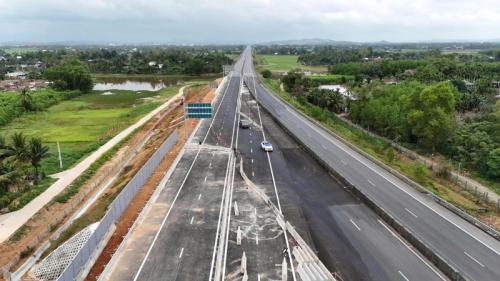
Just in time for the April 30 holiday, a stretch of the North - South expressway from Quang Ngai to the Cu Mong Tunnel will officially open to traffic, significantly accelerating travel along the North-South corridor.

Project Management Unit 2 (under the Ministry of Transport) was quoted by the Government News as announcing that the main route of the Quang Ngai – Hoai Nhon component project will be officially operational starting at 11:30 am on April 29.

The main section being opened in this phase spans approximately 88km. The expressway section begins at Km1050+00 (Nghia Giang commune, Quang Ngai province), where it connects with the Da Nang – Quang Ngai section of the North-South Expressway, and ends at Km1138+00, connecting to the Hoai Nhon – Quy Nhon section of the expressway.

The project began in January 2023 with a total investment of over VND21.110 trillion (nearly $802 million) from the State budget. To date, key items on the main route have been completed, most notably three major mountain tunnels: Tunnel No. 1 (Duc Pho), Tunnel No. 2 (Huan Phong), and Tunnel No. 3 (Binh De).

Under the current traffic organization plan for this initial phase, the expressway section will operate with four lanes and a roadbed width of 17 meters. The maximum speed is set at 90 km/h, with a minimum speed of 60 km/h.

In addition to the Quang Ngai – Hoai Nhon section, April 29 will also see the opening of the Hoai Nhon – Quy Nhon component project and Package 11-XL (Km0+200 - Km19+800) of the Quy Nhon – Chi Thanh component project.

The Hoai Nhon – Quy Nhon section of the expressway has a total length of 70.1km whilst the Quy Nhon – Chi Thanh section of the expressway has a total length of 61.7km (excluding the 5.1km section through the Cu Mong Tunnel). Both projects commenced construction on January 1, 2023.


Central Vietnam province Gia Lai to have 600MW pumped storage hydropower plant

Central Vietnam province Gia Lai to have 600MW pumped storage hydropower plant

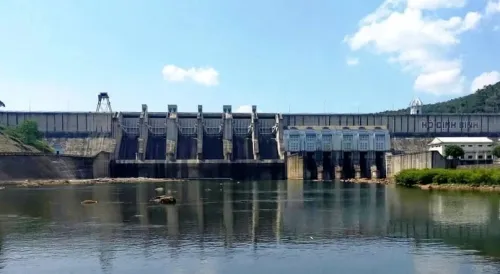
Gia Lai province is accelerating procedures to begin construction of the 600-megawatt Vinh Thanh pumped storage hydropower project, with a total investment of nearly VND11 trillion ($417.49 million).

According to a leader of the provincial Department of Industry and Trade, the Gia Lai People’s Committee has instructed relevant agencies to support and create conditions for Vinh Thanh Pumped Storage JSC to start construction in early 2027, aiming for operation by 2030.

The project’s main components include a newly built upper reservoir with a capacity of 4.3 million cubic meters, a lower reservoir utilizing the existing Dinh Binh irrigation lake, a bidirectional water tunnel system, and reversible turbines. For grid connection, the project will construct a double-circuit 500 kV transmission line linking the plant to the Binh Dinh 500 kV substation.

The project was approved in principle by the Gia Lai People’s Committee for research and survey in late February 2025. After more than a year of study, on April 23, the investor - Vinh Thanh Pumped Storage JSC, together with its French partners, reported survey and research results, concluding that the project is highly feasible.

Once operational, the plant is expected to generate an average of 783 million kWh per year, contributing to energy security and helping stabilize the national power system.

In addition, the project is projected to contribute VND320-350 billion ($13.28 million) annually to the local budget, create 300-500 jobs during construction and 40-50 jobs during operation, and promote socio-economic development, supporting the province’s goal of sustained double-digit economic growth in the coming years.

Legally, the project, located in the former Vinh Thanh district of Binh Dinh province (now Vinh Thanh commune, Gia Lai province after the July 2025 merger), has been approved by the Prime Minister under the revised Power Development Plan for 2021-2030, with a vision to 2050 under Decision No. 768 dated April 15, 2025, and its implementation plan was passed by the Ministry of Industry and Trade under Decision No. 1509 dated May 30, 2025.

The Gia Lai People’s Committee has also incorporated the project into the revised provincial master plan for 2021-2030, with a vision to 2050 under Decision No. 2832 dated November 28, 2025. The initial timeline projected operation during 2031-2032, but local authorities are working to accelerate progress and bring the plant online by 2030.

Vinh Thanh Pumped Storage JSC was established on November 4, 2024, with headquarters on Hoang Van Thu street, Quy Nhon Nam ward, Gia Lai province (formerly Quy Nhon town, Binh Dinh province). Its main business activity is power generation.

The company has a charter capital of VND50 billion ($1.9 million). Its founding shareholders include Tong Phan Long (VND5 billion, 10%), Bui Tien Trung (VND20 billion, 40%), and Le Duc Thoa (VND25 billion, 50%).

The legal representative is Le Duc Thoa (from Thanh Hoa province), who serves as director. He is also the legal representative of La Vuong Wind Power JSC (in Gia Lai) and Gia Nghia Green Renewable Energy Investment and Trading JSC (in Thanh Hoa).


Work starts on $2bn container terminal in Da Nang

Work starts on $2bn container terminal in Da Nang

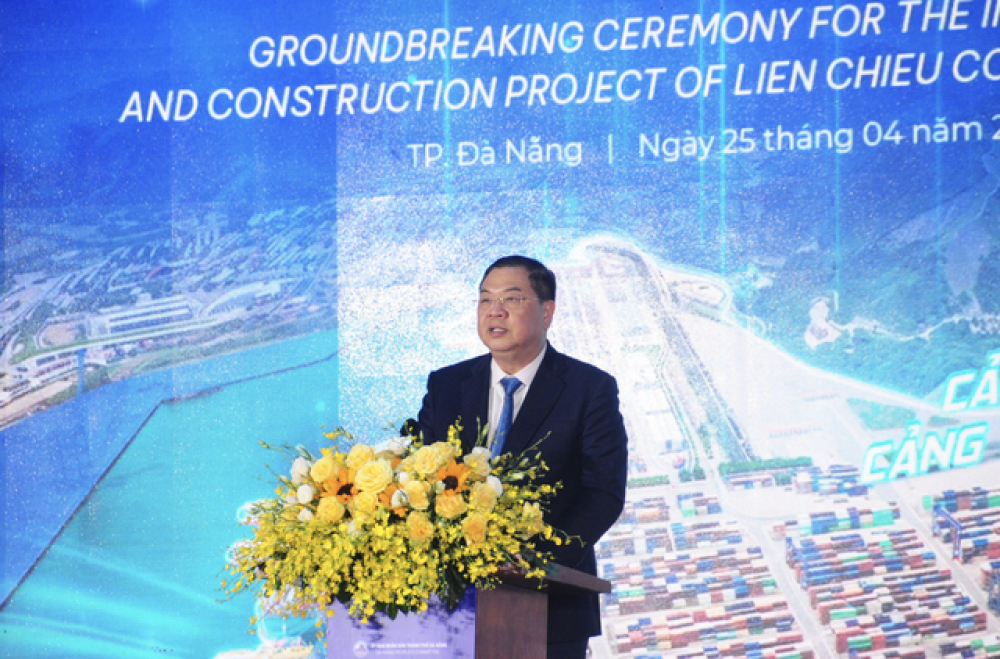
Da Nang City, central Vietnam on Saturday broke ground on the Lien Chieu container terminal project, which carries a price tag of more than VND45 trillion (US$2 billion), marking a significant step in the city’s long-term economic and logistics strategy.

The project, invested by a consortium of Hateco Group, Hateco Seaport Company and APM Terminals B.V. of the Netherlands, will be executed over a 10-year period from 2026 to 2036, divided into three phases.

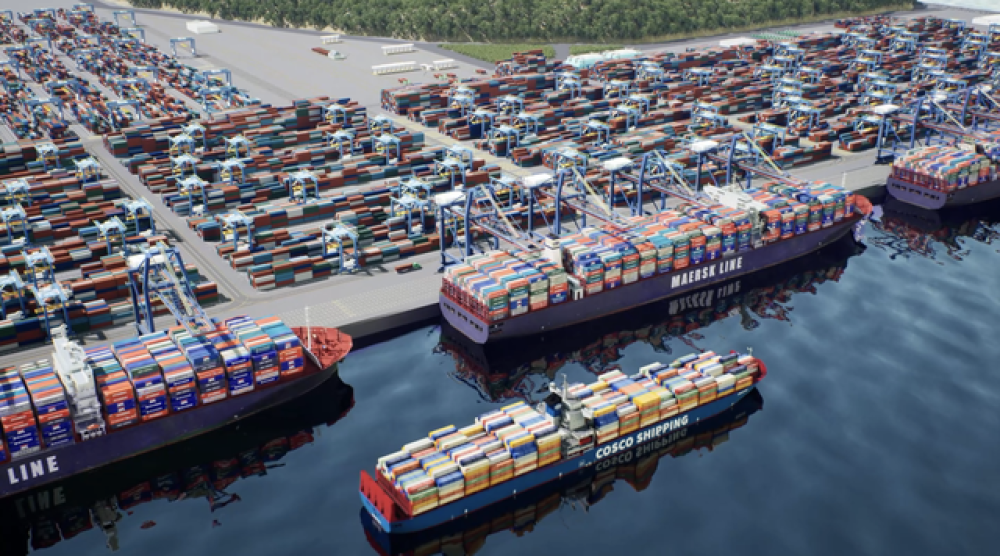
Designed to meet international standards, the Lien Chieu container terminal will feature eight berths spanning a total length of 2,750 meters.

The terminal is capable of accommodating vessels of up to 18,000 TEU and will have a projected annual capacity of 5.7 million TEU, equivalent to roughly 74 million metric tons of cargo.

Within three years of its initial operational phase, throughput is expected to reach some four million TEU annually.

Strategically located along international maritime routes, the mammoth terminal sits at the terminus of the East-West Economic Corridor, a critical trade axis linking Vietnam with Southeast Asia and the Mekong subregion.

Beyond its function as a seaport, Lien Chieu container terminal is envisioned as a comprehensive logistics ecosystem, including integrated barge terminals, warehousing, customs inspection facilities, and container handling services, all connected directly to the national railway network to facilitate multimodal transport.

Tran Van Ky, a representative from the consortium, said that the terminal will adopt a ‘green and smart port’ model, incorporating advanced technologies such as the Internet of Things (IoT) and artificial intelligence (AI) to optimize operations.

Automation systems, clean energy usage, and ecofriendly equipment are expected to reduce emissions and align with both domestic and international environmental standards, positioning the terminal within global green supply chains.

Chairman of the municipal administration Nguyen Manh Hung described the project as a strategic collaboration between public investment and private sector commitment, in line with national policies promoting private economic development.

He emphasized that the terminal would serve as a catalyst for the city’s growth, helping to complete a modern logistics network while reducing transportation costs for businesses.

Also, the project is expected to support sustainable urban expansion, separating cargo traffic from tourism flows and reinforcing Da Nang’s role as an international gateway.

Speaking at the groundbreaking ceremony, Deputy Prime Minister Pham Gia Tuc highlighted the project as a milestone in implementing Vietnam’s strategy for sustainable marine economic development.

He noted that the terminal would stimulate logistics services, industrial growth, and port-based urbanization, while also strengthening national defense and enhancing the country’s global standing.

See all blog