Lumen Vietnam Fund

Blog

Primary benchmarks in real estate

Primary benchmarks in real estate

Actual demand and value will be the determining factors in Vietnam’s property market as supply changes for the better.

Speaking at the launch of the Vietnam Real Estate Market Report for the second quarter and first half of 2026, Mr. Nguyen Van Dinh, Vice Chairman of the Vietnam National Real Estate Association (VNREA) and Chairman of the Vietnam Association of Realtors (VARS), said that as housing supply gradually improves the country’s property market is shifting away from speculation and short-term price expectations toward genuine housing demand and long-term value.

The market is also undergoing a necessary consolidation, he continued. Developers with strong financial resources, sizable land banks, clear legal standing, and proven execution capabilities are continuing to expand, while those with weaker fundamentals are scaling back or exiting the market. This adjustment will support a healthier, more transparent, and more sustainable market while encouraging higher product quality and stronger project delivery.

Prices remain high

Ms. Pham Thi Mien, Deputy Director of the Vietnam Real Estate Market Research Institute at the Vietnam Association of Real Estate Brokers (VARS IRE), said the housing market continued to exhibit encouraging signs of recovery in the first half of the year as supply gradually improved following the resolution of legal bottlenecks, approval of new projects, and faster implementation of large-scale developments.

However, the volume of homes actually launched remained below the number of projects eligible for sale. Many developers continued to take a cautious approach by delaying launches or extending marketing and reservation campaigns to gauge market demand, while investors became increasingly selective in allocating capital.

According to VARS IRE, nearly 34,000 new residential units were launched nationwide in the second quarter of 2026, down about 10 per cent from the previous quarter and 8 per cent from a year prior. Despite improving supply, the imbalance between supply and demand remained largely unresolved, with most new launches continuing to target the upper end of the market.

Apartments dominated new supply in the first half, accounting for around 70 per cent of all launches, while landed homes and residential land made up the remaining 30 per cent, or about 22,000 units. Within the apartment segment, high-end units represented about 45 per cent of supply, up 6 percentage points year-on-year, while luxury and ultra-luxury apartments rose to 33 per cent, up 5 percentage points. Mid-range apartments fell to just 22 per cent, down 11 percentage points from a year earlier.

VARS IRE data showed that primary housing prices remained elevated despite increasing supply. Average primary apartment prices reached about VND80 million ($3,077) per sq m in the second quarter, up 10 per cent against 2025. Prices for villas, townhouses, and shophouses increased by around 5 per cent compared with the end of last year.

Among major markets, Hanoi continued to record the highest average primary apartment price, at about VND123 million ($4,731) per sq m, little changed from the previous quarter. Da Nang maintained average primary prices of about VND91 million ($3,500) per sq m as new supply continued to focus on higher-quality developments.

Ms. Mien said rising primary housing prices were driven mainly by higher development costs, including land acquisition, financing, and construction, along with stricter quality standards that have encouraged developers to position projects in more premium segments. Meanwhile, the secondary market has entered a period of greater stability and clearer segmentation.

Within the apartment market, price adjustments have been most evident in projects that experienced significant price increases, particularly luxury developments and projects by some foreign developers entering the handover stage, when buyers are required to make final payments.

For landed houses and detached homes, prices softened in certain inner-city districts affected by planning changes or previous speculative increases. In contrast, many suburban areas, particularly in southern Vietnam, where infrastructure projects have moved into implementation, recorded price gains of around 5-10 per cent compared with the end of 2025.

Value over momentum

According to VARS IRE, approximately 23,600 successful primary market transactions were recorded nationwide during the second quarter, bringing the total for the first half of 2026 to around 48,000. Of newly-launched projects, around 19,600 units were sold during the second quarter, representing an absorption rate of roughly 58 per cent. Around 43,000 newly-launched units were sold, maintaining an average absorption rate of about 58 per cent.

Apartments remained the primary driver of market liquidity, accounting for 73 per cent of all transactions. Sales were concentrated mainly in legally-completed projects launched in 2025.

“These figures show that demand remains resilient, but capital is no longer spread evenly across the market,” Ms. Mien said. “Rather, it is clearly shifting from chasing market momentum to pursuing long-term value, with investors prioritizing projects that offer legal certainty, construction progress, operational potential, and strong liquidity.”

Overall, VARS IRE said changing buyer behavior is establishing a new framework for assessing real estate value, where product quality, living standards, infrastructure connectivity, and long-term usability have become the defining factors.

As owner-occupier demand becomes the market’s primary driver, projects offering transparent legal status, strong construction quality, practical usability, and healthy liquidity are expected to maintain a competitive advantage and support a more stable growth cycle in the years ahead.

According to the Institute, the ongoing adjustment is more than a normal market cycle. It reflects a broader restructuring of Vietnam’s property sector, with market consolidation serving as an essential step toward greater transparency, stronger fundamentals, and more sustainable development.

Looking ahead, Mr. Tran Minh Hoang, Vice Chairman of VARS, said Vietnam still has substantial room for housing market growth if infrastructure investment continues and capital markets become more developed. In addition to bank lending, he said, the market needs more medium and long-term financing channels to provide developers with sustainable funding sources.

Path to affordability

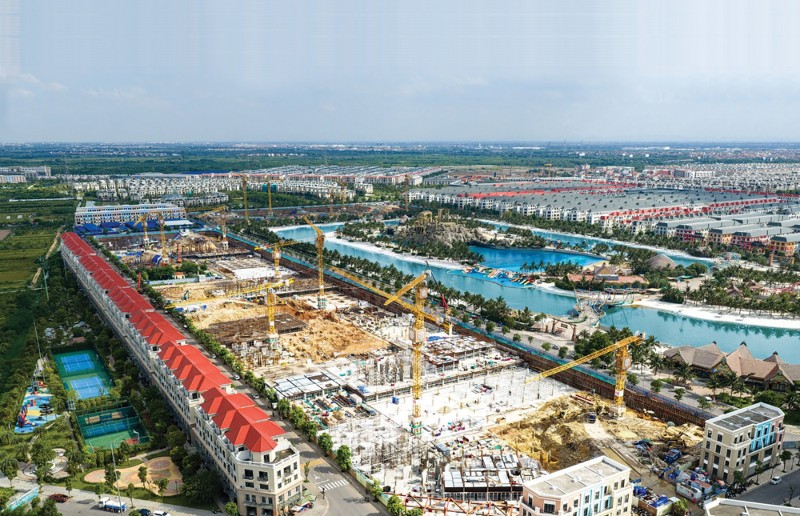
From a developer’s perspective, Mr. Nguyen Thanh Tam, Regional Director for Region 17 at Vinhomes, said buyers are increasingly seeking comprehensive living environments rather than simply purchasing a home. Future large-scale urban developments, he continued, will need to be built around integrated transport infrastructure, complete service ecosystems, high-quality living environments, and sustainable development principles.

Many industry participants also believe that genuine housing demand and medium to long-term investment will remain the market’s key growth drivers, supported by urbanization, economic expansion, and the emergence of new growth centers. Demand is expected to become increasingly selective, concentrating in suburban areas, satellite cities, and locations where infrastructure has moved from planning to actual construction.

As genuine demand becomes the market’s primary engine, participants said improving the legal framework, accelerating infrastructure development, diversifying housing supply, strengthening long-term capital markets, and enhancing urban planning quality will be critical to rebalancing supply and demand while improving housing affordability.

“The biggest challenge today remains the imbalance between housing supply and actual demand,” said Mr. Vo Huynh Tuan Kiet, Director of the Residential Project Marketing Department at CBRE Vietnam. “Satellite cities can only succeed if they are supported by synchronized transport, technical, and social infrastructure, enabling urban expansion, increasing suitable housing supply, and gradually improving home ownership opportunities.”

Mr. Nguyen Thai Binh, Vice Chairman of VARS, believes that as owner-occupier demand becomes increasingly dominant, practical usability, transparent legal status, sustainable cash flow, operational capability, and accountability across the industry will become the primary benchmarks for determining real estate value.

According to VARS, creating a healthier property market will require coordinated action from all stakeholders. Policymakers should continue improving regulations and market transparency. Developers need to deliver products that better match market demand while maintaining construction quality, project progress, and operational standards. Real estate brokers should strengthen professionalism, adopt data-driven practices, and improve advisory quality.

Ultimately, expanding housing supply that matches household affordability, improving project quality, strengthening legal certainty, accelerating infrastructure investment, and enhancing market transparency will be the key factors supporting the sustainable development of Vietnam’s real estate market in the years ahead.


Source: Phan Nam

Latest Posts

Rethinking productivity to drive a new growth model

Rethinking productivity to drive a new growth model

The combination of traditional tools and modern technologies is enabling many Vietnamese enterprises to make significant breakthroughs, helping build a modern productivity and quality ecosystem and driving a new growth model.

HÀ NỘI —Amid rapid changes in the global and domestic economies, productivity and quality in the new era are no longer simply about expanding scale or optimising costs. Instead, they increasingly depend on the ability to harness technology and data while pursuing sustainable development.

The combination of traditional tools and modern technologies is enabling many Vietnamese enterprises to achieve substantial productivity gains, helping build a modern productivity and quality ecosystem and driving a new growth model.

As Việt Nam accelerates the development of science and technology, innovation and digital transformation, this transition is creating both opportunities and challenges, said Nguyễn Nam Hải, chairman of the Commission for the Standards, Metrology and Quality of Việt Nam (STAMEQ).

Renewing the growth model based on higher productivity and quality has therefore become an urgent priority, he said. A new mindset is needed, with productivity measured not only by output but also by the value generated through innovation, the efficiency of resource utilisation and the sustainable value created for society.

This provides a strategic foundation for advancing the dual digital and green transition, helping enterprises strengthen their competitiveness and contributing to Việt Nam’s efforts to realise its development vision through 2045.

Việt Nam is moving towards a productivity and quality ecosystem that places enterprises at the centre and addresses practical management challenges.

To develop this ecosystem, enterprises need to adopt technologies and practices such as AI, big data, ISO 56001-based innovation management, digital traceability and environmental, social and governance (ESG) standards, alongside management tools that can be applied directly to production and business operations to optimise resources and improve international competitiveness.

Hải said institutional reform, technology adoption, digital transformation and advanced management tools would help raise national productivity and support a new growth model.

According to productivity experts, AI, the Internet of Things (IoT) and Big Data are becoming core technologies for transforming production management. They offer opportunities to raise productivity, improve product quality, strengthen competitiveness and enable enterprises to participate more deeply in global supply chains. Business decisions are increasingly supported by scientific analysis rather than relying primarily on experience, improving management accuracy and efficiency.

The integration of AI, IoT and Big Data is also accelerating the shift from traditional, experience-based production towards smart manufacturing. To make effective use of these technologies, however, enterprises need to invest in digital infrastructure, establish standardised data systems, develop digitally skilled workforces and adopt management systems based on international standards.

Deputy Minister of Science and Technology Lê Xuân Định said digital transformation and AI have brought profound changes worldwide. Technology is not only improving productivity, but also transforming management, quality control and market connectivity.

As markets impose stricter requirements for transparency, product quality, traceability and compliance, adopting digital platforms and AI has become essential to building a new growth model, he added.

New drivers of productivity growth

Hải said Việt Nam is stepping up investment in standards, productivity and quality infrastructure. Developing a strong cadre of productivity and quality experts, strengthening communications and scaling up model productivity initiatives nationwide are among the key priorities.

STAMEQ is also expanding international cooperation, leveraging the Asian Productivity Organization network and global certification bodies to strengthen Vietnamese enterprises’ capacity for international integration in productivity and standards.

In coordination with ministries, sectors and localities, STAMEQ will carry out measures to renew productivity and build a modern productivity and quality ecosystem through 2030. The aim is to maximise opportunities arising from digital transformation and international integration, making productivity and quality a central driver of economic growth.

Nguyễn Tùng Lâm, director of the Vietnam Productivity Institute, said digital transformation would be one of the most important drivers of labour productivity growth over the coming decade. Digital management platforms can help enterprises monitor production processes, optimise supply chains and ensure quality from the outset.

Meanwhile, ESG is emerging as a new measure of the quality of corporate development and an increasingly important requirement for export markets, investment funds and global supply chains.

ESG practices can help Vietnamese enterprises meet international standards while combining productivity improvements with green transformation and international integration in pursuit of sustainable development.

Apartment prices ease in Hanoi, Ho Chi Minh City but remain high

Apartment prices ease in Hanoi, Ho Chi Minh City but remain high

After a prolonged period of rising prices, Vietnam’s real estate market saw a downward adjustment in the secondary segment in the second quarter of 2026.

However, housing and land prices in Hanoi and Ho Chi Minh City remained high, while market liquidity declined and inventories continued to rise, according to the Ministry of Construction.

Secondary apartment prices fall

Vietnam’s secondary apartment market showed a clearer downward adjustment in the second quarter of 2026, with prices nationwide falling from the first quarter, according to the Ministry of Construction.

Despite the decline, apartment prices in major cities remained high.

In Hanoi, secondary apartments averaged around VND123 million (US$4,710) per square meter.

Prices ranged from VND133-140 million ($5,090-5,360) per square meter at Hateco Laroma, VND97-103 million ($3,710-3,940) at Bamboo Airways Tower, and VND80-87 million ($3,060-3,330) at Sunshine Garden.

In Ho Chi Minh City, the average secondary apartment price stood at around VND108 million ($4,130) per square meter.

Masteri Thao Dien was priced at VND114-120 million ($4,360-4,590) per square meter, Cantavil An Phu at VND80-89 million ($3,060-3,410), and An Gia Skyline at VND64-72 million ($2,450-2,760).

High apartment prices have also spread to neighboring markets such as Hung Yen Province in the northern region, where the average reached VND69 million ($2,640) per square meter.

At the Ecopark urban area, Sol Forest apartments were priced at VND65-85 million ($2,490-3,250) per square meter, while Sky Oasis ranged from VND55-70 million ($2,110-2,680).

Dinh Minh Tuan, southern regional director of Batdongsan.com.vn, toldTuoi Tre(Youth) online newspaper that apartment prices could come under downward pressure of five to seven percent whenever bank lending rates increase.

From 2021 to 2024, when interest rates remained high at 14-16 percent, apartment prices in Ho Chi Minh City fell by five to seven percent, he said.

When interest rates began easing in 2025, apartment prices rebounded rapidly. Over the past year, prices in the city surged 22.5 percent, offsetting the declines recorded in previous years.

Villa, land prices decline

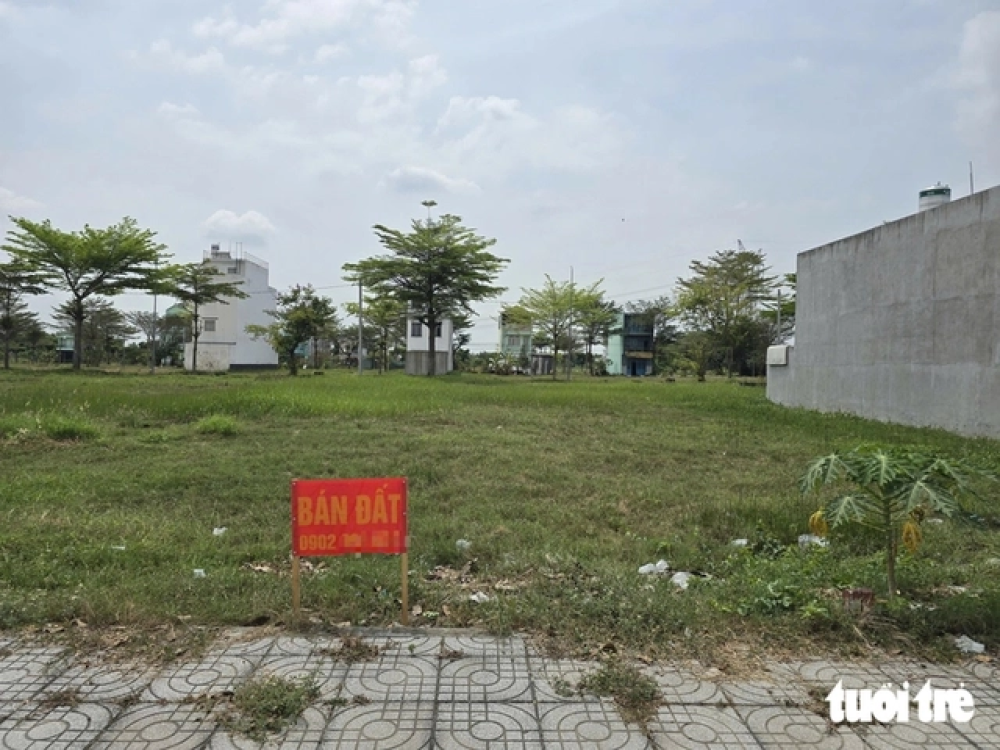
Compared with apartments, land plots in property developments recorded a more pronounced decline.

Apartment prices ease in Hanoi, Ho Chi Minh City but remain high- Ảnh 1.

Secondary land prices nationwide fell by around two to three percent from the previous quarter, bringing the average asking price down to VND40 million ($1,530) per square meter.

In Ho Chi Minh City, land prices fell nearly three percent to an average of around VND66 million ($2,530) per square meter.

Prices at many projects declined by three to six percent, particularly for high-value properties. Despite the drop, land prices remained high.

In Hanoi, land at the Dai Kim-Dinh Cong new urban area was priced at VND105-160 million ($4,020-6,120) per square meter, while Cienco 5 Me Linh ranged from VND40-56 million ($1,530-2,140).

In Ho Chi Minh City, Van Phuc City was priced at VND100-150 million ($3,830-5,740) per square meter, while Rio Vista ranged from VND95-110 million ($3,640-4,210).

Villa and townhouse prices also declined amid weak liquidity, although prices remained high, according to the Ministry of Construction.

In Hanoi, Sunshine Riverside was priced at VND390-440 million ($14,930-16,840) per square meter, while Louis City ranged from VND285-292 million ($10,910-11,180).

In Ho Chi Minh City, prices at The Global City stood at VND360-371 million ($13,780-14,200) per square meter, while Lakeview City ranged from VND220-250 million ($8,420-9,570).

Pressure from weak liquidity, high interest rates

Vietnam recorded more than 100,000 successful real estate transactions in the second quarter, equivalent to 71.5 percent of the previous quarter’s figure and 63.7 percent of the level recorded in the same period of 2025.

Transactions involving apartments and individual houses fell nearly 14 percent to 26,567.

Land transactions recorded the steepest decline, with only 73,438 successful deals, equivalent to 67.4 percent of the previous quarter and less than 60 percent of the year-earlier level.

Meanwhile, new project supply increased sharply, with 113 commercial housing projects comprising more than 103,200 units newly licensed during the quarter, nearly double the number in the first quarter and adding pressure on market absorption.

Financing costs also remained a major hurdle. Real estate lending rates are currently commonly at 12-14 percent per year.

After preferential periods expire, floating rates at many banks rise to 13-15 percent, with some reaching 15-16 percent per year.


30% reduction in personal and corporate income tax proposed

30% reduction in personal and corporate income tax proposed

State budget revenue is expected to decline by approximately VND 3.191 trillion ($112.12 million) in 2026 and VND 3.51 trillion ($134.2 million) in 2027.

Authorized by the Prime Minister, Minister of Finance Ngo Van Tuan, on behalf of the Government, on August 21 presented its proposal for a 30 percent reduction in personal income tax payable for the 2026 and 2027 tax periods on business income to the on-going extra session of the 16th National Assembly.

According to the proposal, the 30% reduction will be applicable to resident individuals whose annual business revenue between 2026 and 2027 does not exceed VND10 billion.

Meanwhile, a 30% reduction in corporate income tax payable for the 2026 and 2027 tax periods is also proposed for enterprises and organizations established in accordance with Vietnamese law whose annual revenue in 2026 and 2027 does not exceed VND 10 billion.

For enterprises currently eligible for tax incentives under the Law on Corporate Income Tax or other laws and resolutions of the National Assembly, the proposed corporate income tax reduction would be calculated based on the amount of corporate income tax payable after tax incentives have been deducted.

According to Minister Tuan’s presentation, the tax cuts would help ease difficulties and stabilize production and business activities for business households, individuals and enterprises.

The measures would also ensure timely support for inflation control and macroeconomic stability, contributing to the realization of the country's economic growth targets.

If these proposals will be accepted by the Legislature, state budget revenue is expected to decline by approximately VND3.191 trillion ($112.12 million) in 2026 and VND 3.51 trillion ($134.2 million) in 2027.


See all blog