Lumen Vietnam Fund

Blog

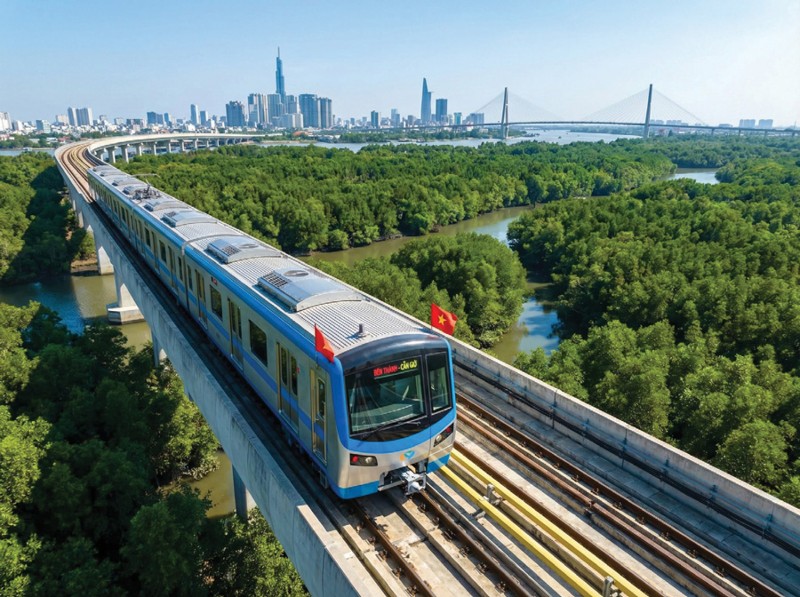
Financing urban metro development

Financing urban metro development

Ms. Giang My Huong, Director of Capital Projects & Infrastructure at PwC Vietnam, spoke with Phan Linh about designing sustainable financing mechanisms for large-scale metro development programs.

Based on international experience, how are large-scale metro development programs typically financed? What roles do public budgets, loans, bonds, land-based financing, and private capital play?

Large-scale metro programs are typically financed through a combination of financing - the upfront capital needed to build infrastructure, funding, and long-term revenue streams that support operations and repay investment. This reflects the nature of metro systems, which require significant capital investment upfront while generating economic and social returns over decades.

Construction is generally financed through public resources, including government budgets, Official Development Assistance (ODA), concessional loans, and, in some cases, government or green bonds. These are complemented by private investment and public-private partnerships (PPPs), particularly for commercially-viable assets such as station retail, depots, real estate developments, and Transit-Oriented Development (TOD). The key is not whether the public or private sector leads, but how projects are structured so the two can complement one another.

Ms. Giang My Huong, Director of Capital Projects & Infrastructure at PwC Vietnam

Long-term funding typically combines public subsidies, fare revenue, non-fare income, such as advertising, station naming rights, and commercial leasing, and land value capture mechanisms. Since fare revenue rarely covers operating and maintenance costs, diversified income streams are essential. Cities such as Hong Kong (China) and Singapore have demonstrated how property development and land value capture can underpin the financial sustainability of metro systems.

Vietnam is beginning to move in this direction through National Assembly Resolution No. 188/2025/QH15, which provides a legal basis for measures including higher floor area ratios (FAR), infrastructure betterment charges, and other land value capture tools.

Ultimately, metro systems cannot rely on a single source of financing. The public sector should provide the foundation, supported by long-term capital, while a strong legal and policy framework encourages private investment and unlocks commercial and land-based revenues that strengthen long-term financial sustainability.

What should Vietnam’s policy priorities be for mobilizing and managing resources for metro development?

First, growing private sector interest in urban rail should be viewed as a positive sign, but participation must be supported by well-designed project structures and effective governance.

Major Vietnamese groups, including Vingroup / VinSpeed, THACO, Becamex, Sovico, and Masterise, are becoming increasingly involved in metro development in Hanoi and Ho Chi Minh City. They can contribute implementation capacity, commercial discipline, and additional investment. However, international experience shows that private capital delivers the best outcomes only when projects have clear structures, balanced risk-sharing arrangements, realistic revenue assumptions, and strong public sector oversight.

Second, policymakers should distinguish clearly between financing and funding. Successful metro systems are designed around a balanced mix of both rather than depending too heavily on any single source.

Third, metro infrastructure should be viewed as a platform for creating economic value rather than simply a transport asset. Hong Kong (China)’s MTR “Rail + Property” model and Shenzhen Metro both illustrate how integrating rail investment with urban development can generate substantial property and commercial value.

For Vietnam, the lesson is that metro investment creates not only mobility benefits but also higher land values and new commercial opportunities. Those gains should be captured and reinvested into the system through appropriate legal and financial mechanisms. Otherwise, much of the value will accrue to surrounding developments while the public sector continues to bear most of the investment cost.

Finally, Vietnam should use carefully selected pilot projects to test TOD, station-area development, and PPP models. These pilots can help refine legal frameworks, revenue models, risk-sharing arrangements, and institutional coordination while gradually building investor confidence.

Under current master plans, Hanoi and Ho Chi Minh City will need to mobilize an estimated $214 billion to $241 billion to develop more than 2,000 km of metro lines. The greatest challenge, however, is not simply securing sufficient capital, but designing a financing framework that enables the system to continue attracting investment, operate efficiently, and maintain long-term fiscal sustainability.

More broadly, metro development should be planned at the network level rather than project-by-project. An integrated legal, financial, and institutional framework is needed so that public investment, private capital, land value capture, and long-term revenue streams reinforce one another.

Applying those principles to Hanoi, what should guide the city’s financing strategy?

Hanoi’s financing framework should rest on five core principles. First, the city should establish a layered financial structure instead of relying primarily on fares or government subsidies. Different revenue streams should serve different purposes.

Second, the public sector should continue to underpin the system, particularly for land acquisition, site clearance, and core infrastructure that is difficult to finance commercially. At the same time, Hanoi should begin implementing land value capture measures permitted under Resolution No. 188, including higher FAR and infrastructure betterment charges, allowing the city to test and refine these mechanisms while generating new revenue.

Third, the metro should be integrated with broader urban development. Financing should be aligned with TOD policies, land-use planning, transport management, climate objectives, and gender equality, disability, and social inclusion (GEDSI).

Fourth, PPPs should be applied selectively. Core infrastructure, including tunnels, viaducts, rail tracks, and major technical systems, is generally better suited to public funding, ODA, or concessional finance because of its high upfront costs and limited commercial returns. By contrast, station retail, depots, real estate, and TOD projects are typically more attractive to private investors because they offer clearer revenue opportunities.

Fifth, private investment depends on credible and transparent risk-sharing. Investors are unlikely to commit significant capital unless risks are allocated appropriately. Policy and land-related risks that fall within the public sector’s responsibility should not be transferred entirely to private investors. PPPs should therefore be seen not as a substitute for public funding but as a targeted tool for mobilizing capital and expertise where market conditions support private participation.

Ultimately, Hanoi’s challenge is not simply securing enough funding to build metro lines but creating a financing framework that enables the system to attract investment, operate efficiently, and remain fiscally-sustainable over the long term. Resource mobilization should therefore form part of a broader urban development strategy linking transport investment, land value capture, and institutional reform.

As Hanoi and Ho Chi Minh City accelerate multiple metro projects simultaneously, what risks are they likely to face, and how should they manage them?

The greatest financial challenge is not the scale of individual projects but the cumulative pressure they place on fiscal capacity, implementation capability, and long-term public finances. The answer is not to slow metro development but to manage acceleration through an integrated program-wide approach.

The first risk is the concentration of capital requirements. Hanoi plans an 18-line network covering roughly 979 km with estimated investment of $110 billion to $137 billion, while Ho Chi Minh City’s long-term vision includes 27 lines totaling around 1,024 km and requiring about $104 billion. Launching multiple lines simultaneously could strain public finances and crowd out other investment priorities if financing is not carefully phased. Many cities mitigate this by prioritizing strategic corridors and matching financing instruments to different project stages rather than relying on a single source.

The second risk is cost overruns and delays across the project portfolio. Simultaneous construction increases pressure on land acquisition, approvals, contractor capacity, supply chains, and project management. Experience from metro projects in Bengaluru and Mumbai in India shows that land clearance, utility relocation, procurement, coordination across contracts, and scope changes require rigorous management before and during construction. The lesson is not to reduce ambition but to strengthen project preparation, implementation capacity, and interagency coordination.

The third risk is failing to capture the land value created by metro investment. If TOD and metro planning proceed separately, cities may lose the opportunity to recycle rising land values back into the transport system. Many successful metro cities therefore integrate transport planning, station-area development, and land value capture from the outset, allowing the economic gains generated by metro investment to help finance future expansion.

Ultimately, the question is not whether Hanoi and Ho Chi Minh City should accelerate metro development, but how they can do so sustainably. Metro expansion should be managed as an integrated program combining finance, implementation, and urban development, rather than as a collection of individual construction projects.

Source: Phan Linh

Latest Posts

Rethinking productivity to drive a new growth model

Rethinking productivity to drive a new growth model

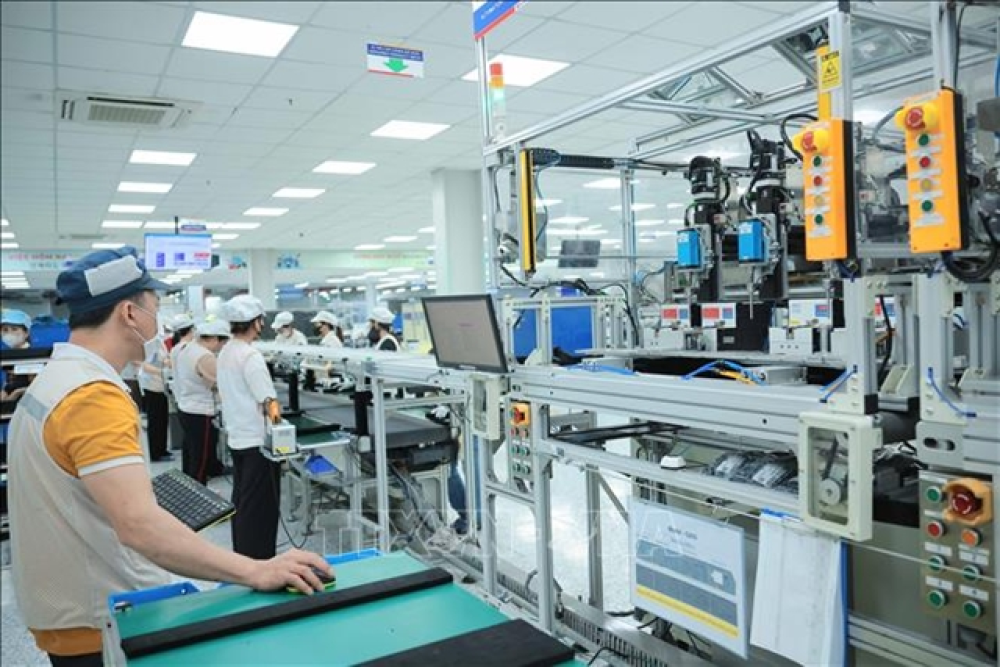
The combination of traditional tools and modern technologies is enabling many Vietnamese enterprises to make significant breakthroughs, helping build a modern productivity and quality ecosystem and driving a new growth model.

HÀ NỘI —Amid rapid changes in the global and domestic economies, productivity and quality in the new era are no longer simply about expanding scale or optimising costs. Instead, they increasingly depend on the ability to harness technology and data while pursuing sustainable development.

The combination of traditional tools and modern technologies is enabling many Vietnamese enterprises to achieve substantial productivity gains, helping build a modern productivity and quality ecosystem and driving a new growth model.

As Việt Nam accelerates the development of science and technology, innovation and digital transformation, this transition is creating both opportunities and challenges, said Nguyễn Nam Hải, chairman of the Commission for the Standards, Metrology and Quality of Việt Nam (STAMEQ).

Renewing the growth model based on higher productivity and quality has therefore become an urgent priority, he said. A new mindset is needed, with productivity measured not only by output but also by the value generated through innovation, the efficiency of resource utilisation and the sustainable value created for society.

This provides a strategic foundation for advancing the dual digital and green transition, helping enterprises strengthen their competitiveness and contributing to Việt Nam’s efforts to realise its development vision through 2045.

Việt Nam is moving towards a productivity and quality ecosystem that places enterprises at the centre and addresses practical management challenges.

To develop this ecosystem, enterprises need to adopt technologies and practices such as AI, big data, ISO 56001-based innovation management, digital traceability and environmental, social and governance (ESG) standards, alongside management tools that can be applied directly to production and business operations to optimise resources and improve international competitiveness.

Hải said institutional reform, technology adoption, digital transformation and advanced management tools would help raise national productivity and support a new growth model.

According to productivity experts, AI, the Internet of Things (IoT) and Big Data are becoming core technologies for transforming production management. They offer opportunities to raise productivity, improve product quality, strengthen competitiveness and enable enterprises to participate more deeply in global supply chains. Business decisions are increasingly supported by scientific analysis rather than relying primarily on experience, improving management accuracy and efficiency.

The integration of AI, IoT and Big Data is also accelerating the shift from traditional, experience-based production towards smart manufacturing. To make effective use of these technologies, however, enterprises need to invest in digital infrastructure, establish standardised data systems, develop digitally skilled workforces and adopt management systems based on international standards.

Deputy Minister of Science and Technology Lê Xuân Định said digital transformation and AI have brought profound changes worldwide. Technology is not only improving productivity, but also transforming management, quality control and market connectivity.

As markets impose stricter requirements for transparency, product quality, traceability and compliance, adopting digital platforms and AI has become essential to building a new growth model, he added.

New drivers of productivity growth

Hải said Việt Nam is stepping up investment in standards, productivity and quality infrastructure. Developing a strong cadre of productivity and quality experts, strengthening communications and scaling up model productivity initiatives nationwide are among the key priorities.

STAMEQ is also expanding international cooperation, leveraging the Asian Productivity Organization network and global certification bodies to strengthen Vietnamese enterprises’ capacity for international integration in productivity and standards.

In coordination with ministries, sectors and localities, STAMEQ will carry out measures to renew productivity and build a modern productivity and quality ecosystem through 2030. The aim is to maximise opportunities arising from digital transformation and international integration, making productivity and quality a central driver of economic growth.

Nguyễn Tùng Lâm, director of the Vietnam Productivity Institute, said digital transformation would be one of the most important drivers of labour productivity growth over the coming decade. Digital management platforms can help enterprises monitor production processes, optimise supply chains and ensure quality from the outset.

Meanwhile, ESG is emerging as a new measure of the quality of corporate development and an increasingly important requirement for export markets, investment funds and global supply chains.

ESG practices can help Vietnamese enterprises meet international standards while combining productivity improvements with green transformation and international integration in pursuit of sustainable development.

Apartment prices ease in Hanoi, Ho Chi Minh City but remain high

Apartment prices ease in Hanoi, Ho Chi Minh City but remain high

After a prolonged period of rising prices, Vietnam’s real estate market saw a downward adjustment in the secondary segment in the second quarter of 2026.

However, housing and land prices in Hanoi and Ho Chi Minh City remained high, while market liquidity declined and inventories continued to rise, according to the Ministry of Construction.

Secondary apartment prices fall

Vietnam’s secondary apartment market showed a clearer downward adjustment in the second quarter of 2026, with prices nationwide falling from the first quarter, according to the Ministry of Construction.

Despite the decline, apartment prices in major cities remained high.

In Hanoi, secondary apartments averaged around VND123 million (US$4,710) per square meter.

Prices ranged from VND133-140 million ($5,090-5,360) per square meter at Hateco Laroma, VND97-103 million ($3,710-3,940) at Bamboo Airways Tower, and VND80-87 million ($3,060-3,330) at Sunshine Garden.

In Ho Chi Minh City, the average secondary apartment price stood at around VND108 million ($4,130) per square meter.

Masteri Thao Dien was priced at VND114-120 million ($4,360-4,590) per square meter, Cantavil An Phu at VND80-89 million ($3,060-3,410), and An Gia Skyline at VND64-72 million ($2,450-2,760).

High apartment prices have also spread to neighboring markets such as Hung Yen Province in the northern region, where the average reached VND69 million ($2,640) per square meter.

At the Ecopark urban area, Sol Forest apartments were priced at VND65-85 million ($2,490-3,250) per square meter, while Sky Oasis ranged from VND55-70 million ($2,110-2,680).

Dinh Minh Tuan, southern regional director of Batdongsan.com.vn, toldTuoi Tre(Youth) online newspaper that apartment prices could come under downward pressure of five to seven percent whenever bank lending rates increase.

From 2021 to 2024, when interest rates remained high at 14-16 percent, apartment prices in Ho Chi Minh City fell by five to seven percent, he said.

When interest rates began easing in 2025, apartment prices rebounded rapidly. Over the past year, prices in the city surged 22.5 percent, offsetting the declines recorded in previous years.

Villa, land prices decline

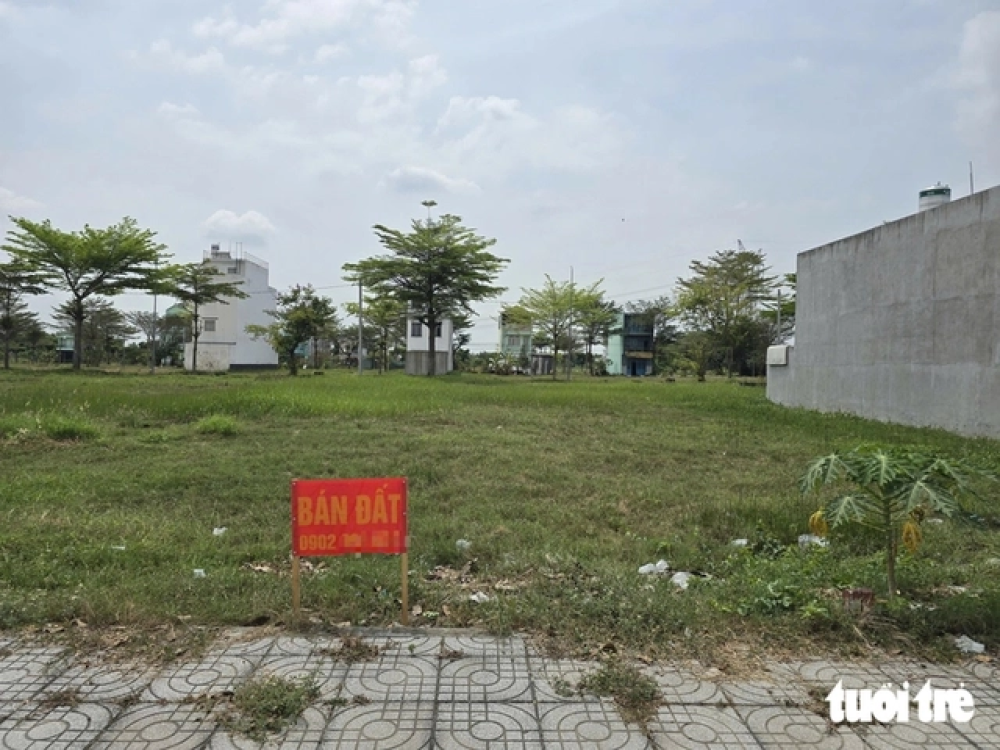
Compared with apartments, land plots in property developments recorded a more pronounced decline.

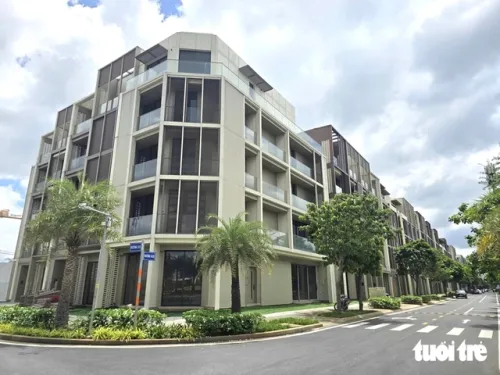
Apartment prices ease in Hanoi, Ho Chi Minh City but remain high- Ảnh 1.

Secondary land prices nationwide fell by around two to three percent from the previous quarter, bringing the average asking price down to VND40 million ($1,530) per square meter.

In Ho Chi Minh City, land prices fell nearly three percent to an average of around VND66 million ($2,530) per square meter.

Prices at many projects declined by three to six percent, particularly for high-value properties. Despite the drop, land prices remained high.

In Hanoi, land at the Dai Kim-Dinh Cong new urban area was priced at VND105-160 million ($4,020-6,120) per square meter, while Cienco 5 Me Linh ranged from VND40-56 million ($1,530-2,140).

In Ho Chi Minh City, Van Phuc City was priced at VND100-150 million ($3,830-5,740) per square meter, while Rio Vista ranged from VND95-110 million ($3,640-4,210).

Villa and townhouse prices also declined amid weak liquidity, although prices remained high, according to the Ministry of Construction.

In Hanoi, Sunshine Riverside was priced at VND390-440 million ($14,930-16,840) per square meter, while Louis City ranged from VND285-292 million ($10,910-11,180).

In Ho Chi Minh City, prices at The Global City stood at VND360-371 million ($13,780-14,200) per square meter, while Lakeview City ranged from VND220-250 million ($8,420-9,570).

Pressure from weak liquidity, high interest rates

Vietnam recorded more than 100,000 successful real estate transactions in the second quarter, equivalent to 71.5 percent of the previous quarter’s figure and 63.7 percent of the level recorded in the same period of 2025.

Transactions involving apartments and individual houses fell nearly 14 percent to 26,567.

Land transactions recorded the steepest decline, with only 73,438 successful deals, equivalent to 67.4 percent of the previous quarter and less than 60 percent of the year-earlier level.

Meanwhile, new project supply increased sharply, with 113 commercial housing projects comprising more than 103,200 units newly licensed during the quarter, nearly double the number in the first quarter and adding pressure on market absorption.

Financing costs also remained a major hurdle. Real estate lending rates are currently commonly at 12-14 percent per year.

After preferential periods expire, floating rates at many banks rise to 13-15 percent, with some reaching 15-16 percent per year.


30% reduction in personal and corporate income tax proposed

30% reduction in personal and corporate income tax proposed

State budget revenue is expected to decline by approximately VND 3.191 trillion ($112.12 million) in 2026 and VND 3.51 trillion ($134.2 million) in 2027.

Authorized by the Prime Minister, Minister of Finance Ngo Van Tuan, on behalf of the Government, on August 21 presented its proposal for a 30 percent reduction in personal income tax payable for the 2026 and 2027 tax periods on business income to the on-going extra session of the 16th National Assembly.

According to the proposal, the 30% reduction will be applicable to resident individuals whose annual business revenue between 2026 and 2027 does not exceed VND10 billion.

Meanwhile, a 30% reduction in corporate income tax payable for the 2026 and 2027 tax periods is also proposed for enterprises and organizations established in accordance with Vietnamese law whose annual revenue in 2026 and 2027 does not exceed VND 10 billion.

For enterprises currently eligible for tax incentives under the Law on Corporate Income Tax or other laws and resolutions of the National Assembly, the proposed corporate income tax reduction would be calculated based on the amount of corporate income tax payable after tax incentives have been deducted.

According to Minister Tuan’s presentation, the tax cuts would help ease difficulties and stabilize production and business activities for business households, individuals and enterprises.

The measures would also ensure timely support for inflation control and macroeconomic stability, contributing to the realization of the country's economic growth targets.

If these proposals will be accepted by the Legislature, state budget revenue is expected to decline by approximately VND3.191 trillion ($112.12 million) in 2026 and VND 3.51 trillion ($134.2 million) in 2027.


See all blog