Lumen Vietnam Fund

Blog

Central Vietnam province Lam Dong eyes 101-km electric rail network

Central Vietnam province Lam Dong eyes 101-km electric rail network

Authorities in Vietnam’s central province of Lam Dong have proposed building six urban electric rail lines spanning over 101 km to connect its famous tourist attraction Da Lat with Lien Khuong International Airport and other major destinations, as part of a long-term urban transport plan through 2050.

The proposal is included in the master plan for five Da Lat wards to 2050, which is under consultation, the provincial government said last week.

The proposed network would comprise six lines with a total length of 101.43 km, using either light rail or monorail technology. The routes would link central Da Lat with Lien Khuong airport and popular destinations such as Suoi Vang Lake, LangBiang Mountain, Tuyen Lam Lake, and the Valley of Love.

The line connecting Da Lat railway station with Lien Khuong airport in Duc Trong commune is prioritized for construction before 2030, providing an additional public transport option for passengers traveling between the airport and the downtown city. The other five lines are planned for development after 2030.

The proposed routes include an 18.5-km line from Da Lat station to Suoi Vang, an 8.55-km line from An Kroet junction to LangBiang, and a 15.78-km line linking Da Lat station with Tuyen Lam lake. Two other routes would connect Da Lat station with the Valley of Love and Tung Lam junction.

The plan also calls for restoring the 84-km Thap Cham-Da Lat railway, which uses a 1,000-mm track gauge, to support tourism and improve connections between Da Lat and the south central coast.

The proposed network is expected to ease pressure on roads, connect tourist destinations with urban gateways and help preserve Da Lat’s landscape, according to the planning consultant.

The master plan covers five wards: Xuan Huong-Da Lat, Cam Ly-Da Lat, Lam Vien-Da Lat, Xuan Truong-Da Lat, and Lang Biang-Da Lat, with a total area of 68,088 hectares.

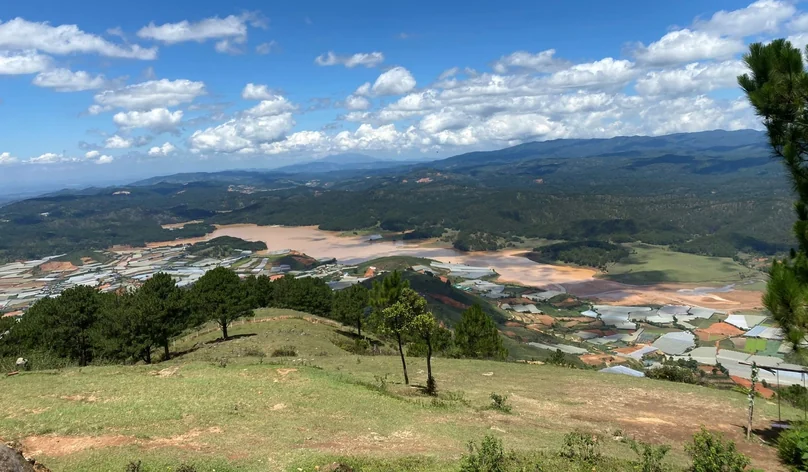
Situated on a plateau around 1,500 meters above sea level, Da Lat enjoys year-round cool weather that stands in contrast to Vietnam's tropical climate. It used to be a summer hideout for French officials during the colonial time who built villas in the hills to escape the heat and humidity of the lowlands. Da Lat is also known as one of Vietnam’s biggest flower-growing regions.

On July 1, 2025, Lam Dong province was merged with Dak Nong and Binh Thuan provinces to form the new Lam Dong province which borders Dak Lak province, Dong Nai city, Khanh Hoa province, Ho Chi Minh City, Cambodia, and the East Sea.

In the first 10 months of this year, Lam Dong welcomed nearly 20.7 million tourist arrivals, including 1.2 million foreign visitors, generating VND57.51 trillion ($2.24 billion), according to the provincial tourism watchdog.


Source: Hai Yen

Latest Posts

Lawmakers approve investment plan for three expressways worth nearly $6.3 bln

Lawmakers approve investment plan for three expressways worth nearly $6.3 bln

The projects are expected to be substantially completed by 2030 and put into operation in 2031.

During its second session, the 16th National Assembly, which concluded on November 21, on the same day approved in principle the investment of three expressway projects: the Bao Ha–Lai Chau Expressway (Bao Ha–Tan Phong section), the Quang Ngai–Kon Tum Expressway, and the Moc Chau–Son La–Dien Bien Expressway section passing through northern mountainous Son La Province.

All three projects will be financed through public investment, with a preliminary total investment estimated at VND162.393 trillion (approximately $6.27 billion).

According to the plan, project preparation will take place between 2026 and 2027, while land clearance, compensation, and resettlement work, together with construction, are scheduled to begin in 2027. The projects are expected to be substantially completed by 2030 and put into operation in 2031.

Among the three projects, the Bao Ha–Lai Chau Expressway, specifically the Bao Ha–Tan Phong section, will be approximately 119 km long. It will feature four lanes and a design speed of 80-100 km/h. The route will connect with the Hanoi–Lao Cai Expressway at its starting point and end in the Tan Phong area of Lai Chau Province.

Before the National Assembly voted on the resolution, Minister of Construction Tran Hong Minh presented a report addressing and explaining lawmakers' opinions regarding the investment policy for the three projects.

According to the minister, these are not isolated road projects but rather major interregional transport corridors. They are expected to help remove transportation infrastructure bottlenecks in the Northwest, Central, and Central Highlands regions; narrow the development gap between mountainous and lowland areas; and strengthen national defense and security in strategically important areas.

Notably, once the Bao Ha–Lai Chau Expressway is completed, all 34 provinces and centrally governed cities across Vietnam will have expressway access. Mr. Minh emphasized that the projects will apply advanced technologies in surveying, design, and construction to ensure safety, quality, integrated connectivity, and resilience to climate change. Future operation and management will also incorporate intelligent transportation systems.

The minister noted that upon completion, the expressways will significantly reduce travel times, enhance connectivity among localities, and facilitate the development of border-gate economies, cross-border trade, logistics, tourism, and agricultural product distribution in the Northwest, Central, and Central Highlands regions.

To accelerate implementation, the three projects will benefit from several special mechanisms and policies similar to those previously approved by the National Assembly for major national infrastructure projects.

These mechanisms focus on five key areas: authority to adjust investment policies, compensation and resettlement procedures, contractor appointment, planning adjustments, and the allocation of construction waste disposal sites.


HCMC targets 14% industrial growth in final quarter of 2026

HCMC targets 14% industrial growth in final quarter of 2026

The southern city's industrial production index (IIP) rising 11% year-on-year in the first ten months of the year.

Ho Chi Minh City has set a target of 13.23% gross regional domestic product (GRDP) growth in the fourth quarter of 2026, with the industry and construction sector expected to expand by 14% and make a significant contribution to overall economic growth.

The city’s Statistics Office reported that industrial production maintained its upward momentum in the first 10 months of the year. The industrial production index (IIP) rose 11% year-on-year, while manufacturing and processing increased 11.4%. In October alone, the IIP climbed 13.8%, with manufacturing and processing up 14.7%.

Several industries recorded strong growth over the 10-month period, including mechanical engineering (14.7%), food processing (11.2%) and pharmaceuticals and chemicals (10.9%). Production across the four key industrial sectors increased 10.7%.

However, performance varied across industries. Electronic product manufacturing grew just 2.2%, garment production rose 3.4%, while motor vehicle manufacturing edged down 0.2%.

Under the city’s fourth-quarter growth scenario, manufacturing and processing value added is targeted to increase 14.14%, requiring further acceleration in industrial output.

Analysts say the city should prioritise industries capable of quickly expanding production and fulfilling orders, while helping businesses address constraints involving working capital, raw materials, labour and logistics.

Strengthening links between major manufacturers and domestic suppliers will also be important to increase local value added and reduce reliance on imported inputs.


34 international airlines seek to delay move to Long Thanh International Airport

34 international airlines seek to delay move to Long Thanh International Airport

According to a survey by the Civil Aviation Authority of Vietnam, 24 international airlines plan to move their operations to Long Thanh airport from the winter 2027 flight season, while 10 others want to make the switch in summer 2028 or later.

Long Thanh International in Dong Nai city is scheduled to begin commercial operations on December 24. Under a plan drawn up by Airports Corporation of Vietnam (ACV), the airport is expected to handle up to 366 flights per week in its initial phase, including 322 domestic and 44 international services.

In preparation for the airport’s opening, CAAV has consulted airlines, the International Air Transport Association, industry associations, diplomatic missions, and various domestic and international aviation authorities.

The survey results, outlined in a report submitted to government leaders on November 20, show that international airlines broadly support the move to Long Thanh, citing its modern infrastructure and capacity to accommodate growing demand. However, around 34 carriers want to postpone the transfer of their operations from Tan Son Nhat airport to allow more time for preparation.

Of these, 24 airlines plan to begin operating at Long Thanh in the winter 2027 flight season, which runs from late October to the end of March 2028. The remaining 10 have proposed switching in the summer 2028 season, from late March to October, or later.

The airlines said they would need six to 12 months to plan their operations at the new airport. Preparations include adjusting route networks, allocating aircraft and flight crews, and arranging ground handling services and ticketing systems. Foreign aviation regulators may also need to conduct inspections and approve safety conditions before allowing carriers to operate.

For air cargo, international logistics companies including UPS, FedEx, DHL, and Cargolux have called for the coordinated provision of express cargo terminals, customs facilities, truck handling areas, and connecting transport infrastructure. Preparation and technical assessments could take around 12 months.

Beyond airport infrastructure, international airlines have also highlighted the need for reliable transport links between Ho Chi Minh City and Long Thanh. Their requirements include seamless connectivity, transit hotels meeting at least four-star standards, and high-quality medical services. The transition roadmap should also ensure fair treatment of domestic and international carriers.

Alongside international airlines, several domestic carriers are preparing to operate at Long Thanh from its initial phase, according to ACV’s plan. Vietnam Airlines is expected to run 72 flights per week, while Vietjet plans up to 294, all of them domestic services.

Long Thanh is being developed on an area of around 5,000 hectares in three investment phases. The project is currently in its first phase, which is designed to handle 25 million passengers and 1.2 million tonnes of cargo annually.


See all blog